
 Vos Iz Neias
Knesset Passes Rabbinic Courts Law, Restoring Jurisdiction Over Arbitrated Monetary Matters
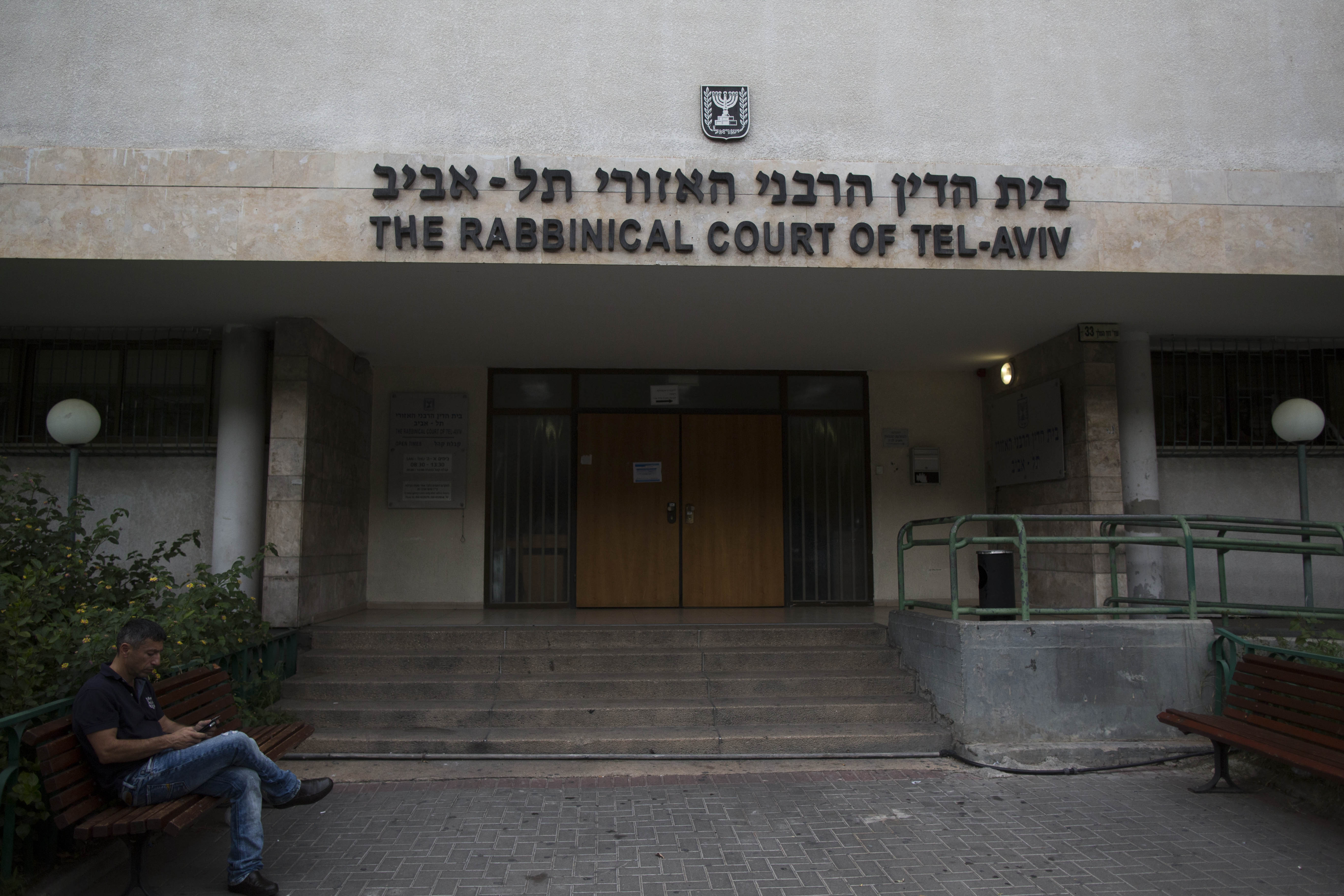
JERUSALEM (VINnews) — Nearly 20 years ago, on the 8th of Nisan 5766, a ruling by the High Court of Justice cancelled the authority of rabbinic courts to conduct civil monetary disputes according to Jewish law. The justices prohibited rabbinical courts from adjudicating monetary matters even when both parties fully agreed to uphold Jewish law in their litigation. Last night, this legal situation was reversed.
Two days after that ruling 20 years ago, Moshe Gafni, chairman of Degel HaTorah, introduced a bill to allow rabbinical courts to adjudicate civil monetary disputes according to Torah law when both parties consent, as had been the practice since the establishment of the state until the High Court ruling. Term after term, Gafni failed to advance the legislation, but last night his bill passed its second and third readings by a vote of 65 in favor and 41 against, and it is expected to become part of Israeli law.
The bill stipulates that a “religious court” refers to a rabbinical court or a Sharia (Muslim) court, and that arbitration proceedings may be conducted only in civil matters, explicitly excluding criminal cases, administrative matters, personal status issues, cases involving the state or a local authority, and other matters listed in the law. It also states that a religious court may act as an arbitrator in a civil case only when all parties have expressed consent by signing an arbitration form, and only when the court has jurisdiction over personal status matters for at least one of the parties, or when all parties are corporations (for example, to bring a case before a Muslim court, at least one party must be Muslim, and both parties must agree to its authority).
In the version approved for the second and third readings, detailed provisions were added regarding consent and procedure. It was determined that a request to the court must be submitted with a signed form, and that a request may be filed even without all parties’ signatures, in which case notification will be sent to the non-signing parties. It was also established that “until a signed arbitration form is received from all relevant parties, the court shall not summon the parties for a hearing,” and no decision on the substance of the dispute will be made. Additionally, at the beginning of the process, the court must verify that the consent was given freely and clarify that the process is arbitration, not a judicial proceeding.
Compared to the original draft, which was more general, the final version also expands provisions regarding substantive law and oversight. It states that the court may rule according to religious law, but “a party’s substantive rights” under specific laws, such as women’s rights, workers’ rights, and the rights of people with disabilities, must not be harmed. It also establishes that the Arbitration Law will apply with modifications, that an arbitration ruling may be annulled if it contradicts this law, and that an arbitration ruling will have the status of a court judgment. Additional provisions were included regarding reporting to the Knesset, ministerial powers, and regulations, which were not part of the original draft.
Earlier in the day, opposition leader and head of Yesh Atid, Yair Lapid, said: “Mark this day. Today is the day the status quo died—dead, buried, eliminated, canceled. It no longer exists and binds no one. There is no longer a status quo in matters of religion and state. Today it ends.”
“This ends today because, during wartime, after the coalition promised to bring forward only war-related legislation, the charedi factions pressured them last night into passing legislation that gives rabbinical courts arbitration powers similar to a court. There is a name for when rabbis receive the powers of a court: it’s called a halachic state,” Lapid said.
Former prime minister Naftali Bennett vowed to “remove the disgrace of the Rabbinic Courts Law” if he was reelected.
Gafni dismissed the criticisms, stating that “Precisely during a time of war, when we need salvation from the Holy One, blessed be He, when two people come and wish to settle monetary disputes according to Torah law, with the full consent of both sides, what is wrong with that? The status quo here has existed and continues to exist!”
The President of the Higher Rabbinical Court, the Rishon LeZion Rabbi David Yosef, congratulated all those involved in its success and especially thanked the chairman of the Constitution Committee, MK Simcha Rothman, for his significant efforts in refining the law and formulating its professional wording.
Rabbi Yosef, who worked with coalition faction leaders to ensure the law’s approval, noted that “he hopes the law will lead to the elevation of Torah and the fostering of unity, as the rabbinical courts will provide a comprehensive halachic response to the evolving economic and social needs of the State of Israel.”
Chairman of the Constitution Committee, MK Simcha Rothman, said: “It is a great privilege for the Knesset that we are passing this law today. This is a correction of an injustice of many years. It is a simple and trivial proposal that should have been agreed upon by everyone, because there is nothing more liberal than allowing two adults to say they want to resolve a dispute between them by mutual consent according to Torah law.”