
 Vos Iz Neias
After 600 Attacks On Missile Launchers, Iranian Source Says To Target Their Electrical Systems
JERUSALEM (VINnews) — Orit Perlov, a researcher on Iran at the Institute for National Security Studies, reshared a tweet from someone in Iran and translated it into Hebrew. In his remarks, the writer offers “a suggestion for Israeli friends” on how to make strikes against underground facilities in Iran more effective.
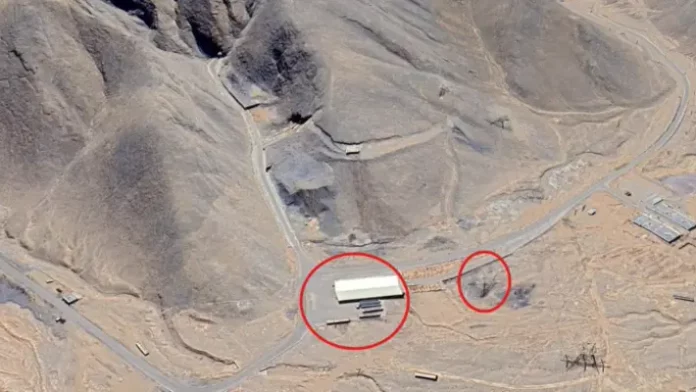
In her translation, she quotes him as saying: “The writer claims that Iran’s ‘missile cities’ (underground facilities) are highly dependent on electricity for operation, ventilation, control systems, and gates. Therefore, according to his argument, without electricity they are almost unusable. He adds that most of these facilities are located outside cities, and therefore have dedicated nearby electrical infrastructure, such as substations/transformers.”
It was further stated: “According to him, due to the need for cooling and heavy equipment, some of these systems are located above ground and cannot all be hidden inside the facility. The conclusion he is trying to convey is that if the external electrical infrastructure is damaged, the facilities themselves will become less effective or inoperable.”
It should be recalled that on Monday, U.S. President Donald Trump announced that Washington and Tehran had held what he described as “good and productive” talks over the past day, in an attempt to reach a “full and complete resolution of hostilities in the Middle East.” According to him, following developments and the nature of the contacts, he ordered a five-day delay of any U.S. military strike against power stations and energy infrastructure in Iran.
However, just yesterday (Tuesday), Iranian media reported that energy facilities in the cities of Isfahan and Khorramshahr were attacked in a series of separate strikes. According to a report by the Iranian news agency Fars, an administrative building and a gas pressure reduction station on Kaveh Street in Isfahan were hit earlier that day.
Iran’s energy minister later stated: “We produce electricity in a decentralized manner across the country. However, in countries along the Persian Gulf and in the Zionist regime, electricity production is centralized and therefore highly vulnerable. If power plants are hit, they will be rebuilt and repaired quickly.”
The IDF spokesperson reports that the Israeli Air Force has carried out more than 600 strike sorties against the ballistic missile array of the Iranian terrorist regime.
In the IDF Military Intelligence Directorate, there are indications of fear, absenteeism, and erosion among soldiers in the ballistic missile units of the Islamic Revolutionary Guard Corps.
Since the beginning of Operation “Roaring Lion,” the Israeli Air Force, the Operations Directorate, and Military Intelligence have been leading an ongoing effort to target components of the Iranian regime’s ballistic missile program, with the aim of reducing harm to the Israeli home front.
Over the past week, based on cross-referencing various intelligence sources, including sources within Iran,Military Intelligence has identified low morale, absenteeism, and attrition among soldiers in the IRGC’s ballistic missile units as a result of IDF strikes. In addition, operatives are reportedly afraid and refusing to arrive at launch sites due to the IDF’s systematic targeting.
Israeli Air Force aircraft continue to operate constantly to locate launchers and strike them in real time, some of which are already loaded and ready for launch.
The significant damage to the ballistic missile array is a central component of the broader effort to weaken and destabilize the Iranian regime.