

By Rabbi Yair Hoffman
To better understand the Haggadah this Pesach, and to better prepare for the Geulah – it is worthwhile to get a better understanding of the procedures and protocols of the Korban Pesach. For example, the Torah Mitzvah of eating maror is only when it is eaten together with the Korban Pesach itself. Nowadays, the Mitzvah is only derabbanan. Hopefully, this short guide will help enhance our understanding and appreciation of the Korban Pesach — may it return quickly in our days.
GROUPS
The Korban Pesach must only be brought in groups. Anyone within a three-day walk of Yerushalayim must join up with a group. The group is called a chavurah. One may not eat of the Korban Pesach if one was not previously a member of a group. The chavurah is generally made up of a family and perhaps more people, too. Any child who can eat a kezayis or more may be included in the group. Every chavurah must have at least one adult male who is an ezrach b’Yisrael.
The chavurah must consume the entire animal and each person must consume at least one kezayis. Thus, the maximum number in the chavurah is equal to the total number of kezeisim in the animal. Theoretically, a chavurah could be comprised of one person, but it cannot be consumed in the form of achilah gasah — excess eating.
Everyone in the chavurah must be tahor, ritually pure, in order to eat from it. If they are tamei, then they must partake of it on Pesach Sheini one month later. However, this is only when the majority of Klal Yisrael is tahor. If the majority of Klal Yisrael is tamei, then they partake of it on the first Pesach.
THE KORBAN
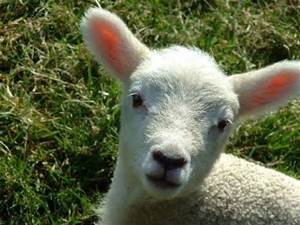
The lamb or kid goat must be male. It must be less than one year old. It may not have any blemishes. On the afternoon of Erev Pesach, a representative of each chavurah brings the lamb or kid goat to the Beis HaMikdash. This is all done after the Korban Tamid of the afternoon was brought, after the Ketores was burned, and after the Menorah lamps were fixed and trimmed. The chavurah representatives are then brought into the Azarah of the Beis HaMikdash, along with the lambs and kid goats.
THE AZARAH
The Azarah was a large courtyard in the Beis HaMikdash that contained the Mizbeiach and the Heichal, the three-part building where only kohanim may enter. The kohanim would get the knives for shechitah in the Ulam, although any Jew was permitted to shecht the Korban Pesach. The Korban must be slaughtered with the correct kavanah. It must be l’sheim Korban Pesach and for the consumption of that particular chavurah. If either intent is absent, the korban is invalid.
When the Azarah is filled with people, the gates of the Beis HaMikdash are then locked. There were a total of three shifts only, and each shift had to have at least 30 people. If there were only 50 people who came to slaughter the Korban Pesach, 30 enter the Azarah and slaughter their sacrificial animals. Ten leave and another ten enter. Then ten more leave and another ten enter.
THE HALLEL AND MUSIC
During the shechitah and the offering, the Leviim sing Hallel (Tehillim 113–118). Musical instruments are played as well by the kohanim or the leviim. The kohanim blow the shofar three times — a tekiyah, a teruah, and a tekiyah — each time that the Hallel is said. The Hallel is repeated continuously until the shechitahs stop, but if the shechitah stops, then the Hallel is stopped as well.
THE KOHANIM
The kohanim capture the blood of the lamb or kid goat in a special gold or silver container called a bozich. It has a round bottom so that the blood does not coagulate before it gets to the mizbeiach. The kohanim pass the container hand by hand, and the last kohen pours it upon the base of the mizbeiach. The kohen should pour it in a single action toward the mizbeiach’s base. The container is then passed back to be used for another Korban Pesach.
THE KORBAN CHAGIGAH
The Rabbis enacted that another Korban, the Korban Chagigah, be brought if the meat of the Korban Pesach would not be enough. There were a number of possible concerns that perhaps brought about this enactment. One was to ensure that everyone ate the Korban Pesach al hasovah — on a full stomach. The other concern was so that someone not be so hungry that he might break a bone of the Korban Pesach while trying to eat it. The Korban Chagigah was not brought if Erev Pesach fell on Shabbos or if the majority of Klal Yisroel was impure.
ROASTED
The Korban Pesach’s abdomen is cut open and the eimurim — the fatty portions within the abdomen — are removed. They are placed in a vessel and salted. They are then taken by a kohen to the mizbeiach to be burned. The animal is taken by the chavurah representative to the home where the chavurah will eat it. The hide of the lamb or goat is taken home by the owner as well.
The Korban Pesach must be roasted over an open fire back at home. It must be roasted in its entirety — not piece by piece. In order to do this, a non-metal spit is placed through the mouth and out the back end below the tail and the legs must be able to dangle so that the whole animal will be roasted. It can also be placed on a grate in a manner that the fire is roasting it and not the heat that emanates from the grate. Only one animal per spit is allowed.
TZLI EISH — THE PRECISE HALACHA OF ROASTING
The Torah’s requirement of tzli eish — roasting over open fire — is more exacting than it might appear. It is not sufficient to simply expose the animal to heat. The Korban Pesach may not be cooked in water or any other liquid, and it may not be roasted in a pot even without liquid. Even if only part of the animal touches a metal surface that conducts heat rather than the fire itself, that portion is considered as if it were cooked — mevushal — rather than roasted, and is problematic. This is why the spit must be non-metal — a wooden or pomegranate-branch spit is traditionally used — so that the heat reaching the meat comes exclusively from the open flame below. The precision of these laws underscores the Torah’s insistence that the Korban Pesach be distinctive in every aspect of its preparation.
WHEN, WHERE AND HOW THE KORBAN PESACH IS EATEN
The Korban Pesach is eaten at the very end of the Pesach Seder. It is eaten with matzah and maror. Hillel used to eat his Korban Pesach in a sandwich with the matzah wrapped around the maror rather than just eating them in a meal together.
The Korban Pesach must be eaten al hasovah — on a full stomach. It must be consumed in its entirety and only by the members of that particular chavurah. Everyone in the chavurah must eat a minimum of a kezayis. It may only be eaten within the boundaries of Yerushalayim. It may also only be eaten in a house or an area that is surrounded by mechitzos where the chavurah has gathered to eat it. It may also only be eaten when everyone in the chavurah is gathered together.
If any meat of the Korban Pesach is taken out of the house after they have begun to eat of it, it is rendered invalid, even if it is brought back in. No bone with meat on it may be broken during the eating or roasting.
If more than one group or chavurah is eating in the same house, a mechitzah must be placed when the korban is being consumed. They should turn away from facing other chavuros when partaking of the Korban Pesach. They may not share of each other’s Korban Pesach — even if one group has a lot left and the other group has very little left.
MEMBER OF TWO GROUPS
If through some error a person was a member of two chavuros, he may only eat of the first lamb that was slaughtered.
WOMEN AND THE KORBAN PESACH
Women are obligated in the Korban Pesach — a significant exception to the general rule that women are exempt from positive, time-bound mitzvos (mitzvas asei shehazman graman). The reason most commonly given is that women were equally part of the miracle of the Exodus from Egypt, and therefore share equally in the obligation to commemorate it. This principle — af hein hayu b’oso hanes — applies similarly to the four cups of wine, the matzah, and the maror on Seder night. The inclusion of women in the chavurah is therefore not merely permitted but reflects a fundamental halachic obligation.
DON’T FALL ASLEEP
If someone falls asleep while eating the Korban Pesach and then wakes up, he or she may no longer continue eating of it. Nothing is eaten after the Korban Pesach that evening, and Hallel is sung upon completion of the eating. There is also a prohibition of nossar, such that nothing may be left over of the Korban Pesach.
THE LONGING FOR ITS RETURN
Every year, as we recite l’shanah haba’ah b’Yerushalayim at the close of the Seder, we express a hope that is more than a formality. The Korban Pesach stands at the very heart of what the Seder was designed to be — not merely a meal with symbolic foods, but a sacred communal offering in which every Jew participated directly in the Divine service. The matzah, the maror, the afikomen that lingers on our palate — all of it was built around that central act. What we have today is a zecher, a memory and a shadow of something far greater. May we merit to see the Beis HaMikdash rebuilt, the avodah restored, and the Korban Pesach brought once again — not as a memory but as a living reality — bimheirah b’yameinu.
The author may be reached at [email protected]