
 Matzav
Jordan Border Route Effectively Shut to Private Vehicles Ahead of Pesach, Causing Chaos for Travelers
As the busy time leading into Pesach intensifies, new restrictions at Israel’s land crossings into Jordan have effectively shut down a commonly used travel route, leaving many in the frum community scrambling for clarity and alternative arrangements.
A message from the U.S. Embassy has added to the confusion, noting that officials have not clearly defined what qualifies as a “private vehicle.” With many travelers relying on hired drivers and transportation services to reach the crossings, the lack of a clear definition has created uncertainty about what is actually permitted. Travelers are being strongly advised to verify in advance that any service they book is authorized under the current rules.
At the same time, the Airports Authority has issued an official announcement detailing sweeping operational changes ahead of the Pesach travel surge. The measures, implemented in coordination with Home Front Command guidelines, are aimed at reducing crowding and maintaining safety at border crossings expected to see a sharp increase in traffic.
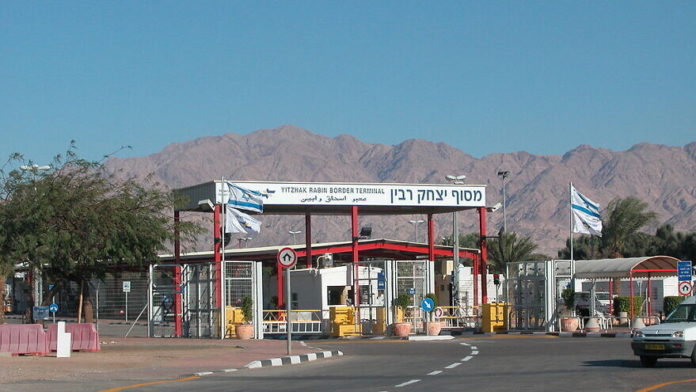
According to the directive, from March 30 through April 10, travel by private vehicle to Jordan via the Jordan River and Rabin crossings will not be permitted. This restriction effectively blocks a major route frequently used by yeshiva bochurim, seminary students, and families seeking to exit or enter Eretz Yisroel during peak travel periods.
In addition, authorities warn that due to strict limits on how many passengers can be inside the terminals at one time, travelers should expect long waits outside before being allowed entry. Proper preparation, including arriving early and planning for delays, is being strongly recommended.
Entry into the terminal itself will only be granted to those who have prepaid the crossing fee through the Milgam company website, meaning that anyone who arrives without prior payment will not be allowed to proceed.
For many, these changes have created significant concern. The ambiguity surrounding private transportation has left people unsure whether commonly used private drivers—often arranged informally or through community networks—are considered legal under the new guidelines.
Askonim emphasize that assumptions can lead to costly mistakes. Travelers who show up at the crossing with a driver that does not meet the undefined criteria risk being turned away entirely.
With Pesach approaching and thousands trying to travel, the situation remains fluid.
{Matzav.com}