
 Vos Iz Neias
Trump Issues New Threat to Iran’s Civilian Infrastructure if a Ceasefire Isn’t Reached ‘Shortly’
DUBAI, United Arab Emirates (AP) — U.S. President Donald Trump on Monday threatened widespread destruction of Iran’s energy resources and other vital infrastructure if a deal to end the war with Tehran is not reached soon.
In a social media post, Trump said “great progress is being made” in talks with Iran to end military operations but bristled that if a deal is not reached and and if the strategic Hormuz Strait is not immediately reopened, the U.S. would broaden its offensive by “completely obliterating all of their Electric Generating Plants, Oil Wells and Kharg Island (and possibly all desalinization plants!).”
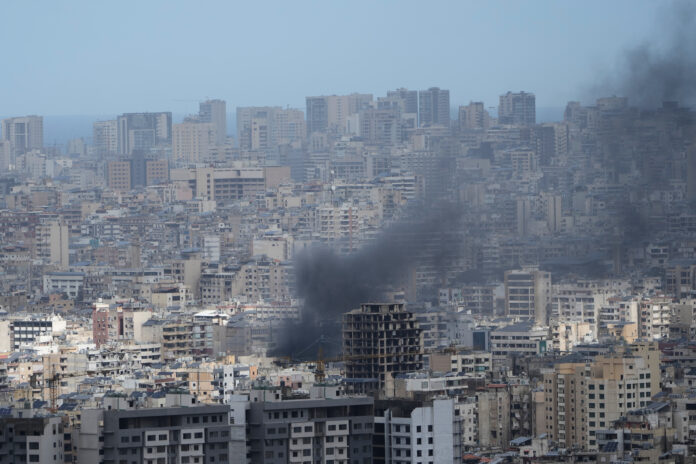
On the ground, the war showed no sign of letting up: Tehran struck a key water and electrical plant in Kuwait, and an oil refinery in Israel came under attack. Israel and the U.S. launched a new wave of strikes on Iran.
Trump’s social media post and earlier comments in an interview with the Financial Times that suggested American troops could seize the country’s Kharg Island export hub highlight how he has repeatedly said that talks with Iran are ongoing — and even going well — though Tehran denies negotiating directly. But at the same time, he has continually ramped up his threats, as thousands more Marines and other U.S. troops pour into the Middle East.
It remains unclear where the diplomatic effort facilitated by Pakistan stands. Iran’s attacks on its Gulf neighbors could add another element of uncertainty to any talks. The United Arab Emirates — which has long billed itself as a beacon of safety and stability in a volatile region — has been hard hit in the war, and increasingly is signaling it wants Iran disarmed in any ceasefire. Iran’s theocracy likely won’t accept that.
Trump says diplomacy is going well but suggests military expansion is possible
In the interview with the FT, Trump said his preference would be to “take the oil in Iran” — a move that would require seizing Kharg Island — the terminal through which nearly all of Iran’s oil exports pass.
“Maybe we take Kharg Island, maybe we don’t,” he continued. “We have a lot of options.”
Also in the interview, Trump said that the U.S. had about 3,000 targets that it would still like to hit in Iran, but adding: “A deal could be made fairly quickly.”
Trump told reporters aboard Air Force One late Sunday that the U.S. was negotiating “directly and indirectly” with Iran.
“We’re doing extremely well in that negotiation but you never know with Iran because we negotiate with them and then we always have to blow them up,” Trump said.
Twice during Trump’s second term, the U.S. has attacked Iran while in the middle of negotiations, once with the strikes on Feb. 28 that started the current war and also in June.
Iranian Foreign Ministry spokesman Esmail Baghaei on Monday acknowledged Tehran had been given a 15-point proposal from the Trump administration, but said there had been no direct negotiations with Washington so far.
Earlier, Iran’s parliament speaker, Mohammad Bagher Qalibaf, dismissed the talks in Pakistan as a cover to get more U.S. troops into the area. He said Iranian forces were “waiting for the arrival of American troops on the ground to set them on fire and punish their regional partners forever,” according to state media.
The U.S. already launched airstrikes once that targeted military positions on Kharg. Iran has threatened to launch its own ground invasion of Gulf Arab countries and mine the Persian Gulf if U.S. troops land on its territory.
To get an amphibious invasion force to Kharg would mean transiting the Strait of Hormuz and most of the Persian Gulf. Experts say that holding the island would also be a challenge, because in addition to its missiles and drones, it would be well within artillery range from the Iranian mainland.