
 FrumNews
Boro Park Demands Answers: The Homeless Shelter That No One Is Talking About
• Exclusive by FrumNews.com
For more than a year, Boro Park’s Jewish residents have been sounding the alarm over New York City’s plan to convert two apartment buildings in the Boro Park community — 5001 10th Ave and 1016 50th St — into a homeless shelter complex. Public reporting last year described hundreds of protesters, widespread neighborhood opposition, and a project expected to house 82 families with children at those two addresses.
On top of that, public records show a City contract for this project worth more than $52 million.
Now the matter is in court.
A formal filing submitted on March 27 places the controversy squarely before a judge and frames this not as a political disagreement, not as a neighborhood complaint, and not as a misunderstanding—but as a challenge to the legality of the process itself. The filing alleges that long-term rent-stabilized tenants were denied proper notice, that the project proceeded without critical procedural safeguards, and that the rights of existing residents were not merely overlooked, but violated.
That is where the story changes.
Because once a matter reaches this point, the question is no longer whether people are upset. The question becomes far more serious: How did a project of this magnitude move forward in the heart of a dense residential neighborhood while so many basic legal, safety, and transparency concerns remained unresolved?
This is not an attack on homeless families. It is an indictment of secrecy, bureaucratic indifference, and a governmental process that, according to the filing, trampled notice requirements, bypassed meaningful transparency, and left residents to discover the transformation of their own neighborhood after the machinery was already in motion.
And Boro Park has every right to ask: Who is representing us?
The question matters because Boro Park is not an area known for visible street encampments. The City’s own HOPE program conducts annual counts of unsheltered people in public spaces across New York City, and the broader public conversation around visible street homelessness is usually centered on other parts of the city, not Boro Park.
That is precisely why residents are asking a fair and obvious question: if this community is not the epicenter of the homelessness epidemic, if there are no public encampments defining daily life here—then why was this neighborhood selected for a shelter project of this scale, and why was it advanced in a manner that residents say deprived them of lawful notice and meaningful participation?
The filing itself is not timid. It alleges that there was no filed ALT-1 application reflecting a change of use for 5001 10th Avenue, that 1016 50th Street had no certificate of occupancy on file, that the temporary certificate tied to 5001 covered only the cellar and was set to expire on April 14, 2026, and that no valid Office of Temporary and Disability Assistance operating certificate appeared in publicly available records for the subject premises. It further alleges the absence of ULURP review, environmental review, and Fair Share analysis. Those are not technical footnotes. Those are the kinds of procedural and regulatory failures that go to the heart of whether the City followed the law before imposing a major siting decision on the Boro Park community.


The papers are also explicit about conditions inside the building. They describe eyewitness observations of bunk beds installed in units, including five bunk beds in a two-bedroom apartment and three bunk beds in a small studio apartment, and they argue that such occupancy configurations violate applicable standards, especially in a project intended for families with children. The memorandum of law also points to nearby schools and a surrounding area already under substantial strain.
That is why Boro Park residents are not speaking in abstractions. They are speaking about density, safety, habitability, lawful occupancy, community burden, and the rights of people who have lived in these buildings for decades. The filing reports that the five tenant-petitioners alone represent more than 221 combined years of residency. That is not a transient population. That is the human backbone of a neighborhood.
“Most of the tenants are working two jobs to get by, and now their building would be converted in part to a homeless shelter,” then-mayoral candidate Curtis Sliwa argued last year. “This would lead to unsafe conditions for residents and the homeless who need safer shelter spaces.”
And yet, despite the seriousness of the allegations, despite the visible concern from the community, and despite the fact that this issue has been public for over a year, too many of the people elected or expected to stand up for Boro Park were absent when it counted most.
That is the political story here.
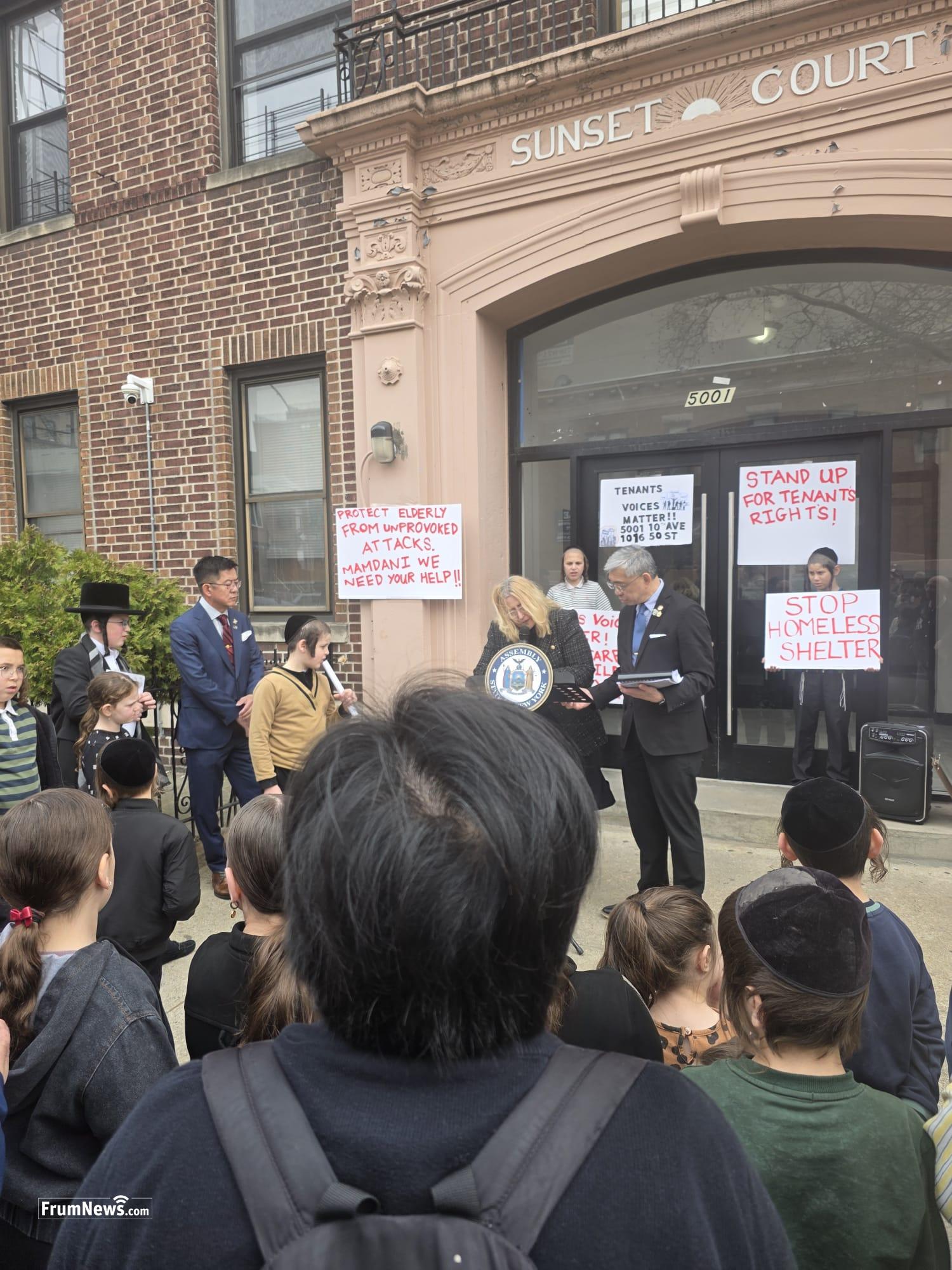
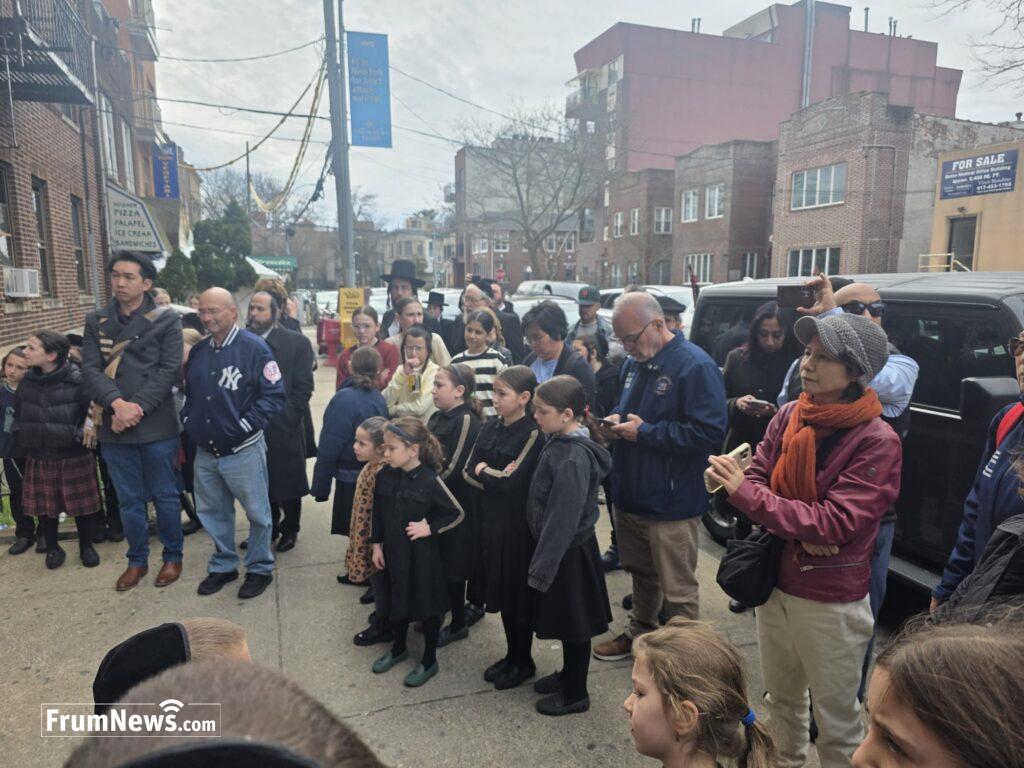
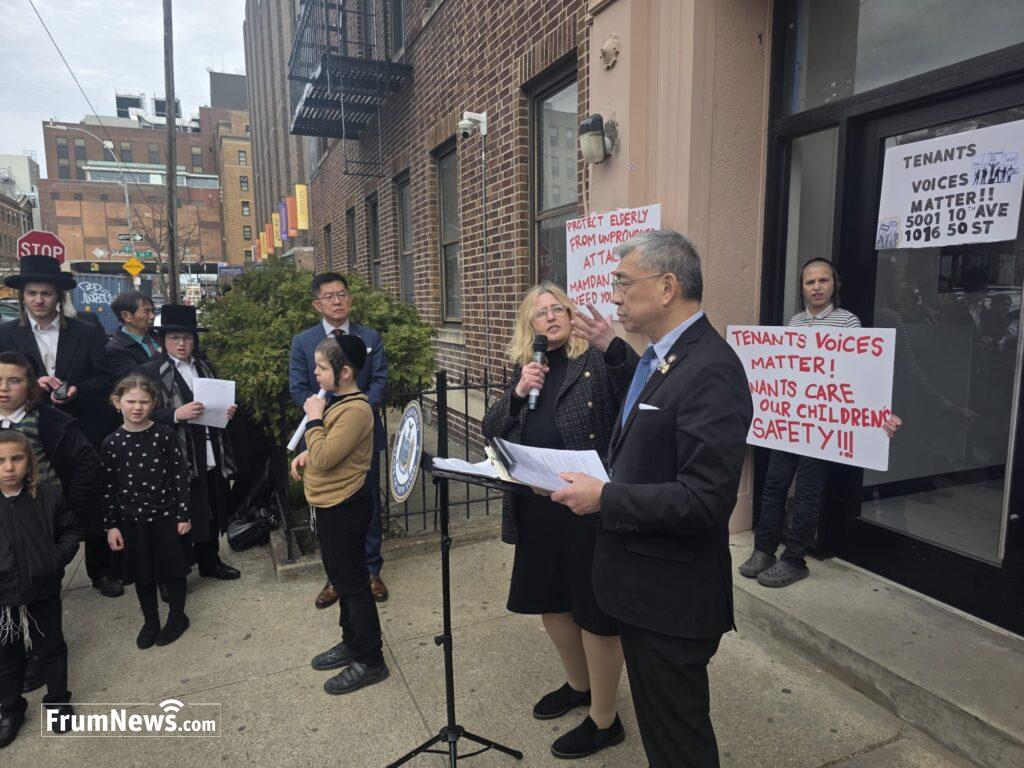
At the recent press conference and public push surrounding the filing, some people showed up and did the work. Assemblyman Lester Chang stood with his constituents and backed the community’s demand for answers. His own February 2025 statement had already reflected concerns about the proposed shelter, and the court filing now references a March 26, 2026, letter from him supporting judicial intervention and stating that no meaningful clarification regarding project approvals had been provided by the City.
“The residents of Boro Park deserve transparency, fairness and a say in decisions that impact their community,” said Chang. “This shelter proposal was pushed through without public input, raising serious concerns about safety, infrastructure and the overall well-being of our people.”
“We stand united in protecting the integrity of our neighborhood,” Chang added. “Our community is compassionate, but we will not allow reckless policies to jeopardize the safety of our children, businesses and institutions. There must be a better plan that considers the concerns of residents.”
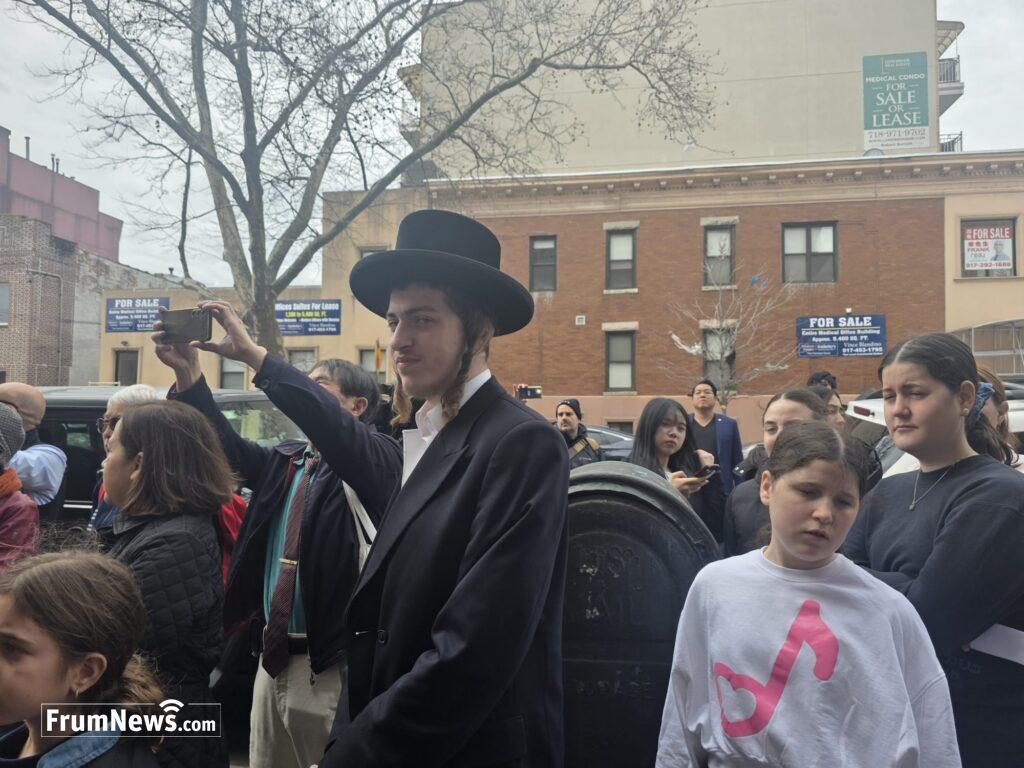
Respected community advocate Zack Lichtenstein spoke at the press conference, joining others in the neighborhood who refused to accept the usual scripted performance of “we are monitoring the situation” while the situation barrels forward unchecked. State Senator Steve Chan appeared in support of the community as well, even though this was not even his district. That matters. People notice who crosses district lines to stand with a community, and they also notice who cannot seem to cross the street.
And then there is attorney Abraham Hoshander.
At a time when many in positions of influence remained on the sidelines, Hoshander was the only one who stepped forward to assist with the court filing, spending days speaking directly with tenants and concerned community members, and working closely with Assemblyman Chang and his Chief of Staff, Soya Radin. The filing bears his name. The community is fortunate that someone was willing to assemble a serious legal challenge when so many others offered distance, caution, or silence. Boro Park needed action, and action is what he provided.
That contrast should not be softened.
Because this episode has exposed a harsh truth that voters would be wise to remember: representation is not a title, not a flyer, not a photo-op, and not a carefully worded promise to “look into it.” Representation is measured by who stands up when the community is under pressure, when legal issues are difficult, when the bureaucracy is opaque, and when speaking plainly may upset those in power.
On that standard, some passed, and some failed.
This is also where the oversight question becomes impossible to ignore. The New York City Public Advocate’s office explicitly describes itself as an ombudsman for city government, tasked with agency oversight and investigation of citizens’ complaints about city services. That makes it entirely fair for Boro Park residents to ask where the oversight was, where the scrutiny was, and why it should take desperate residents and a legal filing to force basic questions into the open.
The same question naturally extends to other oversight-oriented bodies. When residents allege secrecy, procedural evasion, unlawful conditions, and the sidelining of tenant rights, it should not be considered radical to expect review. It should be considered routine. That it does not feel routine is part of the problem.
Nor is this happening in a vacuum.



In Manhattan, an Upper East Side shelter dispute recently produced a temporary restraining order before later developments in that litigation.
In Crown Heights, the Jewish community is fighting against the proposed homeless shelter at Kingsbrook, which would tear down the historic Kingsbrook Shul—one of the oldest Shuls in Crown Heights—and box in the thriving community, as it did previously with the homeless shelter at the Brooklyn Armory.
The point is not that the cases are identical. They are not. The point is that courts are plainly being asked, in more than one community, to examine whether the City followed lawful procedures before advancing shelter projects with serious neighborhood impact.
Boro Park, therefore, is not hysterical, and it is not unreasonable. It is doing what communities are supposed to do when government ceases to inspire confidence: it is asking questions, demanding records, showing up publicly, and, now, going to court.
That should concern every New Yorker, even those with no connection to Boro Park.
Because if long-term tenants can be left in the dark while their residential buildings are allegedly repurposed under dubious conditions, if communities can be brushed aside while agencies proceed without giving convincing answers, and if elected officials can disappear at the moment their constituents need them most, then this is not only a Boro Park story. It is a New York story.
Still, Boro Park has every right to make it personal.
This neighborhood is close-knit, family-centered, heavily residential, and full of schools, houses of worship, local businesses, bus traffic, and daily pedestrian life. It is not a dumping ground for decisions made elsewhere. It is not a place where the community should be expected to accept sweeping changes first and explanations later. And it is certainly not a place where residents should be asked to trust a process that, according to the filing, failed at nearly every stage where transparency and legality were required.
So once again, the question stands.
Who is representing us?
Who listened when residents first raised concerns?
Who demanded answers before the situation reached a courtroom?
Who showed up when it mattered?
Who did the work?
Who stood with the tenants whose rights, according to the filing, were violated?
And who was nowhere to be found?
Boro Park deserves answers.
Boro Park deserves lawful process.
Boro Park deserves real representation.
And after this, voters should know exactly who offered it, and who did not.