
 Vos Iz Neias
Leaked Document Reveals: Iran Used Civilian Infrastructure For Missile Launch Sites
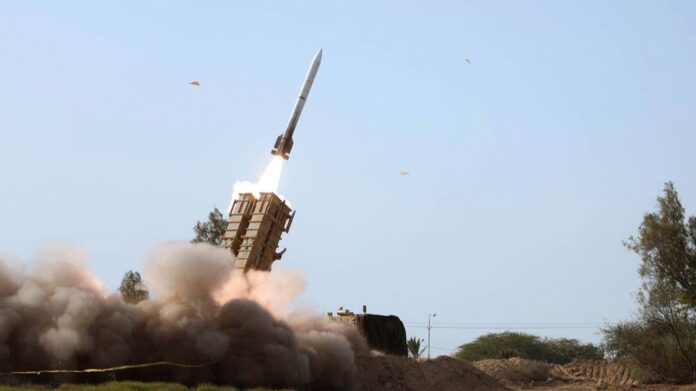
JERUSALEM (VINnews) — According to a report by the London-based news outlet Iran International, a “top secret” document of the Islamic Revolutionary Guard Corps (IRGC), obtained by the hacker group Edalat-e Ali, outlines how civilian infrastructure, public facilities, and nature areas are integrated into the IRGC’s missile system.
According to the report, the 33-page document was compiled by the intelligence and operations division of the IRGC missile command and is intended to guide missile units on the “identification, maintenance, and use” of launch positions.
Based on the document’s contents, the IRGC authorized the use of urban infrastructure such as water, electricity, gas, and telephone systems, as well as various civilian facilities, including hospitals, restaurants, garages, and service centers, as part of the support and deployment network for missile units. The report claims the document reflects a multi-layered policy designed to enable a dispersed, networked, and cross-sector deployment of operational systems.
The document also reportedly permits the use of natural areas, including forests, wooded regions, hills, and mountains, for positioning forces and launch sites. The report linked this to recent criticism surrounding the exposure of a “missile city” in a mountainous complex near Yazd, which allegedly raised concerns about environmental and water resource damage. The document also mentions a “dispersion” policy involving the use of elevated terrain and vegetation cover for attacks.
According to the report, the document also allows the use of sports and industrial facilities such as halls, workshops, warehouses, and hangars as part of what it defines as “artificial dispersion” or “cover dispersion.” Iran International claimed that during the current conflict, footage has emerged showing strikes on such facilities, which were later alleged to have been used by the IRGC for operational purposes. It further reported that, according to its estimates, Israeli and U.S. strikes on some of these sites resulted in the deaths of hundreds of IRGC personnel.
Another section of the document deals with “emergency and urgent” situations, in which “third-tier” launch positions are designated for rapid use. According to the report, this policy justifies rapid deployment even in civilian areas and emphasizes the need to position support and rescue vehicles near launch sites. The document also stresses the continuous collection and updating of a “database” of positions and operational routes, alongside the use of civilian infrastructure and services for operational support.
The report further claims that, alongside the emphasis on survivability and concealment, the document reveals inherent concerns about information leaks and operational exposure. Forces are instructed to employ “deception, cover, and normalization methods,” restrict access to launch sites, and report any leaks immediately. However, according to Iran International, footage from the fighting has shown instances where the required distance between launch positions and populated areas was not maintained, and there were reports of missile falls posing risks to civilians—for example, in a mountainous park near Yazd and another position in Hamadan.
The document also addresses the use of main and secondary roads, both on and alongside them, in “urgent” situations even without prior registration in launcher databases. According to the report, it does not detail specific measures to protect civilian lives in such areas. It also notes that the document’s introduction acknowledges the capability of Iran’s adversaries to detect, track, and destroy missile systems, and that several sections reflect caution and even internal distrust. For example, a directive is issued not to assign engineering tasks to a single driver and a recommendation given to avoid employing temporary or short-term drivers for sensitive missions.
Additionally, the report noted that according to Reuters, which cited five U.S. intelligence officials last week, Washington has concluded that roughly one-third of the Islamic Republic’s missile stockpile has been destroyed so far. Against this backdrop, Iran International argues that the document reflects a prioritization of urgency, survivability, and dispersion over precision and operational efficiency, and that the dispersion policy itself may harm coordination and real-time control, even if it is intended to improve the system’s survivability.