
 Matzav
How Seriously Wounded US Airman Climbed Mountain, Hid In Crevice And Dodged Iranian Bounty-Hunters For 36 Hours
A U.S. Air Force colonel who was shot down over Iran managed to survive severe injuries and evade capture for more than a day, trekking up a steep mountain and hiding while enemy forces searched for him before a high-risk rescue operation brought him to safety.
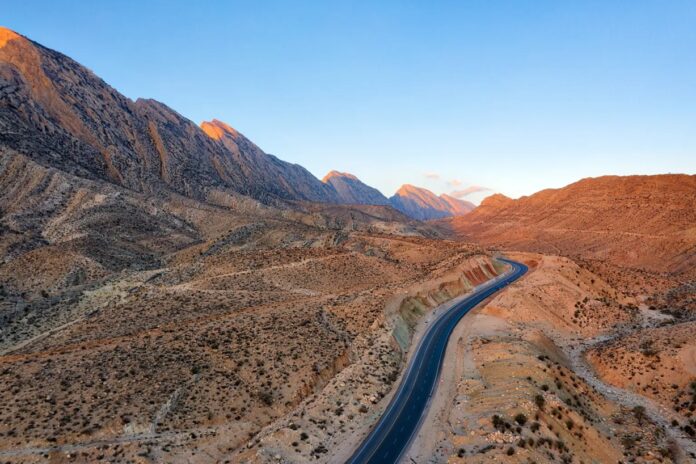
The officer, whose identity has not been released, endured roughly 36 hours in the rugged Zagros Mountains after his F-15E was downed Friday in hostile territory, remaining concealed while Iranian forces and bounty hunters combed the area.
Despite being wounded, the airman climbed approximately 7,000 feet—more than 1.3 miles in elevation—and took refuge in a narrow crevice, avoiding detection even as search efforts intensified around him, according to The New York Times.
“Thousands of these savages were hunting him down,” President Trump told Axios of the harrowing situation.
Armed with only a handgun, the officer waited for help while transmitting an emergency signal from his position early Sunday, CBS News reported.
Initially, U.S. officials feared the signal might have been part of a trap designed to draw American forces into danger.
Before being rescued, the colonel transmitted a brief and unusual message over the radio, according to a U.S. defense official: “God is good.”
“What he said on the radio sounded like something a Muslim would say,” Trump told Axios, referencing the Islamic phrase “Allahu Akbar,” or “God is Great.”
Defense Secretary Pete Hegseth later echoed the same words, posting “God is good” on X following the successful recovery.
The pilot of the aircraft had already been extracted shortly after the jet was brought down, leaving the weapons systems officer alone behind enemy lines.
While the full extent of the colonel’s injuries has not been publicly detailed, officials have described them as serious.
Using intelligence resources, including CIA assistance, U.S. forces were able to pinpoint the officer’s exact location and verify that he was still alive, according to The New York Times.
As part of the effort, the CIA reportedly executed a deception plan by circulating false information indicating that the airman had already been rescued and was being transported out of Iran.
When the rescue operation was launched, it involved a large daytime deployment of aircraft, with MQ-9 Reaper drones establishing a defensive perimeter and targeting hostile forces that approached within two miles of the officer’s position, according to The Jerusalem Post.
Roughly 100 special operations personnel took part in the mission, led by SEAL Team 6, with additional support from Delta Force and Army Rangers, the Times reported.
During the operation, U.S. commandos also clashed with local tribal fighters in the area while securing the extraction.
The mission encountered complications when two aircraft positioned near Isfahan became immobilized, forcing additional planes to be sent in to evacuate personnel and destroy the stranded equipment to prevent it from being captured.
After being rescued, the injured officer was flown to Kuwait for further medical treatment.
President Trump, who publicly confirmed the successful mission, said he will hold a briefing with military officials at the White House on Monday afternoon to discuss the operation.