
 Matzav
Israel Eliminates IRGC Intelligence Chief, Strikes Major Iranian Petrochemical Facility
Israeli forces carried out a sweeping series of airstrikes across Iran on Monday, killing two senior Islamic Revolutionary Guard Corps officials and targeting key military and economic infrastructure, even as diplomatic efforts to secure a ceasefire continued.
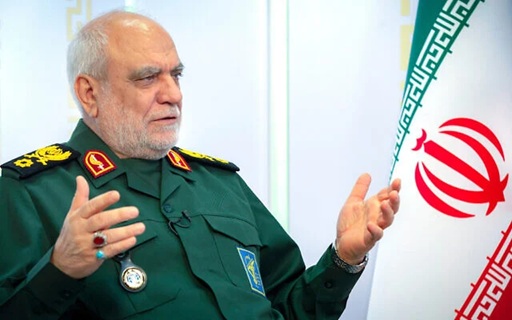
Among those killed was Majid Khademi, a high-ranking IRGC intelligence official who had recently assumed leadership of both the Intelligence Protection Organization and the IRGC’s Intelligence Organization after his predecessor was eliminated in last year’s fighting.
In a separate operation in Tehran, another senior figure, Yazdan Mir — also known as Sardar Bagheri or Asghar Bagheri — was killed. He led Unit 840, a covert division within the IRGC’s Quds Force known for overseas operations.
The Israel Defense Forces described Khademi as “one of the IRGC’s most senior commanders and had accumulated extensive military and security experience over many years.”
“In his role, he was responsible for gathering intelligence and helping formulate a comprehensive situational assessment for the regime’s senior leadership” during the war, the military said.
According to the IDF, Khademi also played a central role in directing hostile activities abroad. He “worked to advance terror activities against the State of Israel and against Jewish targets worldwide. He also took part in attempts to target American individuals and was responsible for monitoring Iranian civilians as part of the regime’s suppression of internal protests,” the IDF added.
Regarding Bagheri, the military said he occupied several senior posts within the Quds Force and was deeply involved in operations targeting Israeli and American interests globally.
The IDF noted that Unit 840 has been linked to assassination attempts and abductions beyond Iran’s borders, including operations involving Israeli nationals.
Bagheri, according to the military, “coordinated and promoted terror activities against the State of Israel, including operations carried out within the territory of the State of Israel, Syria, and Lebanon.”
The IDF further stated that under his leadership, the unit “advanced operations aimed at harming IDF troops operating in the buffer zone in Syria, using Syrian operatives who had previously served in Assad’s army.”
Officials also said he played a role in efforts to smuggle weapons into Israel and areas of the West Bank.
Defense Minister Yisroel Katz, who was briefed during a high-level security assessment with IDF Chief of Staff Lt. Gen. Eyal Zamir, warned that Israel would continue pursuing its adversaries. “Iran’s leaders live with a sense of persecution. We will continue to hunt them down one by one.”
Prime Minister Bibi Netanyahu also praised the operations, highlighting the elimination of Khademi and Bagheri.
He described Bagheri as “responsible for attacks against Jews and Israelis around the world.”
“Whoever acts to murder our citizens, whoever directs terrorism against Israel, whoever builds the Iranian axis of evil — their blood is on their own head. We are acting with power and determination; we will reach anyone who seeks to harm us,” Netanyahu said.
“We will continue with full force, on all fronts, until the threat is removed and all the objectives of the war are achieved.”
In addition to targeting individuals, Israeli forces struck major components of Iran’s energy sector, including the South Pars petrochemical facility in Asaluyeh, one of the country’s most significant industrial sites.
Katz said the IDF “has just powerfully struck the largest petrochemical facility in Iran, located in Asaluyeh, a central target responsible for about 50 percent of the country’s petrochemical production, following last week’s strike on the second main facility.”
He added that the two facilities, “which together are responsible for about 85% of Iran’s petrochemical exports, have been taken out of use and are not functioning.”
“This is a severe economic blow amounting to tens of billions of dollars to the Iranian regime,” he said.
According to Katz, Iran’s petrochemical sector plays a crucial role in funding the IRGC and its military activities.
He said the military had been instructed to intensify strikes on key infrastructure. “continue striking with full force the national infrastructure of the Iranian terror regime.”
“The Iranian terror regime will discover that continued aggression against Israel and the cowardly and criminal firing at Israeli civilians will lead to a deepening of the economic and strategic damage it pays and to the collapse of its capabilities,” Katz said.
Iranian media later reported that another petrochemical complex, in Marvdasht, was also struck.
“A few minutes ago, the Marvdasht Petrochemical Complex was targeted by an American-Zionist enemy attack,” the Fars news agency reported, noting that a fire broke out but was later contained, with no casualties reported.
Israel did not immediately respond to that report.
The Israeli Air Force also targeted multiple airfields in and around Tehran, stating they were being used by the Quds Force.
According to the military, the strikes hit runways, control towers, and a drone production facility, while also destroying numerous Iranian aircraft.
Fighter jets carried out attacks on planes, helicopters, and infrastructure “used by the regime’s armed forces for military purposes” at Tehran’s Mehrabad Airport and two additional nearby airstrips.
The strikes came as Iran continued launching ballistic missiles toward Israel, some of which have caused casualties in recent days.
Meanwhile, Iranian sources reported that a residential building southwest of Tehran was hit, resulting in at least 13 fatalities, though the intended target was unclear.
Separate reports indicated that a strike at Sharif University of Technology caused a temporary gas disruption in parts of the capital.
Iranian state media said the attack damaged a gas regulation facility on campus, causing a leak but no fire. “The attack did not result in a fire, and in less than half an hour, the gas leak was completely fixed,” state broadcaster IRIB said.
The university, which has faced international sanctions in the past over its links to Iran’s military programs, was largely empty at the time due to the ongoing conflict.
Reports also indicated that the strike damaged a data center at the site, including facilities linked to artificial intelligence systems.
Footage aired by Iranian outlets showed extensive destruction at the location, with debris scattered and structures heavily damaged.