
 Matzav
“We Waited for Death — Then Hashem Saved Us”: Freed Hostage Shares Powerful Story of Faith and Survival
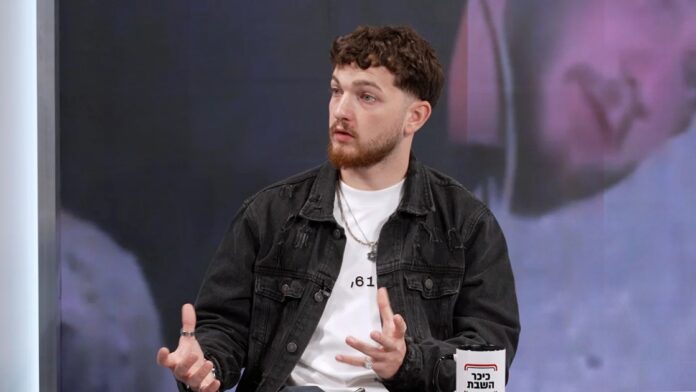
More than two years after emerging from the darkness of captivity into freedom, Bar Kuperstein spoke publicly in an emotional interview with Kikar HaShabbat about his time in Hamas captivity, describing how faith sustained him through the darkest moments.
Kuperstein recounts two and a half years filled with fear, uncertainty, and suffering—but says one thing never left him: his belief in Hashem. In the interview, he reflects on the horrors of Simchas Torah, the long months inside terror tunnels in Gaza, and the small moments he experienced as open miracles.
He describes how, even in the lowest and most desperate conditions, he managed to hold on to faith and find strength, hope, and light.
At the beginning of the interview, he shares: “In the past two years, I didn’t have the ability to celebrate a real Pesach. The other holidays—Chanukah or Rosh Hashanah—we were able to mark in some way.
“When we went to get food, the terrorists had a television in their room. On Chanukah we saw the prime minister lighting the third candle, so we knew it was Chanukah. They showed a clip from a broadcast in Israel and we saw Sukkos. On Chanukah we took a flashlight and would sing songs.”
Kuperstein then returns to the morning of Simchas Torah, when he was serving as a deputy security officer at the Nova festival. He describes how he helped save dozens of lives before being captured by Hamas terrorists and taken into Gaza.
“There was total chaos there,” he recalls. “From the moment the rockets started, we told people to disperse, and slowly you see that the rockets don’t stop. Then there was a huge traffic jam in the parking lot. I took my car to see what was causing it, and I saw a police vehicle blocking the road, warning of terrorist gunfire—and then I understood there was a terrorist infiltration.
“We continued evacuating vehicles, and after about fifteen minutes, cars came back under gunfire, and we realized there were terrorists there too. Wounded people were arriving, there were terrorist squads—you understand you’re in a war zone. We reached a point where we were trapped in a death zone, north and south, everything blocked. I went to a police officer and told him we had to open an emergency route. I told him to drive and open it, and he trusted me to stay behind. When I returned from captivity, a police officer told me that action saved more than 2,000 people.”
He describes the moment of his abduction: “I saw the terrorists’ pickup trucks arriving and I understood… it was like a full army, military vehicles. I didn’t know where it came from. At that moment I understood I couldn’t save anyone else and had to save myself. I felt like someone was holding my hand and guiding me where to go—Hashem directed me. Along the way I was shouting at people to get out of their cars; people were frozen in shock. I couldn’t stop at every car because they were shooting at me in insane quantities.
“I hid in bushes and started crawling because they were shooting at us. Eventually they reached us and began slaughtering everyone. I remember we all said ‘Shema Yisrael’ together, everyone who was with me in the bushes—and we were all saved, baruch Hashem. The fact that we were taken captive was itself the salvation. Everyone ahead of us—we heard screams, then bursts of gunfire, and silence. They were massacred. We said Shema Yisrael and waited for the bullet that would kill you.
“After a month in captivity, when we were allowed to talk, we shared those moments, and it turned out that all of us said ‘Shema Yisrael.’ Apparently, that’s what truly saved us.”
Kuperstein describes the journey into Gaza: “The entire way I’m praying to Hashem, saying ‘Shema Yisrael’ and chapters of Tehillim—everything I remember. I’m begging not to die there. I know what the ‘Hannibal Protocol’ is in the army—you see terrorists and you shoot—I kept praying that wouldn’t happen.”
He recalls a chilling exchange with a terrorist: “One of the terrorists who spoke English came to me and asked, ‘Where is your God now?’ That shook me. I sat with that question for hours and couldn’t answer.
“Then I said to myself—if I have a question about Hashem, who do I ask? My mother. I asked myself what she would say, and I answered: Hashem is testing me, and I’m in a test, and I have to pass it. That’s what kept me going.”
In the early weeks, he was moved between different houses across Gaza: “We were walking through the streets, our faces uncovered, usually in the dark because there’s no street lighting. We moved like that between several houses.”
He shares a moment he describes as a clear miracle: “One night, when they were transferring us, something didn’t feel right. We walked for about an hour, and the whole time I was just praying—‘Please let everything be okay.’ We felt something was wrong. I asked Hashem to bring us somewhere safe.
“We reached a place called ‘Beit HaBasta,’ but the guards didn’t arrive, so they took us back to the previous house. When we returned, the terrorist told me, ‘God loves you.’ I asked what happened, and he said, ‘You remember the house you were supposed to go to? It was bombed exactly where you were supposed to be.’”
“I said then—what just happened to me is not random. It’s Hashem. It’s divine providence. It’s a message that Hashem is with me and telling me I will stay alive.”
He describes his constant conversations with Hashem deep inside the tunnels: “I would talk to Him freely, because I didn’t know many prayers. I knew ‘Shema Yisrael,’ I knew some Tehillim. I told myself I would pray in my own way—I would just speak to Hashem, because I know you can do that.
“Every time I would ask Hashem for small things—just a bit more hope. I wouldn’t say ‘get me out of here now.’ If Hashem put me here, then I’m in a test and I need to be here. I would daven constantly—Shacharis, Modeh Ani, whatever I remembered. And at the end I would ask, ‘Give me some hope, give me a little more food, give me strength to walk and ask the terrorists for something.’”
He adds: “When I would go ask the terrorists for something, it didn’t always end with a ‘no.’ Sometimes it ended with threats or even beatings. So I would ask Hashem—after a period with no food—give me the strength to ask for something to eat. And then I went to them, didn’t even ask, and they just gave me food. If that’s not Hashem, then what is? It never happened that they just gave us food on their own.”
He also recounts another moment of divine encouragement: “I asked Hashem for a sign, and suddenly I heard my mother on the radio—on my birthday. If that’s not Hashem, then what is?”
Despite watching others being released in earlier deals, including women, children, and his fellow captive Ohad Ben Ami, he says he never felt resentment: “No, not at all. I always knew my time would come. Now it’s Ohad’s time. I’m happy for him, that he’s going back to his children and parents. Now it’s his time to be home. I’ll manage.”
“I knew my time would come,” he continues. “Hashem protected me, saved me again and again. If all this happened, there’s no chance I’m not getting out of here. I always believed I would leave captivity—and baruch Hashem, I’m here.”
He recalls an especially moving Shabbos in the tunnels: “Wow, I remember one Shabbos I’ll never forget. It was me, Elkana, and Ohad, and then they added Yosef Chaim Ohana, Segev, and Maxim. That Shabbos we were six people in a tunnel, and we sang ‘Shalom Aleichem’ together. It felt like the whole tunnel was shaking. We had tears of joy. We felt Hashem sent angels to surround us. It was incredibly emotional, and from then on, every Shabbos we made Kiddush.”
He also describes spiritual growth among the captives: “It was amazing. I came from a traditional home, Elkana also knew a lot, and those who didn’t know had a strong connection—they said, ‘Teach us.’ Ohad, who knew accounting, would say, ‘Come, let’s learn Torah.’ They wanted more—it was very moving. We had the privilege to give them that gift.”
On the constant bombings, he says: “Of course—every day, every hour, there are explosions. Everything shakes, sand falls on you. You’re underground—one bomb in the wrong place and everything collapses and you’re buried forever. You’re always afraid. But every time there was an explosion, you immediately say ‘Shema Yisrael,’ Tehillim—even ‘Shir LaMa’alos.’ That’s what kept us going—this faith.”
He describes the days leading up to his release: “We knew about the deal a few days before. They called us and said, ‘Sit and watch TV.’ They didn’t say anything, and then we saw the government approved the deal and families celebrating. We looked at each other and said, ‘Okay, let’s see if it actually happens.’ How many times had we seen this before? We didn’t want to be disappointed again. If it happens, it happens—we’ll be happy at home.”
Finally, he describes the moment of freedom: “It was crazy. We came out of the tunnel—they open the shaft, and suddenly you feel air on your face after almost two years underground. There’s no air in the tunnel, and suddenly you feel wind and see the sun. We saw massive destruction, but then you hear children and birds—you hear life. We were in a pit, and suddenly you hear a truck horn—these are things we hadn’t heard for two years.”
He also recalls the moment he was transferred to Israeli forces: “Of course I remember. We were with the Red Cross, we reached the line, and suddenly you see an armored vehicle from the Nachal Brigade—and I served in Nachal. That was closure for me. The forces escorted us, and suddenly you see an IDF base on a hill, everyone waving, and you say, ‘I survived this. I won.’”