
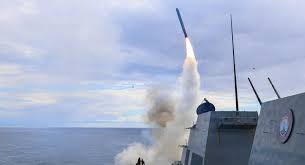

The Pentagon is preparing a request for approximately $4.5 billion in its fiscal 2027 budget to rebuild depleted Tomahawk cruise missile stockpiles, highlighting growing pressure on U.S. military resources following sustained global operations.
According to a Bloomberg Government report, the planned funding request follows extensive use of the long-range, sea-launched missiles in recent conflicts, including the war with Iran, where hundreds were reportedly deployed.
The increased usage has sparked concern within defense circles about maintaining adequate readiness for future threats.
Tomahawk missiles continue to serve as a key component of U.S. strike capabilities, enabling naval forces to carry out precise attacks from great distances.
With each missile costing an estimated $2 million, restoring inventory levels represents a major financial commitment.
Defense officials say the proposal is part of a larger effort to rebuild the nation’s weapons reserves and reinforce the defense industrial base after years of limited investment and rising global tensions.
In addition to operations involving Iran, ongoing U.S. military commitments worldwide—including support for allies and deterrence against rivals such as China and Russia—have further strained available munitions.
To address the issue, the Pentagon is advocating for multiyear purchasing agreements with defense contractors to boost production capacity and avoid future shortages.
Officials warn that without consistent funding, the United States risks falling behind in an era of high-intensity warfare, where advanced weapons are used at a rapid pace.
The proposed 2027 defense budget is expected to include not only funding for missile replenishment but also increased investment in aircraft, missile defense systems, and other essential military capabilities.
The shift reflects a growing acknowledgment that modern warfare demands larger reserves of advanced weaponry.
Supporters of increased defense spending argue that such measures are overdue after years of what they describe as insufficient prioritization under previous administrations, emphasizing that rebuilding stockpiles and strengthening production capacity are critical to maintaining U.S. military superiority and deterring adversaries.