
 Matzav
Kidnapped U.S. Journalist Freed in Baghdad as Militia Claims Responsibility
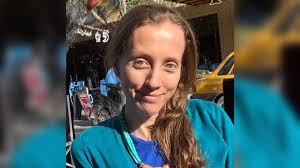
American journalist Shelly Kittleson, who was abducted from a street in Baghdad last week, has been released, according to an Iraqi official familiar with the situation.
The official, speaking to the Associated Press on condition of anonymity due to restrictions on public comment, said Kittleson was freed in the afternoon. While her current location was not disclosed, the official confirmed she had been held somewhere in Baghdad prior to her release.
Earlier in the day, the Iran-backed Iraqi militia Kataib Hezbollah issued a statement saying it had decided to release Kittleson, who had been kidnapped on March 31.
The group said the move was made “in appreciation of the patriotic stances of the outgoing prime minister”, Mohammed Shia al-Sudani, without elaborating further. It added: “This initiative will not be repeated in the future.”
The militia also imposed a condition, stating that Kittleson must “leave the country immediately” after being freed.
The U.S. State Department did not immediately respond to requests for comment.
Until issuing the statement, Kataib Hezbollah had not publicly acknowledged involvement in the abduction, although both U.S. and Iraqi officials had previously indicated the group was likely responsible.
According to two militia officials who spoke anonymously to the Associated Press, the release was part of an arrangement that would see several Kataib Hezbollah members previously detained by Iraqi authorities set free.
Kittleson, 49, is a freelance reporter who has spent years working across the Middle East, including in Iraq and Syria, and had previously been based in Rome. Like many independent journalists, she operated without the security resources typically available to staff reporters at major news organizations.
She had recently returned to Iraq before her kidnapping. U.S. officials said they had warned her multiple times about potential threats, but she chose to remain in the country.
Iraqi authorities reported that the abduction involved two vehicles. One of the cars was involved in a crash while being pursued near the town of al-Haswa in Babil province, southwest of Baghdad. Kittleson was then moved into a second vehicle that escaped.
Earlier on Tuesday, Iraqi officials said efforts to secure her release had encountered setbacks.
One security official said a representative of the Popular Mobilization Forces—a coalition of Iran-aligned militias formally linked to the Iraqi military—had been assigned to negotiate with the kidnappers, but faced difficulties establishing communication with Kataib Hezbollah’s leadership.
Kataib Hezbollah has been linked in the past to the abduction of foreign nationals.
Elizabeth Tsurkov, a graduate student at Princeton University with Israeli and Russian citizenship, went missing in Baghdad in 2023. After being freed and transferred to U.S. authorities in September 2025, she said she had been held by Kataib Hezbollah, though the group never formally claimed responsibility.
Iran-backed militias operating in Iraq have also carried out repeated attacks on U.S. installations in the country since the outbreak of the U.S.-Israel conflict with Iran.