
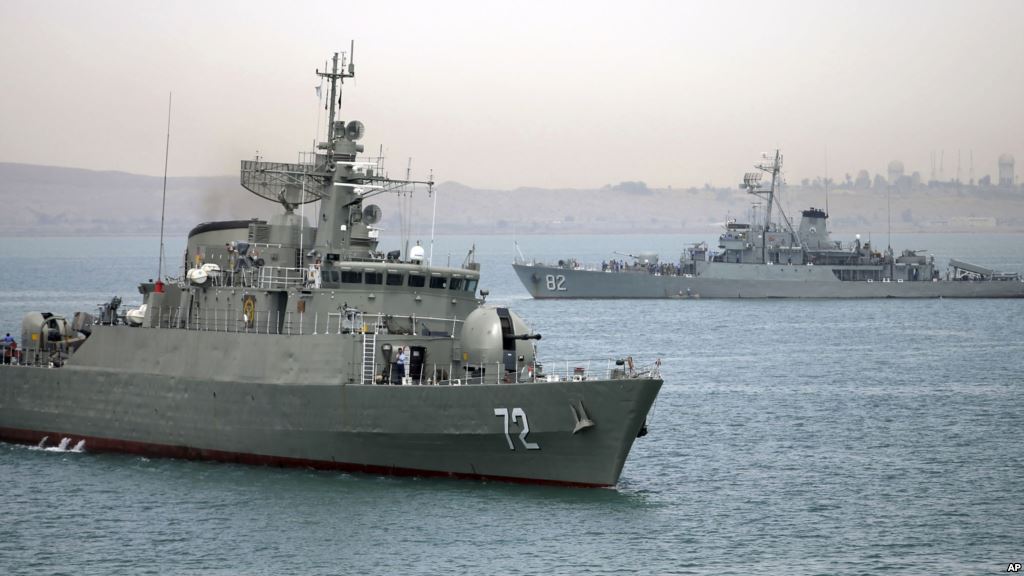

Fresh doubts about the durability of the newly arranged ceasefire have emerged as Iran signals it does not intend to fully comply with the agreement, heightening concerns over stability in one of the world’s most vital energy routes.
The truce, which took effect Wednesday after talks spearheaded by President Donald Trump, was meant to calm weeks of hostilities and allow maritime traffic through the Strait of Hormuz to return to normal.
Trump had underscored that the deal would restore “free trade across the Strait of Hormuz,” presenting it as a move to stabilize international supply chains.
Yet as the ceasefire went into effect, Tehran appeared to be adjusting its terms to suit its own interests rather than honoring the intent of the agreement.
Officials involved in mediation efforts, along with shipping experts, say Iran has made clear it will only permit a restricted number of vessels to transit the strait each day.
On Wednesday, just 12 cargo tankers were allowed to pass through the narrow waterway.
That figure stands in stark contrast to conditions before the conflict, when more than 100 ships could move through the corridor daily without obstruction.
These limitations have triggered serious concern in global energy markets, which rely heavily on uninterrupted shipments of oil and liquefied natural gas through the region.
Adding to the tension, Iran is reportedly imposing charges on ships seeking passage, effectively converting the international waterway into a tightly controlled and revenue-generating bottleneck.
Those fees, which can climb as high as $2 million for large oil carriers, are reportedly arranged ahead of time and paid using alternative methods such as Chinese yuan or cryptocurrency.
International observers have criticized the move, arguing that it violates long-established maritime rules that guarantee freedom of navigation.
Under widely accepted international conventions governing waterways, nations are not allowed to levy fees for transit through natural chokepoints like the Strait of Hormuz.
As a result, Iran’s conduct is being viewed not only as a violation of the ceasefire but also as a broader challenge to global legal standards.
Despite public messaging suggesting a willingness to pursue calm, Tehran appears to be using the pause in fighting to deepen its control over the strait.
Iran’s Revolutionary Guard has assumed a leading role in regulating maritime traffic, requiring ships to coordinate their passage directly with its naval units.
Broadcast warnings directed at vessels in the area have reinforced the risks, with Iranian forces cautioning that ships attempting to pass without approval could be targeted.
Only a small number of vessels made it through on the first full day of the ceasefire, marking one of the lowest levels of traffic seen in recent weeks.
The reduced volume has effectively prolonged the disruption caused by the conflict, preventing a meaningful return to normal commercial activity.
Although the ceasefire remains in effect on paper, conditions on the ground indicate that free navigation is still severely limited, with Iran dictating access and pricing.
Oil-producing nations in the Gulf have voiced strong objections to any arrangement that requires payments to Tehran, warning that such a system could establish a dangerous precedent.
They argue that allowing these practices would legitimize economic pressure tactics and erode the rules-based global order.
Analysts say Iran’s approach reflects an evolving strategy, using its geographic position to exert influence rather than relying solely on military force.
By controlling the strait, Tehran gains immediate leverage over global markets, particularly the pricing and flow of oil.
This influence is significant given that roughly 20% of the world’s oil supply passes through the narrow channel.
Even limited disruptions can cause sharp price swings, with far-reaching consequences for economies worldwide.
Shipping firms are proceeding cautiously, wary of resuming normal operations amid uncertainty about enforcement and safety conditions.
Many companies are holding vessels back, waiting for clearer direction before committing to regular transit schedules.
U.S. officials have acknowledged the complications arising from Iran’s actions, with Secretary of State Marco Rubio warning that tolls would be both illegal and dangerous.
He stressed that stopping such measures would likely require a coordinated international effort, especially from nations that rely heavily on the strait.
At the same time, the United States has not yet laid out a specific plan for enforcing compliance.
For now, the ceasefire remains nominally in place, but questions about its effectiveness continue to grow.
As long as restrictions and fees remain, the agreement falls short of delivering the open and secure passage it promised.
With Vice President JD Vance scheduled to hold direct talks with Iranian officials in Islamabad on Friday, the coming days are expected to be decisive in determining whether diplomacy can restore genuine freedom of navigation or whether tensions will escalate once again.