
 Vos Iz Neias
Analysts Discuss Meaning Of Failure Of Iran-US Talks: Will The War Resume Immediately?
JERUSALEM (VINnews) — The failure of the talks between the United States and Iran, held in Pakistan, continues to spark a range of assessments in both the regional and international arenas. Experts and analysts are presenting a complex picture of a tense interim situation, one that could rapidly deteriorate into broader escalation.
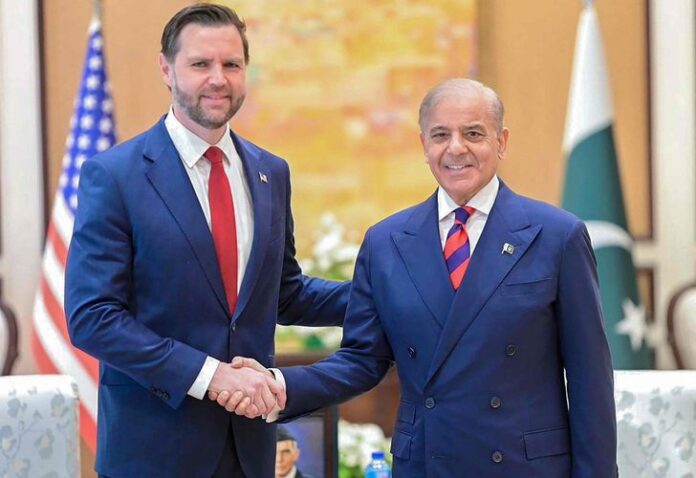
Iran researcher Orit Perlov shared several interpretations on the X network, suggesting that the negotiations reached a dead end after U.S. Vice President J.D. Vance announced their failure and left Pakistan.
According to her, there is currently no expectation of extending the understandings, and both sides are required by April 22, the expiration date of the ceasefire, to submit written responses to each other’s demands. The key demands from Washington include dismantling Iran’s nuclear and missile programs, ending support for proxy forces in the region, and reopening the Strait of Hormuz.
Danny Citrinowicz, a researcher of Iran and the Shiite axis at the INSS, commented on Israel radio on the collapse of the negotiations between the United States and Iran, saying:
“The talks failed for a simple reason. When both sides come to negotiations believing they have won the campaign, the chances that either side will present meaningful compromises are low. I’m not saying we will immediately return to conflict, but we are still at a point where we are once again approaching military escalation.”
Ahmed Afifi, a Saudi-based expert on military and strategic affairs, estimates that despite the failure of the talks, a relative calm is expected in the short term. However, he emphasizes that this is only a limited window, until U.S. and British ground forces arrive in the region. He notes that unlike the current phase, in which the British mainly played defensive and logistical roles, this time more direct offensive involvement is expected.
According to him, additional countries may join the U.S.-Israel-Britain coalition, with formal announcements likely to come later. At the same time, if Iran continues its attacks against Gulf states, there is a high likelihood that they will enter into direct confrontation with Iran and its proxies—especially Saudi Arabia. Afifi further estimates that the war will end only after significant weakening of Iran and its regional arms.
Perlov adds that the urgent need at this stage is to strengthen U.S. and British military presence and replenish weapons stockpiles in the region. She also raises the possibility that the timing of the ceasefire announcement may have been intended to allow the Iranian public to prepare economically, taking advantage of temporarily reopened markets to stock up on essential goods during the remaining window.
Other analysts present even sharper scenarios. Fares Swaid from Lebanon argues that the collapse of negotiations could lead to three main paths: a return to war, an expansion of the conflict, or a dramatic end to the campaign, either through the collapse of the Iranian regime or another extreme scenario.
Dr. Fahd Al-Shalimi from Kuwait notes that Iran did not accept the American conditions, particularly the demand to abandon its pursuit of nuclear weapons. He says the key questions now concern the future of the ceasefire, the possibility of a broad international consensus against Iran, including Europe and regional states, and whether Tehran will return to negotiations and ultimately agree to the demands.
At the same time, the failure of the talks is also affecting the political arena in the United States. Attempts to promote alternative leadership from within Iran, similar to the Venezuelan model, are facing significant difficulties, partly due to deep mistrust among the involved parties and complex diplomatic dynamics. The arrival of a broad and fragmented delegation in Islamabad failed to produce a breakthrough and further eroded the initiative.
The departure of Vance, considered a prominent anti-war figure among Donald Trump’s supporters, has also shaken the political consensus surrounding the administration. These developments may expand Trump’s room to maneuver in justifying escalation, and possibly a broader military move, despite the high costs.
In conclusion, until a decisive turning point is reached, various sources estimate that a fundamental shift will be required, either within Iran’s internal political arena or in Washington’s strategic approach, which may include attempts to reach an agreement with leadership enjoying broader public legitimacy.