
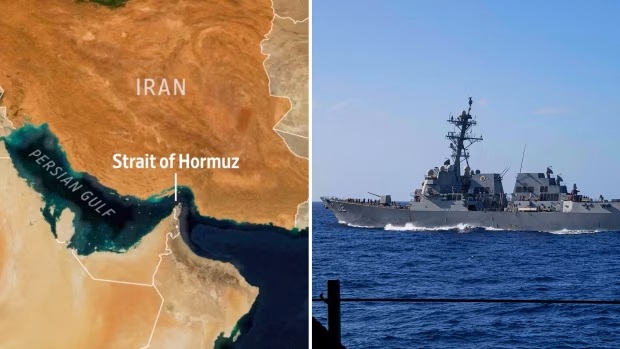

The United States military announced Tuesday that it has begun effectively implementing a blockade on Iranian ports, even as at least one vessel linked to Tehran managed to pass through the Strait of Hormuz.
U.S. Central Command said, “During the first 24 hours, no ships made it past the U.S. blockade, and 6 merchant vessels complied with the direction from U.S. forces to turn around to re-enter an Iranian port on the Gulf of Oman.”
Although several tankers approaching the strait on Monday initially turned back once the blockade was in place, one vessel, the Rich Starry, changed direction again and successfully navigated through the passage early Tuesday.
At the same time, Iran issued a warning that ports throughout the Middle East could become targets following the deployment of more than 15 U.S. warships to enforce the blockade in the Strait of Hormuz.
The escalating situation has heightened concerns of a broader confrontation, with fears growing that the current ceasefire could unravel, leading to renewed conflict and significant economic consequences worldwide. Ports across the region—from Kuwait to Oman—have been placed on heightened alert.
Amid the rising tensions, officials in Pakistan said Tuesday that Islamabad has put forward a proposal for a second round of negotiations between the United States and Iran. A White House official also confirmed to NewsNation that additional talks are under consideration, though no timetable has yet been finalized.
Separately, direct negotiations between Israel and Lebanon were scheduled to begin Tuesday in Washington. Lebanese representatives are seeking to secure a ceasefire in the ongoing conflict with Hezbollah, which has resulted in at least 2,089 fatalities in Lebanon. However, Israeli Prime Minister Bibi Netanyahu has indicated he is not pursuing a ceasefire, instead aiming for Hezbollah to disarm and for a wider peace arrangement with Lebanon.
{Matzav.com}