
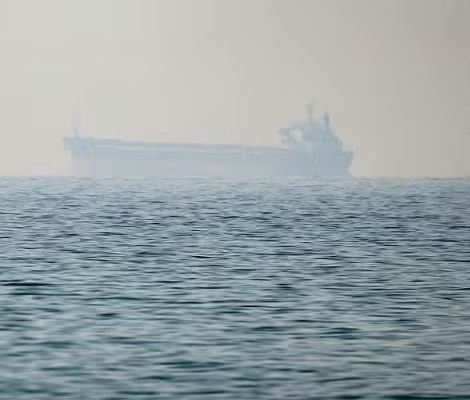

Maritime monitoring firms say vessels operating near the Strait of Hormuz are increasingly using deceptive tracking methods following a U.S.-led blockade targeting ships connected to Iranian ports, raising concerns about enforcement and the continued movement of energy supplies through the strategic waterway, according to a report by The New York Times.
Ami Daniel, CEO of maritime intelligence company Windward, said that over the past day, ships in the region have begun altering their behavior, with more vessels either disabling their tracking systems or transmitting misleading identification data after initially continuing operations normally following U.S. and Israeli strikes on Iran in late February.
“Now, we are starting to see vessels going dark or using ‘zombie’ or random identification,” Daniel said, referring to a growing pattern in which ships interfere with their automatic identification systems, or AIS, which are required under international maritime regulations.
The AIS network provides real-time data on a vessel’s identity, position, and route through a unique nine-digit number, effectively acting as a digital identifier for ships at sea.
Experts say operators are now exploiting weaknesses in the system by turning off their transmitters, falsifying voyage details, or adopting the identities of other vessels — a tactic known as “spoofing.”
According to analysts, these maneuvers resemble those used by Russia’s so-called “shadow fleet” to bypass sanctions after its invasion of Ukraine, when ships altered identifying information or operated under unclear or stateless registrations to continue exporting oil.
“What the Russians have been doing is altering the numbers,” said John C.K. Daly, adding that similar methods are now being observed among vessels tied to Iran.
A Windward report published Tuesday found that some ships associated with Iran have already stopped transmitting tracking data, while others under sanctions or using false flags continue to transit the region, suggesting that operators are testing how far they can push enforcement boundaries.
“The continued movement of similar vessel profiles indicates that operators are testing the practical limits of enforcement in real time,” the report said.
Analysts caution that the growing use of so-called “ghost” vessels is creating what Erik Bethel described as a “contested information environment,” where incomplete or manipulated data makes it harder to track ships and enforce restrictions.
“A blockade is only as strong as the intelligence behind the interdictions,” Bethel said.
The situation is further complicated by the nature of international shipping, where vessels are often registered, owned, and managed across different countries, making it difficult to determine responsibility even under normal circumstances.
Despite these evasive tactics, U.S. officials maintain that enforcement remains effective. More than a dozen U.S. Navy ships are currently deployed in international waters in the Gulf of Oman, and U.S. Central Command reported Tuesday that six commercial vessels had already complied with directives to turn back toward Iranian ports.
Daniel noted that geography may ultimately limit the success of such evasion efforts, pointing out that the narrow passage of the strait makes it difficult for ships to avoid detection entirely.
“My expectation is that the U.S. Navy can sit out in the Gulf of Oman,” he said. “I don’t think there’s a way to breach the blockade.”
{Matzav.com}