
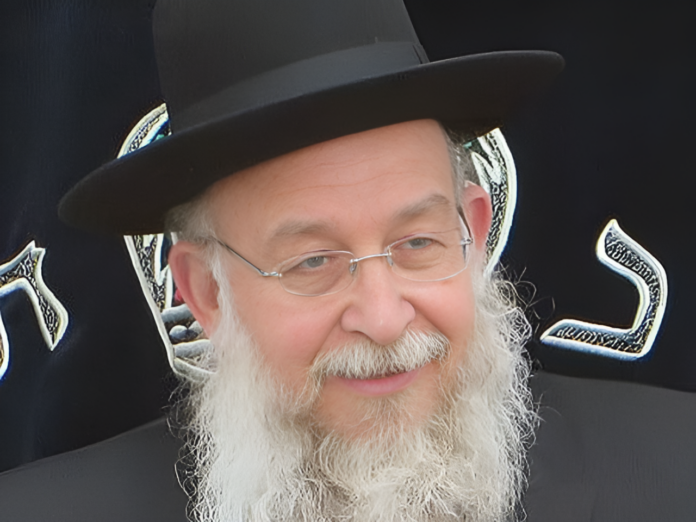

By Rabbi Yair Hoffman
THE SHORT ANSWER
The Shulchan Aruch (493:1) tells us that it is customary not to get married between Passover and Shavuos until Lag BaOmer, because Rabbi Akiva’s students died during this period. However, getting engaged is permitted.
The Poskim pretty much all agree that it is forbidden to enjoy live music during Sefira, and some even forbid it during the year on account of the Churban Beis HaMikdash. There is a difference of opinion about whether this extends to recorded music as well.
Most Poskim rule that there is no difference between live and recorded music — both are forbidden. Rav Binyomin Zilber (Az Nidberu 8:58), Rav Moshe Feinstein (Igros Moshe, OC 1:167), and Rav Eliezer Waldenberg (Tzitz Eliezer 15:33) all take this stricter position. In fact, Poskim even forbid listening to acapella music during Sefira.
Some Poskim do disagree and argue that a device which did not exist at the time the ban on music was enacted — such as a radio or CD player — is not included in the prohibition. Rav Chaim Pinchas Scheinberg zt”l told this author that he permits it, and this is also the position of the Chelkas Yaakov (1:62).
OTHER EXCEPTIONS
There are also exceptions that even the more machmir (stricter) Poskim have ruled upon. If not being able to listen to recorded music would cause depression, they permit listening to it in private — this is the ruling of Rav Shlomo Zalman Auerbach (Halichos Shlomo, Moadim 2:11:14). In a nursing home and rehabilitation facility, it is also permitted. This author posed this question to leading Poskim when serving as a director of such a facility. Rav Shlomo Zalman also permitted playing children’s music for the enjoyment of young children (Halichos Shlomo, Moadim 2:11, note 53). A music teacher or musician whose livelihood depends on performing live music is permitted to do so during Sefira (see Igros Moshe, OC 3:87). Someone driving who needs music to stay alert may also listen to it — this is even a fulfillment of a d’Oraisah mitzvah.
THE LONG OF IT
Beyond the basic rulings on music lies a more intricate halachic discussion — one that touches on the nature of Omer mourning itself, the history of the dancing prohibition, and a contemporary challenge to the Mishna Berura raised by Rav Yitzchok Rubin shlita.
Getting back to the above ruling in Shulchan Aruch, the Mishna Berura quoting the Magen Avraham adds that someone who gets engaged during these days may even hold an engagement party. While we no longer separate the engagement ceremony from the wedding itself, it is still allowed to arrange a match and celebrate — but dancing and festivities are traditionally off-limits, and certainly just dancing for fun is not done.
THE QUESTION OF DANCING DURING CERTAIN TIME PERIODS
The Sha’ar HaTziyun quotes the Pri Megadim citing the Elya Rabba: even from Rosh Chodesh Iyar until Rosh Chodesh Sivan, and from Rosh Chodesh Sivan until Shavuos, there is a question about whether it is permitted to be lenient when it comes to dancing for fun and general celebrating.
WHAT DO MODERN POSKIM SAY ABOUT MUSIC?
Based on these earlier sources, leading halachic authorities ruled against listening to music even during the days between Rosh Chodesh Sivan and Shavuos. Rabbi Shlomo Zalman Auerbach zt”l wrote that since the Eliyah Rabbah raised a doubt about these days — and since the Pri Megadim and Sha’ar HaTziyun recorded that doubt — we should be strict, especially since this matches accepted practice. (See “Bein Pesach L’Shavuos” by Rabbi Tzvi Cohen, Chapter 15:4.)
The same stricter ruling was quoted in the names of Rabbi Moshe Feinstein zt”l, Rabbi Yosef Shalom Elyashiv zt”l, and Rabbi Shmuel Vosner zt”l. Usually, when there is a doubt in mourning laws, we rule leniently. But since major authorities specifically raised this doubt, the leading Poskim said to be strict here.
THE REASONING — AND RAV RUBIN’S CHALLENGE
In a shiur given at his shul in Har Nof, Rav Yitzchok Rubin shlita raised an important question about the internal logic of these rulings. The reasoning behind the Eliyah Rabbah’s doubt is never actually explained in the text. The extra words found in the Sha’ar HaTziyun — “for those who customarily get haircuts then” — were actually added by the Chafetz Chaim himself, and do not appear in either the Eliyah Rabbah or the Pri Megadim.
Those who allow weddings and haircuts during certain days of the Omer do so because, according to their minhag, those days are simply not days of mourning at all. If that is the case, why would there be any reason to be strict about recreational dancing during days they do not consider mourning days in the first place?
On top of that, the custom against dancing is actually a development first cited in the Magen Avraham (1635–1682), in his comment on Siman 493:1. It neither appears in the Tur nor the Shulchan Aruch. If we are lenient about something as serious as haircuts, why should there even be a question about dancing — which is a lighter matter?
HOW THE TUR PRESENTS THINGS
The Tur opens Siman 493 by explaining that the minhag not to marry between Pesach and Shavuos exists because we do not want to increase joy during the time when Rabbi Akiva’s students died. The Ritz Giat clarified that it is specifically marriage — which represents the greatest joy — that is forbidden, but engagement is allowed. The Tur also mentions that some communities do not get haircuts during this period. The Beis Yosef traces this haircut custom to the Drashos Ibn Shuaib and notes it became widespread practice.
WHAT THE MAGEN AVRAHAM ADDED
The Magen Avraham introduced something new: while an engagement party is permitted during the Omer, “recreational dancing and celebrations are customarily forbidden.” He even adds that someone who arranged a match — not yet an engagement party — may not have dancing and celebrations either.
The Eliyah Rabbah (493:2) understood the Magen Avraham to mean that dancing is permitted at an actual engagement party, since it is a mitzvah meal, but not at a lesser celebration like a match-making event — and certainly not for dancing just for fun.
THE UNIQUE NATURE OF OMER MOURNING
Understanding these questions requires appreciating how the mourning practices of the Omer differ from regular mourning. On one hand, they are stricter in some respects: even someone who has not yet fulfilled the mitzvah of having children may not get married during the Omer, whereas a regular mourner may marry after shiva if he has not yet had children (see Yoreh Deah 392).
On the other hand, the Omer mourning is more lenient in other ways — washing, cutting nails, and festive meals are all permitted. The Omer period adopted mourning customs only in specific areas: marriage, which involves the greatest joy; haircuts, though many great authorities noted this was not the custom in their own communities (see Radbaz and Birkei Yosef); and recreational dancing and celebrations, though as noted, major Poskim debated whether to be strict here. This selective pattern is itself relevant to Rav Rubin’s argument, as we shall see.
WHAT THE ELIYAH RABBAH MAY HAVE BEEN ASKING
After quoting the Magen Avraham’s restriction on recreational dancing, the Eliyah Rabbah asks: during the periods that have some basis for leniency — the days before Rosh Chodesh Iyar and after Rosh Chodesh Sivan — perhaps recreational dancing, which is less serious than marriage and haircuts, might actually be permitted?
His reasoning is that some communities do not observe mourning during those stretches at all, as the Rema notes for the days before Rosh Chodesh Iyar, and the Pri Megadim and Derech HaChaim note for the days after Rosh Chodesh Sivan. Additionally, Tachanun is not recited on those days, suggesting a less mournful character.
WHAT THIS MEANS PRACTICALLY
If this reading of the Eliyah Rabbah is correct — and it differs from the Sha’ar HaTziyun’s interpretation — then Rav Rubin suggests everything fits together well. There would be room to be lenient about listening to music between Rosh Chodesh Sivan and Shavuos, since the accepted minhag today is to be lenient during those days regarding both marriages and haircuts.
In Eretz Yisroel today, the widespread minhag is to get haircuts after Lag BaOmer. Since haircuts are stricter than dancing, one must seriously examine what basis exists for prohibiting recreational dancing during those later days — and certainly for the even lighter matter of listening to music. Even though the Eretz Yisroel custom is to prohibit marriages until Rosh Chodesh Sivan, perhaps only marriage — representing the greatest joy — remains prohibited, as the Taz suggests. Lighter matters like dancing, and certainly listening to music, may not fall into the same category.
AN IMPORTANT CAUTION — AND A PRACTICAL BOTTOM LINE
Rav Rubin was careful to note that his entire presentation is a theoretical discussion, not a ruling for practice. He invoked the words of the Chazon Ish (Kovetz Igros 2:141), who wrote that accepted halachic rulings from authorities like the Beis Yosef, the Magen Avraham, and the Mishna Berura carry enormous weight — weight that cannot simply be set aside because of a clever argument.
The Yaavetz (Responsa 20) quotes in the name of the author of the Chelkas Mechokek that a person may not issue rulings until he has the power to “uproot and erase a paragraph from the Shulchan Aruch.” The Chafetz Chaim himself reportedly said that someone who has “reached the level of ruling” is one who has the ability to disagree with the Mishna Berura. The practical implication is clear: even a logically compelling analysis does not automatically translate into a leniency one may act upon.
The bottom line for most people, then, remains as before: follow your community’s accepted practice and the guidance of your own posek. The above analysis is presented as intellectual enrichment — an appreciation of the depth and nuance underlying rules that might otherwise seem arbitrary. Great care is needed when discussing the words of the Mishna Berura – all the more so when it comes to actual practice.
The author can be reached at [email protected]