
 Matzav
Israeli Navy Reveals Unprecedented Submarine Operations and Deep-Strikes Achievements During War
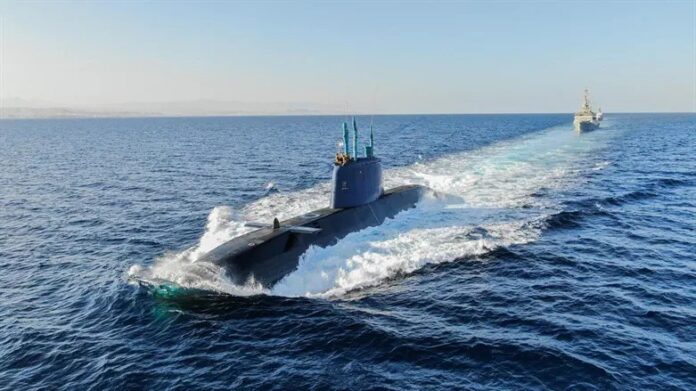
48New details released by the IDF following a change in naval leadership reveal that Israel’s submarine fleet carried out far-reaching and highly classified missions during the war, achieving record-breaking operational reach and striking deep inside enemy territory.
As Major General David Saar Salama stepped down as commander of the Navy, officials disclosed that Shayetet 7 reached new milestones in both distance traveled and sustained activity within hostile zones. According to the information made public, these operations marked a significant expansion of the Navy’s strategic footprint.
Among the most notable revelations was that Israeli submarines reached “the farthest location in the history” of the submarine flotilla during a wartime mission, underscoring the unprecedented scope of the operations.
The fleet was deployed simultaneously across three separate arenas, with vast distances of thousands of kilometers between each submarine. In a first for the Navy, Shayetet 7 coordinated directly with Shayetet 3, the missile boat flotilla, to target and destroy enemy air defense systems and aircraft from the sea.
In the Syrian arena, the Navy took advantage of a narrow operational window to launch a major strike against Syrian naval forces. Within roughly an hour, Israeli forces sank 15 ships and struck dozens of missiles with ranges between 80 and 200 kilometers, dealing a major blow to Syria’s maritime capabilities.
Naval operations against Hezbollah also yielded significant results, particularly in dismantling the group’s coastal missile network. Many of these weapons, which had been concealed beneath civilian infrastructure and in underground facilities, were destroyed, leaving only a limited number still in Hezbollah’s possession.
Another key operation, known as Operation Behind the Back, saw Shayetet 13 forces capture Imad Amhaz. His interrogation led to the uncovering of a previously hidden Hezbollah naval unit, adding to Israel’s intelligence gains.
The Navy also played a major role in countering the Houthi threat, carrying out strikes as far as 150 kilometers داخل Yemen. These attacks reportedly disrupted supply routes, preventing roughly 80 percent of goods from reaching their intended destinations. During Operation “Roaring Lion,” naval units also provided direction and intelligence for strikes on at least 95 targets in Iran.
Since the war began, naval commando units have conducted hundreds of missions, including operations in distant regions where Israeli forces had not previously operated. In Gaza, naval forces were involved in central combat activities, ranging from raids on Shifa and Rantisi hospitals to seizing control of the harbor, conducting hostage rescue efforts, and carrying out logistical insertions deep in the Strip.
During the course of the fighting, the Navy brought all four Sa’ar 6-class warships into full operational use, deploying them in both defensive and offensive roles. The fleet was further strengthened by the arrival of two landing craft from the United States, and a sixth submarine, INS “Drakon” (dragon), is expected to join the fleet in the near future. In addition, a new maritime unit called “Netz” was established to enhance surveillance and drone operations at sea.
Over the 48 days of Operation Roaring Lion,” naval forces accumulated approximately 26,000 hours at sea, conducted 154 offensive strikes, and successfully carried out 40 air defense and interception actions against incoming aerial threats.