
 Vos Iz Neias
Understanding the Heter to Take a Haircut Today a la Brisk Chakiros
NEW YORK- (VINNEWS/Rabbi Yair Hoffman) Among the fascinating anomalies in the halachos of Sefiras HaOmer is a permission first recorded in Minhagim Yeshanim MiDura: even though weddings are not held between Pesach and Shavuos, when Rosh Chodesh Iyar falls on Shabbos, a wedding may be conducted on Erev Shabbos — the first day of Rosh Chodesh. The Poskim, including the Mishna Brurah, extended this leniency to include taking a haircut and shaving as well.
This creates a striking exception to the standard mourning practices of Sefirah, and it demands explanation. What exactly is the basis of this heter?
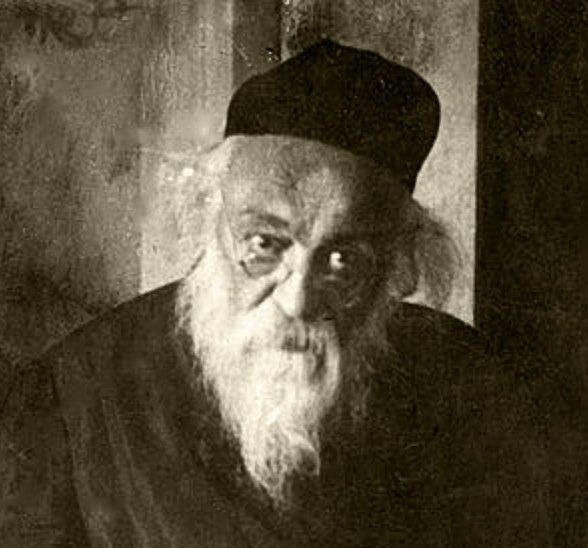
Most people are familiar with the famous concept of Brisker Chakiros. A chakirah is a two-sided conceptual investigation — a question of the form “is this halachah because of X or because of Y?” — where both sides may yield the same ruling in the standard case, yet diverge in their theoretical foundation and in their practical consequences at the margins. Though the method has roots in earlier Acharonim, it was Rav Chaim Soloveitchik zt”l (1853–1918), the Brisker Rov and Rosh Yeshiva of Volozhin, who transformed the chakirah into a systematic derech halimud that reshaped Torah learning in the yeshiva world.
So let’s do this now: There are two fundamentally different ways to understand why this permission exists — and the choice between them may have real halachic consequences.
The Chakira: Two Possible Foundations
Possibility #1: The Heter Stems from Shabbos
The first possibility is that this Shabbos — the Shabbos on which Rosh Chodesh Iyar falls — carries an elevated kedushah and simchah beyond that of an ordinary Shabbos. It is Shabbos combined with Rosh Chodesh, and this special status is powerful enough to override the aveilus practices of Sefirah.
According to this understanding, the haircut is fundamentally lichvod Shabbos — in honor of Shabbos. The role of Rosh Chodesh is not that the haircut is being done for Rosh Chodesh per se, but rather that Rosh Chodesh intensifies the kedushah of the Shabbos, making this Shabbos uniquely worthy of having its honor override the mourning restrictions. An ordinary Shabbos during Sefirah does not carry enough weight to override the Sefirah customs — but Shabbos Rosh Chodesh does.
Possibility #2: The Heter Stems from Rosh Chodesh
The second possibility is that the haircut is fundamentally established for Rosh Chodesh. This may seem surprising, because as a general rule we do not take haircuts for Rosh Chodesh. However, we find in several Rishonim and Poskim that specifically for Rosh Chodesh Iyar, there was indeed a custom to take a haircut. Even though this is not the accepted halachah as a standalone rule, perhaps the custom retains enough force to be actualized when it is combined with another kavod — namely, the kavod of Shabbos.
According to this understanding, neither factor alone would suffice: the minority view that permits haircuts on Rosh Chodesh Iyar is not strong enough on its own, and Shabbos alone does not override Sefirah. But tziruf — the combination — of Shabbos kavod plus Rosh Chodesh Iyar specifically creates a strong enough case to permit the haircut.
The Difference
At first glance, one might object that this chakira has no practical consequence. After all, the Hebrew calendar is fixed: Rosh Chodesh Iyar never falls on Friday. It falls only on Shabbos, Monday, Wednesday, or Shabbos again (depending on the year). So the question of “what if only Shabbos were the factor” or “what if only Rosh Chodesh were the factor” seems purely theoretical.
But this is not quite right. A theoretical difference can still be a halachic difference — it can inform how we understand related cases and how the heter operates in practice.
If the fundamental mechanism is Shabbos (Possibility #1): The haircut is being done lichvod Shabbos. This has important implications. Taking a haircut on Thursday — when Rosh Chodesh Iyar falls on Friday–Shabbos — would be considered “lichvod Shabbos,” just as the Poskim consider Thursday haircuts generally to count as being for Shabbos. According to this side, there would be room to permit taking a haircut on Thursday in this scenario.
If the fundamental mechanism is Rosh Chodesh (Possibility #2): The permission is rooted in the haircut being done on Rosh Chodesh Iyar itself. A Thursday haircut would not qualify, because Thursday is not Rosh Chodesh. Only a haircut taken on the day of Rosh Chodesh itself (Friday, in our case) could draw upon the special status of Rosh Chodesh Iyar.
The Implication for the Directive of Rabbi Yehuda HaChassid
This chakira becomes especially important for those who follow the tzava’ah of Rabbi Yehuda HaChassid not to take haircuts on Rosh Chodesh.
According to Possibility #1 — the heter flows from Shabbos — there is no problem at all for the follower of Rabbi Yehuda HaChassid. The haircut is not being taken “for Rosh Chodesh”; it is being taken “for Shabbos,” and the fact that it coincidentally falls on Rosh Chodesh is incidental to the heter. Indeed, one could even take the haircut on Thursday and avoid the issue entirely, since Thursday haircuts also count as lichvod Shabbos.
According to Possibility #2 — the heter requires Rosh Chodesh to be an active component — the follower of Rabbi Yehuda HaChassid faces a genuine tension. The very factor that creates the permission is the factor he has committed to avoiding. On this side, there is strong reason for such a person to be machmir.
Reading the Poskim
When examining the language of the Poskim who record this heter, their formulations suggest the first understanding — that the haircut is lichvod Shabbos, with Rosh Chodesh serving to elevate the Shabbos rather than being the direct object of the haircut. The role or purpose of Rosh Chodesh, on this reading, is “l’hosif simchah u’kedushah d’Shabbos” — to add joy and sanctity to Shabbos — and it is this enhanced Shabbos whose kavod is strong enough to override even the aveilus customs of Sefirah.
This reading would allow the heter to operate cleanly even for those who follow Rabbi Yehuda HaChassid’s tzava’ah, because on this understanding the haircut is never really “for Rosh Chodesh” in the first place. It also opens the door to taking the haircut on Thursday, which preserves the Shabbos honor while sidestepping any concern about haircuts on Rosh Chodesh itself.
Conclusion
The chakira is a classic example of how a single halachic permission can rest on two very different conceptual foundations — and how those foundations, even when they yield the same ruling in the standard case, diverge when the case shifts. Is this a Shabbos-driven heter that happens to occur on Rosh Chodesh, or a Rosh-Chodesh-driven heter that happens to occur on Erev Shabbos? The language of the Poskim points toward the former, and this has practical consequences for when the haircut may be taken and for whom the heter is available.
The author can be reached at [email protected]