
 Matzav
Iran Re-Closes Strait of Hormuz, Fires on Ships as Tensions With U.S. Escalate
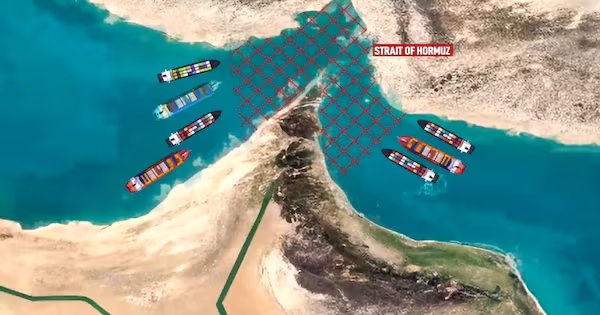
Tensions in the Strait of Hormuz surged again on today after Iran reversed its earlier reopening of the strategic passage and opened fire on vessels attempting to transit, responding to the continued U.S. blockade of Iranian ports.
Iran’s Revolutionary Guard navy announced that the strait would remain shut until the American blockade is lifted, warning that “no vessel should make any movement from its anchorage in the Persian Gulf and the Sea of Oman, and approaching the Strait of Hormuz will be considered as cooperation with the enemy” and be targeted.
The renewed attacks in the narrow waterway, which carries roughly 20 percent of the world’s oil supply, raised fears of a worsening global energy crisis and the possibility of further escalation as the conflict entered its eighth week.
A fragile ceasefire is set to expire by Wednesday, even as Iran said it has received new proposals from the United States. Pakistani mediators are working to organize another round of direct talks between the two sides.
Earlier in the day, Iran’s joint military command had stated that “control of the Strait of Hormuz has returned to its previous state … under strict management and control of the armed forces.”
According to the United Kingdom Maritime Trade Operations center, Iranian Revolutionary Guard gunboats fired on a tanker, while an unidentified projectile struck a container ship, causing damage to several containers. India’s foreign ministry said it summoned Iran’s ambassador following what it called the “serious incident” involving gunfire directed at two Indian-flagged vessels, particularly after several ships bound for India had previously been allowed to pass.
For Tehran, closing the strait—first enacted after the United States and Israel launched hostilities on Feb. 28 during nuclear negotiations—remains one of its most potent tools, with the potential to disrupt the global economy and apply political pressure on President Donald Trump. For Washington, the naval blockade serves as a key lever to intensify pressure on Iran’s already strained economy.
Iran’s new supreme leader, Ayatollah Mojtaba Khamenei, issued a defiant statement, saying the navy stands “ready to inflict bitter defeats on its enemies.” He has not appeared publicly since assuming leadership following his father’s death in the initial Israeli strike.
The renewed closure comes just a day after Iran announced the strait had been reopened to commercial traffic following a 10-day ceasefire between Israel and the Iranian-backed Hezbollah group in Lebanon, a move that had briefly eased oil prices.
Trump, however, made clear that the U.S. blockade of Iranian ports “will remain in full force” until a deal is reached. The blockade was implemented after direct talks in Pakistan between U.S. and Iranian officials ended without agreement.
U.S. Central Command said American forces have turned back 23 vessels attempting to reach Iran since the blockade began earlier in the week. Trump’s remarks drew sharp criticism from Tehran.
“Americans are risking the international community, risking the global economy through these, I can say, miscalculations,” Iranian Deputy Foreign Minister Saeed Khatibzadeh told The Associated Press, adding that the U.S. is “risking the whole ceasefire package.”
Iran’s Supreme National Security Council issued a statement condemning the blockade as a breach of the ceasefire and said it would block “any conditional and limited reopening” of the strait. The council has recently functioned as the country’s top decision-making authority.
Because much of the supply flow to U.S. bases in the Gulf region passes through the strait, “Iran is determined to maintain oversight and control over traffic through the strait until the war fully ends,” the council said. The statement indicated that Iran would enforce designated shipping routes, require transit fees, and issue clearance certificates.
A subsequent statement from the Revolutionary Guard navy suggested a stricter stance, indicating that no vessels should attempt passage at all.
The latest escalation came hours after Pakistani Foreign Minister Ishaq Dar said his government is working to “bridge” the gap between Washington and Tehran. Pakistan is expected to host another round of negotiations early next week.
Iran’s Supreme National Security Council confirmed that “new proposals” from the United States were delivered during a recent visit by Pakistan’s army chief and are currently under review.
Khatibzadeh, however, said Iran is not yet ready to return to face-to-face negotiations, arguing that the United States “have not abandoned their maximalist position.”
He also rejected the idea of transferring Iran’s stockpile of enriched uranium—estimated at 970 pounds (440 kilograms)—to the United States, calling it “a nonstarter.” He did not elaborate on alternative proposals, saying only that “we are ready to address any concerns.”
Trump, speaking later, said Iran “got a little cute” but added that “very good” discussions were underway, with more developments expected soon. “They can’t blackmail us,” he said.
On Friday, Trump said the United States would enter Iran if necessary to retrieve what he called “all the nuclear dust,” referring to the enriched uranium believed to be stored at nuclear facilities damaged in last year’s U.S. strikes.