
 Matzav
IDF Adopts Armed Pickup Concept Following October 7 Lessons to Bolster Border Defense
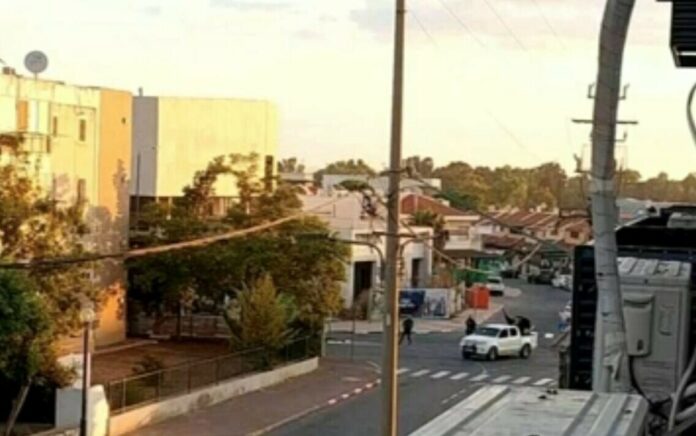
Drawing lessons from the October 7 attacks, the IDF has begun implementing a new approach to defending border communities by introducing light, fast-response vehicles equipped with mounted machine guns, aimed at providing immediate firepower without relying on air or heavy armored support.
The army has established a dedicated conversion line for Isuzu D-Max pickup trucks, outfitting them with mounted MAG machine guns. The initiative is being carried out at the IDF’s vehicle maintenance and upgrade center in Haifa, according to a report by Walla!.
The mounted weapon, installed in the rear of the pickup, will include partial ballistic protection designed to shield the operator from gunfire while still allowing full visibility and operational effectiveness. Until now, such machine guns were primarily deployed on heavy armored platforms, but adapting them to lighter vehicles is intended to provide border units with rapid-response firepower. The goal is to enable forces to react quickly to emerging threats without waiting for armed drones, attack helicopters, or heavy armored vehicles to arrive.
“This is an addition of lethality to border defense,” explained Lt. Col. Sh., commander of the mobility and heavy equipment plant within the IDF’s maintenance system. The concept, he noted, represents a return to earlier military doctrine. Light 4×4 vehicles equipped with machine guns were already in use in 1948 by the “Shimshon’s Foxes,” a well-known jeep unit of the Givati Brigade.
While the IDF’s central facility in Tel Hashomer focuses on producing Merkava tanks and Namer and Eitan armored personnel carriers, the Haifa center specializes in vehicle conversions and engineering equipment. Among its outputs are “Panther” vehicles, based on FMTV trucks, as well as modifications tailored for Israeli use of American-made Humvees and JLTVs. Dozens of vehicles are completed each month at the facility, which is staffed by both soldiers and civilian defense employees, and are then deployed directly to combat units operating in Gaza and Lebanon.
The Joint Light Tactical Vehicle, known in IDF service as the “Pereh,” is also undergoing significant armor upgrades at the site. In cooperation with Israeli companies Plasan and Taavura, a specialized version has been developed to transport up to ten soldiers, alongside another model equipped with a remotely operated weapon station that is already in use along Israel’s eastern border.
The U.S. Congress has approved Israel’s purchase of 3,250 JLTVs, with hundreds already ordered and more than 100 currently in active service.
Engineering design for the upgrades is led by a team headed by Lt. Col. G., which has focused not only on increasing combat effectiveness but also on improving conditions for troops. One key improvement has been reducing the high noise levels inside the vehicles. “We managed to lower the noise level, which also improves the quality of life for the crew so they don’t come out exhausted from the drive,” G. said.
At the same time, the IDF’s Technology and Logistics Directorate is in discussions with the U.S. Army about establishing a joint maintenance forum, modeled after existing cooperation frameworks between the Israeli Air Force and its American and German counterparts.