
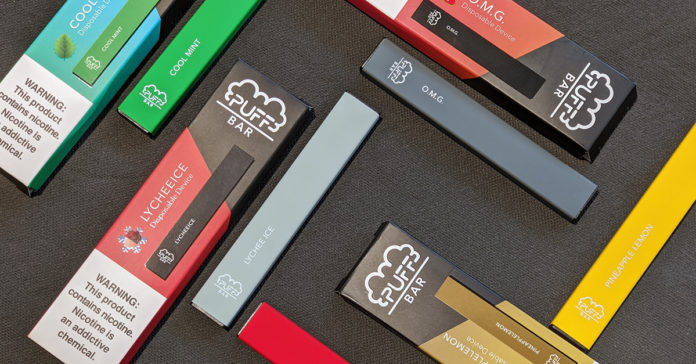

Smokers and users of alternative nicotine products in Israel are expected to face higher costs under a proposed tax overhaul that targets vaping devices and tobacco pouches, even as taxes on e-liquid are set to drop significantly.
Under the plan, a new purchase tax will be imposed for the first time on electronic cigarette vaping devices, alongside a levy of roughly 350 shekels per kilogram on tobacco and nicotine pouches. At the same time, the tax on vaping liquid will be sharply reduced to one shekel per milliliter, a move aimed at curbing black market activity while shifting the financial burden toward equipment and newer nicotine products.
According to reports, the draft legislation proposes a one-shekel-per-milliliter tax on vaping liquid, a 10-shekel tax on vaping devices, and a levy of approximately 350 shekels per kilogram on tobacco and nicotine pouches.
The Israel Tax Authority has published the proposal for public comment. Once Finance Minister Bezalel Smotrich signs the order, it can take effect quickly without requiring full legislative approval in three readings, as the finance minister holds authority to set tax rates. The only requirement for implementation is approval by the Knesset Finance Committee.
If lawmakers oppose the measure, the full Knesset would need to convene and revoke the order by a simple majority. A similar situation occurred with a previous order adjusting the VAT exemption threshold on personal imports, which was initially canceled before being revised and reissued. In that case, the Federation of Israeli Chambers of Commerce petitioned the High Court of Justice, and the Finance Committee also voiced opposition. The Knesset is expected to revisit that issue in the coming weeks. In contrast, widespread opposition to the new vaping tax proposal is not anticipated.
The legislation also includes tighter oversight of taxation on electronic cigarettes. Originally part of broader budget legislation, it was separated because it was not directly tied to the state budget and will now be reviewed independently by the Finance Committee after the minister signs the order.
In addition, the government is advancing a broader restructuring of how electronic cigarettes and emerging smoking products are taxed, following recommendations from a professional committee and a cabinet decision issued in December 2025. The proposal introduces, for the first time, a purchase tax on vaping devices themselves while significantly lowering the tax on the liquid component.
Until now, tax policy on e-cigarettes has focused mainly on the liquid, similar to traditional cigarettes and rolling tobacco. However, the committee concluded that electronic cigarettes should be treated as a distinct product, with the liquid not representing the primary component in terms of either cost or usage.
The panel highlighted two main reasons: first, the liquid cannot be used without the device; second, the production cost of the liquid is minimal compared to that of the device. As a result, it recommended viewing the product as a combined unit — device and liquid — and adjusting taxation accordingly.
A central goal of the reform is to eliminate the black market. Officials say that the previously high tax on vaping liquid encouraged widespread illegal trade. Lowering the tax on liquid while introducing a levy on devices is intended to draw businesses back into the legal market and improve compliance. Over time, policymakers say, tax rates could be gradually increased once the system stabilizes.
The reform extends beyond e-cigarettes. In response to the growing range of smoking alternatives introduced over the past decade, the proposal also seeks to apply purchase taxes to products containing tobacco, tobacco substitutes, and nicotine — including both tobacco and nicotine pouches. Alongside these tax changes, the government is promoting additional legislation to regulate smoking products for taxation purposes, including updated licensing, reporting, and enforcement requirements across the supply chain. That measure has already passed its first reading as part of the 2026 economic program.
{Matzav.com}