
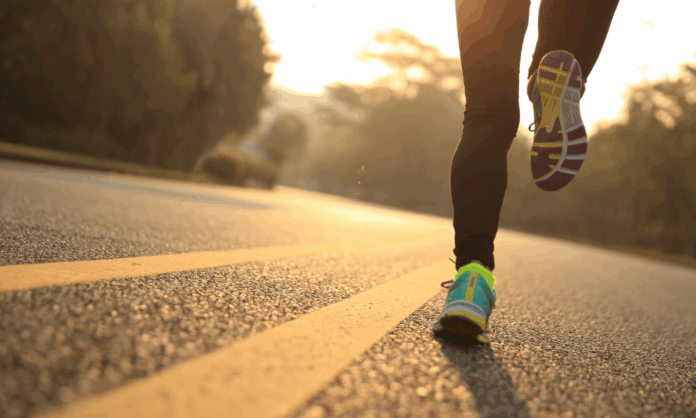

Joan, a 64-year-old patient, came into my office frustrated. She was walking every day, staying active and taking care of herself. But she still felt stiff, tired and not nearly as strong as she used to be.
“I thought I was doing enough,” she told me.
It’s something I hear all the time.
For decades, we’ve told people that moving more is the key to better health. And that’s true – but it’s only part of the story. Increasingly, research shows that how you move matters nearly as much as how often. In particular, brief bursts of higher-intensity activity can have an outsize impact on health, fitness and even longevity.
Why vigorous activity deserves a place in your routine
A recent study in the European Heart Journal looked at people who didn’t engage in formal exercise and found that just one to two minutes a day of vigorous activity, accumulated in short bursts, was associated with a significantly lower risk of chronic disease and death.
Not a workout class. Not a training plan. Just everyday life, done with a bit more intensity.
Exercise physiologists call this vigorous physical activity, or VPA. Sometimes referred to as vigorous intermittent lifestyle physical activity (VILPA), it includes things most people don’t think of as exercise: climbing stairs quickly, carrying heavy groceries, walking uphill with purpose or hurrying to catch a train.
These moments are brief, but they matter. Huffing and puffing, even for short periods, can shape long-term health.
This is not the same as high-intensity interval training, or HIIT. HIIT is structured and deliberate, performed in an exercise setting. VPA is opportunistic. One builds fitness and the other reinforces it throughout the day.
Two minutes can sound almost too simple. But physiologically, it makes sense. When you push your body harder, even briefly, you activate systems that don’t get challenged during lower-intensity movement. Your heart rate climbs, your muscles recruit more fibers, your mitochondria (which are like the battery packs to your cells) proliferate and your metabolism shifts. These adaptations drive improvements in cardiovascular fitness, strength and resilience.
Think of it this way: A leisurely walk is good for you, but add a few short bursts of speed or hills, and that same walk becomes far more impactful.
The challenge is that many people, especially as they get older, shy away from intensity. There is a widespread belief that aging means slowing down, taking it easy and avoiding anything that feels too demanding. Some of that instinct is understandable. People worry about injury or overdoing it.
But avoiding intensity altogether can accelerate the very declines people fear.
As we age, we need more intensity, not less. We lose muscle mass, power and cardiovascular capacity over time. Those losses are not just about performance; they affect balance, independence and quality of life. The ability to climb stairs without getting winded, react quickly if you trip, and carry groceries without strain all depend on having a higher capacity for intensity.
The good news is that you don’t need long workouts or extreme training to tap into these benefits. Even small, manageable doses of intense movement can help counter the effects of aging. That could mean burpees at the gym, if that’s your thing. But even if it’s not, short bursts of effort in everyday life still make a difference.
For Joan, we made a simple adjustment. She kept her daily walks but added short intervals. Every few minutes, she picked up the pace for 20 to 30 seconds – not a sprint, but a brisk effort that made it harder to speak in full sentences. Then she recovered and repeated.
At first, it felt uncomfortable. That’s the point. Intensity should feel like work. But within a few weeks, she noticed a difference. She felt stronger. Her energy improved. Even her regular walking pace became easier.
As I tell my patients, “Pushing yourself means getting comfortable being uncomfortable. It’s the only way to grow. Mentally, physically and physiologically.”
How to add high-intensity movement to your day
One important point to remember is that intensity is relative. What feels vigorous to one person may feel different to another. The goal is not to compare yourself with others, but to safely push your own limits.
Intensity should be approached thoughtfully. If you have underlying medical conditions or have been inactive, it’s worth discussing a plan with your physician. The aim is to challenge the body, not overwhelm it.
We often think of health as something that requires major time commitments or dramatic lifestyle overhauls. But some of the most effective interventions are surprisingly small.
Two minutes of effort, layered into the fabric of your day, can begin to shift your physiology in meaningful ways.
For many of my patients, that realization is empowering. It lowers the psychological barrier to getting started and reframes exercise from something that requires an hour at the gym to something that can happen in the margins of everyday life. Lowering the cost to act, or making the desired outcome easier, is an important step toward unleashing one’s motivation.
Joan still walks every day. But now she walks with purpose. She has embraced those short bursts of effort and, in doing so, rediscovered a sense of strength and confidence in her body.
“I feel a lot closer to myself again,” she told me at her last visit.
That’s the real goal: not only adding years to life, but life to years.
And sometimes, it starts with just two minutes.
Jordan D. Metzl, MD, is a sports medicine physician at the Hospital for Special Surgery in New York City and the founder of the IronStrength fitness community. His newest book, “Push: Unlock the Science of Fitness Motivation to Embrace Health and Longevity,” examines the science of fitness motivation and muscle maintenance for health.