
 Matzav
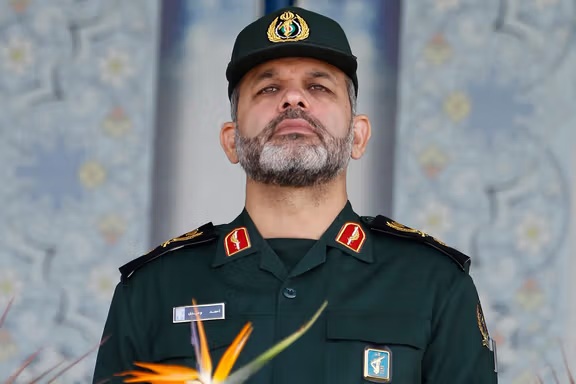
Meet Ahmad Vahidi — The Shadowy General Actually Running Iran — And Trump’s Biggest Obstacle To Peace
In the aftermath of joint U.S.-Israeli airstrikes that wiped out large portions of Iran’s senior leadership at the outset of the war, a single figure has quietly consolidated control behind the scenes, reshaping the country’s direction. The NY Post reports that according to analysts, Maj. Gen. Ahmad Vahidi, a top commander in Iran’s Islamic Revolutionary Guard Corps, has rallied a close group of allies to oversee both Tehran’s military operations and its negotiating efforts.
Soon after Vahidi, now 67, assumed de facto control alongside his inner circle, Iran adopted a more uncompromising posture. Officials declined to participate in peace discussions with the United States this week, while attacks intensified against vessels navigating the Strait of Hormuz.
Vahidi, who has long been under heavy Western sanctions and has been tied to terror incidents in Argentina, is seen as representing the regime’s most hardline camp. That faction has effectively pushed aside more moderate figures in Tehran, including those formally tasked with negotiating with Washington.
Even if American officials were to reach an agreement with Iran’s representatives, questions remain about whether such a deal would carry any weight as long as Vahidi and his associates retain actual control.
Earlier in his career, Vahidi led Iran’s elite Quds Force during the 1990s, expanding Tehran’s regional reach before handing leadership to Qasem Soleimani.
Both Vahidi and Soleimani are widely credited with building the infrastructure that enabled Iran’s proxy network to flourish across the region, including the Hezbollah in Lebanon.
Unlike his two immediate predecessors at the IRGC, Vahidi also built a career within Iran’s political establishment, serving in high-ranking posts such as defense minister and interior minister under separate governments.
The veteran commander was named deputy head of the IRGC last December by then–Supreme Leader Ali Khamenei.
After Khamenei and IRGC chief Mohammad Pakpour were killed in U.S.-Israeli strikes on February 28, Vahidi moved into the top leadership position within the powerful paramilitary organization.
Following Khamenei’s death, Vahidi backed the appointment of his son, Mojtaba Khamenei, as successor, despite reports that the elder ayatollah had not intended for him to inherit the role.
With Mojtaba reportedly wounded in the same February strikes and absent from public view, analysts argue that the new supreme leader serves largely as a figurehead, according to Khosro Isfahani of the Washington-based National Union for Democracy in Iran.
“If Mojtaba is alive, and that is a big if, he is just a sock puppet. He is the first AI-generated supreme leader in human history,” Isfahani told The Post, referencing the fake photos the regime had posted of Mojtaba following his appointment.
“He has zero political capital, zero public support, and zero sway over the decision-making. The regime has and will continue attributing statements to him,” Isfahani added.
Vahidi’s grip over Iran’s negotiating team became apparent when he brought in Mohammad Bagher Zolghadr, secretary of Iran’s Supreme National Security Council and a longtime IRGC figure, to join the delegation earlier this month.
According to the Institute for the Study of War, Zolghadr’s role was to ensure that negotiators adhered strictly to IRGC directives.
That influence was reportedly demonstrated when Zolghadr filed a complaint against Foreign Minister Abbas Araghchi after the diplomat was said to have signaled a willingness to make concessions during early rounds of talks.
“Zolghadr sent a complaint to senior IRGC leaders, almost certainly including Vahidi, that Araghchi had surpassed his mandate during the negotiations by expressing flexibility regarding Iran’s support for the Axis of Resistance,” the ISW said of the initial peace talks.
“Zolghadr’s anger caused senior leaders in Tehran, including former IRGC Intelligence Organization Chief and long-time member of Mojtaba’s inner circle, Hossein Taeb, to call the negotiating delegation back to Tehran,” the think tank added.
Iran’s negotiating team has not returned to Pakistan to resume discussions with the United States, a sign that Vahidi and Zolghadr’s influence remains dominant.
With talks still stalled, Isfahani described Iran’s approach as a calculated strategy in which different officials play contrasting roles, with Vahidi taking a hardline stance while others project moderation.
Iranian Parliament Speaker Mohammad Bagher Ghalibaf, who is said to be leading the delegation alongside Araghchi, may appear more pragmatic, but Isfahani argued that his background aligns closely with Vahidi’s.
“A comparative study of the two key players in the arena, Vahidi and Ghalibaf, shows that they grew through the ranks of the IRGC together and have historically advocated for identical policies and strategies,” he pointed out.
Vahidi has also been linked to major terror attacks abroad, including the 1994 bombing of the Asociación Mutual Israelita Argentina (AMIA) Jewish community center in Buenos Aires, which killed 85 people.
Interpol issued a red notice for Vahidi, calling on global law enforcement agencies to locate and arrest him, effectively labeling him a wanted international fugitive.
Argentine investigators have also connected him to the 1992 bombing of the Israeli Embassy in Buenos Aires.
In addition to those allegations, Vahidi has faced U.S. sanctions over his involvement in Iran’s nuclear and missile programs. Further sanctions were imposed in 2022 in response to the regime’s violent crackdown on protests following the death of Mahsa Amini.
The European Union likewise sanctioned Vahidi that year over the use of live ammunition against demonstrators during the protests, which human rights groups say resulted in nearly 500 deaths.
{Matzav.com}