

Heavy weapons use during the recent conflict with Iran has significantly depleted key U.S. munitions stockpiles, with officials and analysts warning it could take years to fully replenish supplies, according to a new report that is fueling debate over long-term military readiness.
The findings point to the strain placed on American resources during a high-intensity campaign, prompting fresh concern about the country’s ability to sustain another major conflict—particularly against a peer adversary such as China.
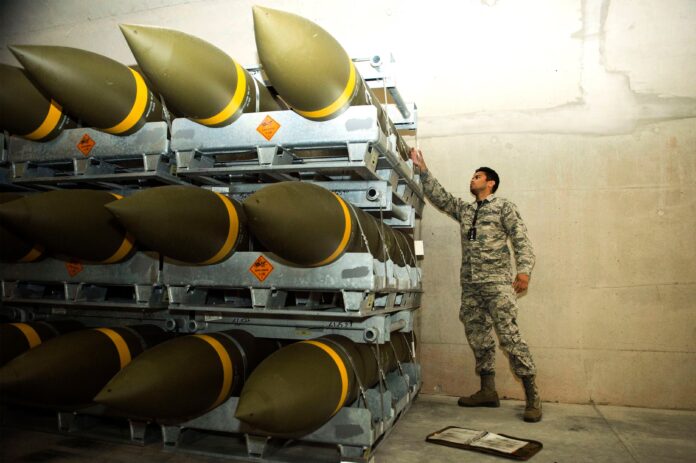
U.S. forces have fired more than 1,000 Tomahawk cruise missiles and as many as 2,000 advanced air-defense interceptors, including Patriot and THAAD systems, since fighting began in late February, The Wall Street Journal reported.
Officials say replacing those weapons could require several years, leading to internal discussions about how to revise contingency planning in light of the reduced inventories.
While leaders do not see an immediate threat to U.S. security, the focus has shifted to longer-term preparedness.
Some officials cautioned that if tensions with China escalated in the near future, the United States could encounter a temporary “munitions gap,” potentially increasing risks for American forces in a high-end conflict such as a defense of Taiwan.
Despite those concerns, officials in the Trump administration rejected suggestions that the military is underprepared.
White House press secretary Karoline Leavitt dismissed the warnings, emphasizing the strength of U.S. capabilities.
“The United States of America has the most powerful military in the world, fully loaded with more than enough weapons and munitions,” she said, the Journal reported.
Pentagon leaders echoed that message, underscoring that the U.S. maintains a “deep arsenal” and has carried out operations across multiple regions without jeopardizing national security.
Independent defense experts, however, say the situation is more nuanced.
A recent analysis by the Center for Strategic and International Studies found that the Iran conflict drew down substantial portions of critical missile reserves, including about one-quarter of Tomahawk supplies and more than half of certain defensive interceptor systems.
“It’s going to be years before we can rebuild those inventories,” CSIS senior adviser Mark Cancian said.
The report highlights a broader strategic issue: a potential future conflict with a nation like China would likely demand even larger quantities of sophisticated weapons, particularly long-range strike capabilities and missile defense systems.
Even so, military officials say the campaign against Iran has also yielded benefits, including valuable operational experience and a demonstration of U.S. combat effectiveness.
Adm. Samuel Paparo, who commands U.S. forces in the Pacific, told lawmakers he does not see any immediate degradation in America’s ability to deter China.
In the meantime, the Pentagon has begun taking steps to restore its stockpiles.
The Trump administration has proposed significant new funding to expand the defense-industrial base, aiming to increase production capacity and shorten delivery timelines.
Major defense firms, including Lockheed Martin and RTX Corporation, have already announced plans to ramp up missile manufacturing in the coming years.
Analysts say that while the U.S. remains capable of sustaining current operations, rebuilding inventories and preparing for future large-scale conflicts will require ongoing investment and careful strategic planning.
The overall picture, they say, is that the U.S. military continues to hold a dominant position, but the pace and demands of modern warfare are placing increasing pressure on its arsenal.
{Matzav.com}