
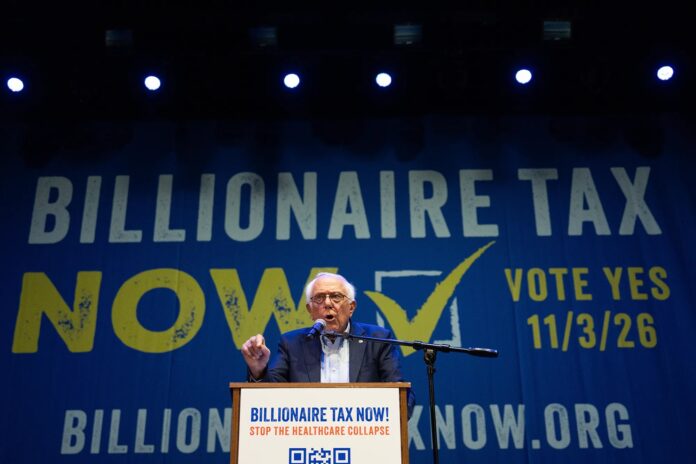

Backers of a proposed California tax targeting billionaires say they have collected enough signatures to place the measure on the November ballot, setting the stage for a high-stakes debate over whether the state should impose a one-time 5% tax on its wealthiest residents.
According to individuals familiar with the effort who spoke to The Wall Street Journal, more than 1.5 million signatures have been gathered. While county officials must still validate the petitions, supporters are confident they will surpass the approximately 875,000 signatures required to qualify.
The proposal was spearheaded by the Service Employees International Union–United Healthcare Workers West, a labor group representing over 120,000 healthcare employees. The union says the tax is intended to offset anticipated funding shortfalls in healthcare tied to President Donald Trump’s tax and spending legislation.
“When our growing coalition files these signatures, David will have won the first round against Goliath,” Suzanne Jimenez, a spokeswoman for the Billionaire Tax Now coalition, said in a statement Sunday.
Under the plan, the tax would apply to individuals who resided in California as of January 1 and whose net worth reaches at least $1 billion by the end of the year. SEIU-UHW estimates that roughly 200 people would be affected.
Before appearing on the ballot, the measure must still receive official certification and then secure majority support from voters. Critics are expected to argue that the proposal would penalize financial success, encourage wealthy individuals to relocate, and worsen existing economic challenges in a state already dealing with high taxes, elevated living costs, and population outflows.
California Gov. Gavin Newsom opposes the measure, warning that it could drive high-net-worth residents out of the state. Prominent business leaders and billionaires have also voiced concerns, describing the proposal as harmful to innovation and economically risky.
Opposition groups, including efforts backed by Google co-founder Sergey Brin, have invested tens of millions of dollars into competing ballot initiatives designed to block key aspects of the tax. One such proposal seeks to prohibit retroactive taxation and prevent new taxes on personal assets such as retirement accounts, stocks, bonds, and intellectual property.
Despite the criticism, the plan has gained backing from progressive Democrats, including Sen. Bernie Sanders of Vermont and Rep. Ro Khanna of California. Nvidia CEO Jensen Huang has also expressed support, stating he is “perfectly fine” with the proposal.
SEIU-UHW President Dave Regan argued that looming Medicaid reductions could have serious consequences unless new funding sources are found, including job losses in healthcare, declining public health outcomes, and rising insurance costs.
“This did not start as a political statement about rising inequality — we are simply trying to solve a huge and immediate and practical problem,” Regan said in a statement.
A recent poll conducted by UC Berkeley’s Institute of Government Studies found that 52% of likely California voters are inclined to support the measure, while 33% oppose it and 15% remain undecided.
Supporters estimate the tax could generate approximately $100 billion in revenue, asserting that California’s economy will continue to produce new wealth even if some billionaires choose to leave.
Opponents dispute those projections. An analysis by the California Tax Foundation estimated that the measure could actually reduce annual state revenue by between $3.53 billion and $4.49 billion “due to billionaire departures and their economic spillover effects.”
The state’s nonpartisan Legislative Analyst’s Office has offered a more cautious outlook, saying the tax would likely generate “tens of billions” in one-time revenue, while potentially leading to ongoing losses of “hundreds of millions of dollars or more” each year if some billionaires relocate.
{Matzav.com}