
 Vos Iz Neias
Trump Administration Considers Palantir AI for Overhauling Aging Air Traffic Control System
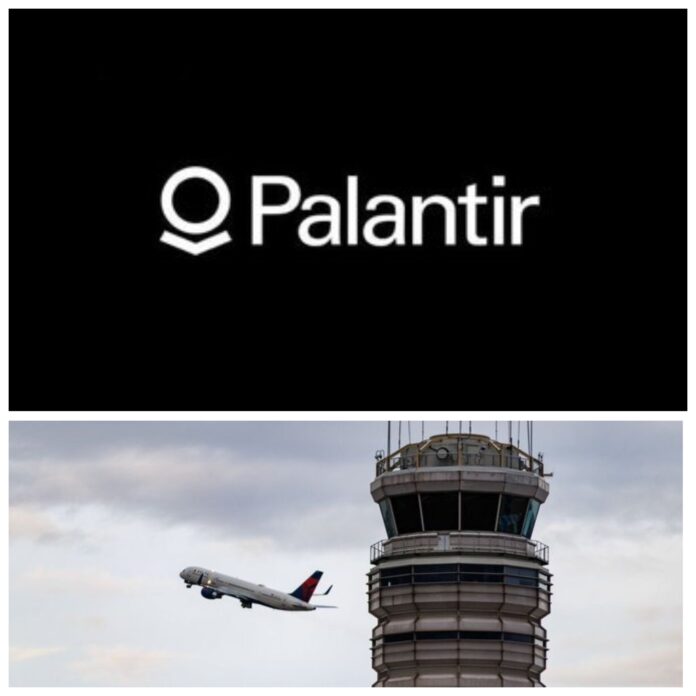
WASHINGTON D.C (VINnews) – The Trump administration is exploring the use of Palantir Technologies’ artificial intelligence to modernize the nation’s struggling air traffic control infrastructure as legacy systems show signs of failure, Bloomberg reported.
The Federal Aviation Administration outlined plans for a major upgrade, shifting to a centralized, cloud-based system that leverages AI to predict air traffic flows and adjust departure times to head off conflicts.
“We are going to revolutionize our air traffic management by modernizing our software, moving to a centralized, cloud-based system that will use artificial intelligence to predict air traffic flows and adjust departure times to resolve conflicts,” the FAA said in a statement.
Palantir is competing against Thales SA and Airspace Intelligence Inc. for a contract to develop SMART — Strategic Management of Airspace Routing Trajectories — an AI platform designed to extend conflict prediction from the current 15 minutes to as long as two hours.
The Colorado-based Palantir confirmed in a statement to investors that it has secured a contract with the FAA to supply a data analytics tool supporting the agency’s aviation safety modernization goals.
Congress has already allocated $12.5 billion to begin the overhaul of the air traffic control system, but the FAA says it will need an additional $20 billion to finish the project.
Transportation Secretary Sean Duffy said last week that the department is seeking additional funding to complete the work.
“They’re going to have to find a pathway to get us the rest of that money,” Duffy told Roll Call at Department of Transportation headquarters.
Duffy added that the new system will require time to develop, deploy, debug and train personnel on, but starting now would position the software to be ready in about 2½ years, coinciding with infrastructure upgrades.
“If we start now, by the time infrastructure upgrades are complete, the software should be ready within 2½ years, giving America a brand-new system,” he said.
Duffy also told CBS News that the AI integration could identify potential congestion weeks in advance and make minor adjustments to flight schedules to prevent widespread delays.