
 Vos Iz Neias
Using 500 Tons Of Explosives, IDF Blows Up Largest Terror Tunnels Found In Lebanon
JERUSALEM (VINnews) — Israeli forces have completed a large-scale operation to locate and destroy two Hezbollah tunnels in the Qantara area. These were two large, reinforced underground complexes with dozens of rooms for lodging and organization, capable of housing hundreds of Hezbollah fighters ahead of a planned raid into Israel.
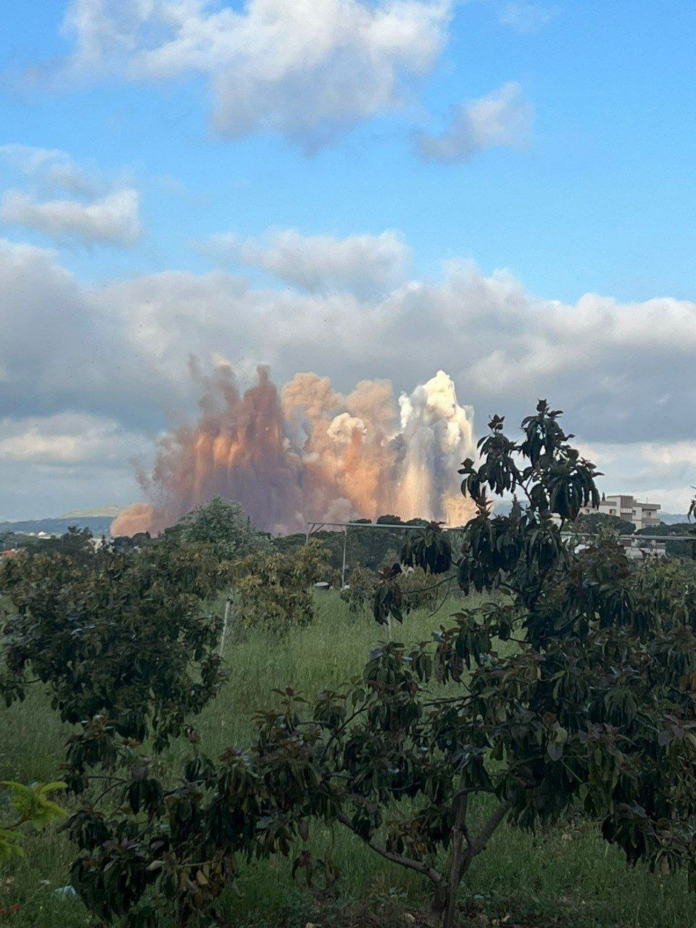
Inside the tunnels, shafts were discovered leading fighters to positions with launchers aimed toward Israeli territory. The destruction was carried out using about 500 tons of explosives, resulting in what the IDF described as “the largest explosion of the war.”
The two underground complexes were separate from each other, one about 700 meters long and the other 1.2 kilometers, and were located roughly 10 km from the border. The IDF estimates Hezbollah spent about a decade building them, with direct guidance and assistance from Iran.
תיעוד הפיצוץ הענק בדרום לבנון: רעידת אדמה הורגשה באזור | @uriya_keshet pic.twitter.com/hZwoazRKO3
— i24NEWS (@i24NEWS_HE) April 28, 2026
Clip of exploding tunnels in Lebanon, which reportedly caused a minor earthquake
The tunnels were discovered about a month ago based on precise intelligence. Forces found large quantities of weapons inside, including Kalashnikov rifles, anti-tank missiles, sniper rifles, explosive devices, explosive drones, and machine guns. The IDF noted that these tunnels are part of a broader underground infrastructure network uncovered during Operation “Northern Arrows” and destroyed in areas such as Rab al-Thalathin and Mays al-Jabal.
According to the commander of Brigade 7, the complexes functioned as underground “safe haven cities,” located about 500 meters apart, with anti-tank positions aimed at Israeli communities such as Misgav Am. While not directly connected, they were close to other infrastructure in the Saluki area, allowing fighters to move from the wadi into the complexes.
Each complex could accommodate hundreds of fighters simultaneously. When Israeli forces arrived, about 20 terrorists emerged and ambushed them using RPGs and explosives. Some were killed, others fled, and some were captured. Interrogations provided insight into their methods of operation. It took 24–48 hours to locate the tunnel entrances, after which the full layout was mapped, weapons removed, and remaining terrorists targeted, even after the ceasefire.
The tunnels, the largest found by Israel in Lebanon since the 2024 Northern Arrows operation began, reached depths of around 26 meters and were heavily reinforced, making them resistant to airstrikes, hence the need for massive quantities of explosives to destroy them. The operation is described as one of the most complex underground missions conducted during the war, eliminating a project Hezbollah had worked on for over a decade and which posed a significant threat to Israeli border communities.
An engineering officer from the elite Yahalom unit added that the tunnels were unusually large, wide enough for vehicles to pass through, and included extensive facilities such as sleeping quarters, bathrooms, kitchens, showers, and drainage systems. He emphasized the engineering challenge: proper placement of explosives was critical to collapse the entire structure rather than merely enlarging parts of it.