

Tensions between the United States and Iran escalated again over the weekend after a senior Iranian military official warned that a return to hostilities is “likely,” just hours after President Donald Trump expressed dissatisfaction with Tehran’s latest proposal in ongoing negotiations.
According to Iranian state media, a new draft proposal was delivered Thursday evening through Pakistan, which has been acting as a mediator, though no details were released about its contents.
The conflict, which began in late February with military action by the United States and Israel, has remained largely paused since April 8. One attempt at negotiations in Pakistan has already failed to produce an agreement.
“At this moment I’m not satisfied with what they’re offering,” Trump told reporters, blaming stalled talks on “tremendous discord” within Iran’s leadership.
“Do we want to go and just blast the …. out of them and finish them forever — or do we want to try and make a deal?” he added, saying he would “prefer not” to take the first option “on a human basis”.
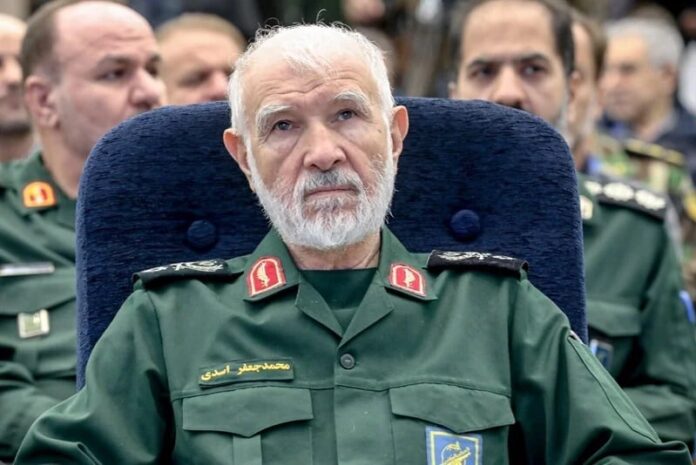
On Shabbos morning, Mohammad Jafar Asadi, a senior commander in Iran’s Central Command, said “a renewed conflict between Iran and the United States is likely,” according to remarks published by Fars News Agency.
“Evidence has shown that the United States is not committed to any promises or agreements,” he added.
Iran’s judiciary chief, Gholamhossein Mohseni Ejei, said Friday that while Tehran remains open to diplomacy, it will not accept terms imposed upon it.
The White House has not disclosed specifics of the Iranian proposal, but Axios reported that U.S. envoy Steve Witkoff submitted revisions to an earlier draft that would bring Iran’s nuclear program back into the scope of discussions.
Those proposed changes reportedly include requirements that Iran refrain from transferring enriched uranium from previously targeted facilities or restarting operations at those sites during negotiations.
Markets reacted briefly to news of the proposal, with oil prices dropping nearly five percent before stabilizing. Prices remain significantly elevated, roughly 50 percent higher than before the war, due largely to the continued closure of the Strait of Hormuz.
Since the outbreak of the conflict, Iran has effectively blocked the strategic waterway, disrupting major shipments of oil, natural gas, and fertilizer. In response, the United States has enforced its own blockade on Iranian ports.
Speaking at a rally Friday, Trump referenced a previous U.S. operation targeting an oil tanker during the standoff, saying “we’re like pirates”.
Despite the pause in large-scale fighting in the Gulf region, violence has persisted in Lebanon, where Israeli forces have continued strikes against positions linked to the Iran-backed Hezbollah group, even as a separate ceasefire remains in place.
Lebanon’s health authorities reported that 13 people were killed in southern strikes, including in the town of Habboush, which had been under an evacuation warning from the Israeli military.
Meanwhile, Washington confirmed late Friday that it approved significant new arms deals for regional allies, including a $4 billion Patriot missile system agreement with Qatar and nearly $1 billion in precision-guided weapons for Israel.
Back in Washington, lawmakers are grappling with a legal question over whether the administration missed a deadline requiring congressional approval for continued military action.
Officials in the administration maintain that the ceasefire effectively pauses the 60-day clock that would otherwise trigger the need for congressional authorization, a position disputed by Democratic lawmakers.
Trump is also facing mounting political pressure at home, with inflation rising, no decisive outcome in the conflict, and midterm elections approaching.
“There has been no exchange of fire between United States Forces and Iran since April 7, 2026,” Trump said in letters to congressional leaders, adding that the hostilities “have terminated”.
Inside Iran, the economic consequences of the war are becoming more severe.
The United States has introduced additional sanctions targeting three Iranian currency firms and warned companies against paying a “toll” demanded by Iran for safe passage through the Strait of Hormuz.
According to the U.S. military, its blockade has prevented approximately $6 billion in Iranian oil exports. Inflation in Iran, already high before the conflict, has now climbed above 50 percent.
“Everyone is trying to endure it, but… they are falling apart,” 40-year-old Amir, a Tehran resident, told an AFP reporter based outside the country.
“We still have not seen much of the economic effects because everyone had a bit of savings. They had some gold and dollars for a rainy day. When they run out, things will change.”
Separately, Iran’s judiciary announced that two men convicted of spying for Israel were executed today, marking the latest in a series of such cases in recent weeks.
One of the individuals had been found guilty of assisting Israel during a 12-day conflict last June.
{Matzav.com}