
 Vos Iz Neias
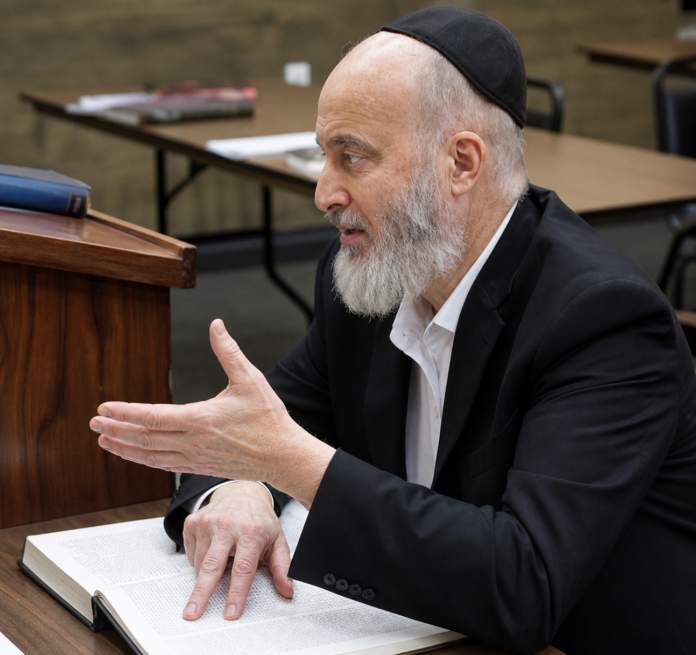
Rabbi Chaim Yisroel Abadi, Founder of Lakewood Youth Programs, Passes Away
LAKEWOOD (VINnews/Rabbi Yair Hoffman) – Rabbi Chaim Yisroel Abadi, a pioneering educator and founder of programs supporting at-risk youth in the Orthodox Jewish community, has died, community members said. He passed away over the Sabbath following a period of illness.
Abadi was the founder and spiritual leader of “Minyan Shelanu” and “The Chill,” initiatives based in Lakewood that focused on teenagers and young adults struggling within traditional yeshiva frameworks.
He established “The Minyan” in 2001, creating a space designed to be supportive and nonjudgmental. The program offered mentorship, social support and a sense of belonging to youth facing personal and educational challenges. Over the years, it became a widely recognized resource in the community, credited by supporters with helping many participants build stable and productive lives.
Abadi had lived in Lakewood long before the township’s rapid growth in recent decades. He was regarded by many as a forward-thinking figure who identified and addressed the needs of struggling teens at a time when such issues received less public attention.
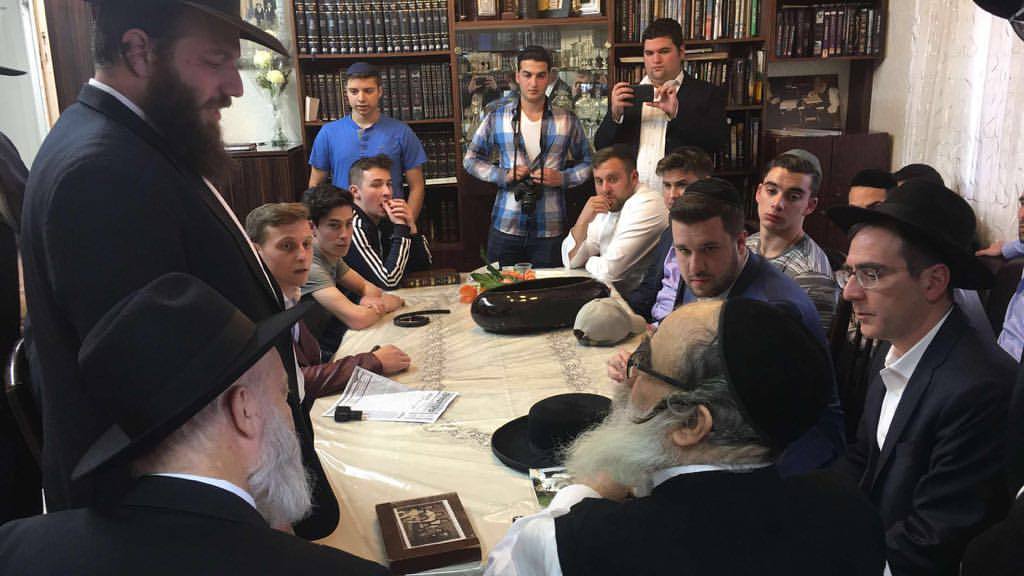
His father, Rabbi Yitzchak Abadi, a noted halachic authority and educator in Lakewood, died about five months ago.
Abadi had been ill for some time and was reported to be in critical condition in recent days before his death
There are Rabbonim whose lives are measured in the Torah and seforim that they leave behind. There are others whose lives are measured in the neshamos they refuse to abandon. HaRav Chaim Yisroel Abadi zt”l, who was niftar this past Shabbos in Lakewood after a long battle with illness, belonged to that second, rarer category — and the void he leaves cannot be measured at all.
He was the founder and Rov of “Minyan Shelanu” and of “The Chill,” its parallel division for girls. To the broader Lakewood community, those names long ago stopped being institutions and became something closer to a maskana — the maskana that no Yiddishe neshama, however far from where it once stood, was ever to be written off. The love they had for him was tangible. My brother-in-law would hire these young men for work and he was awed by the love and respect that they had for him.
A Father’s Mantle, a Son’s Different Mission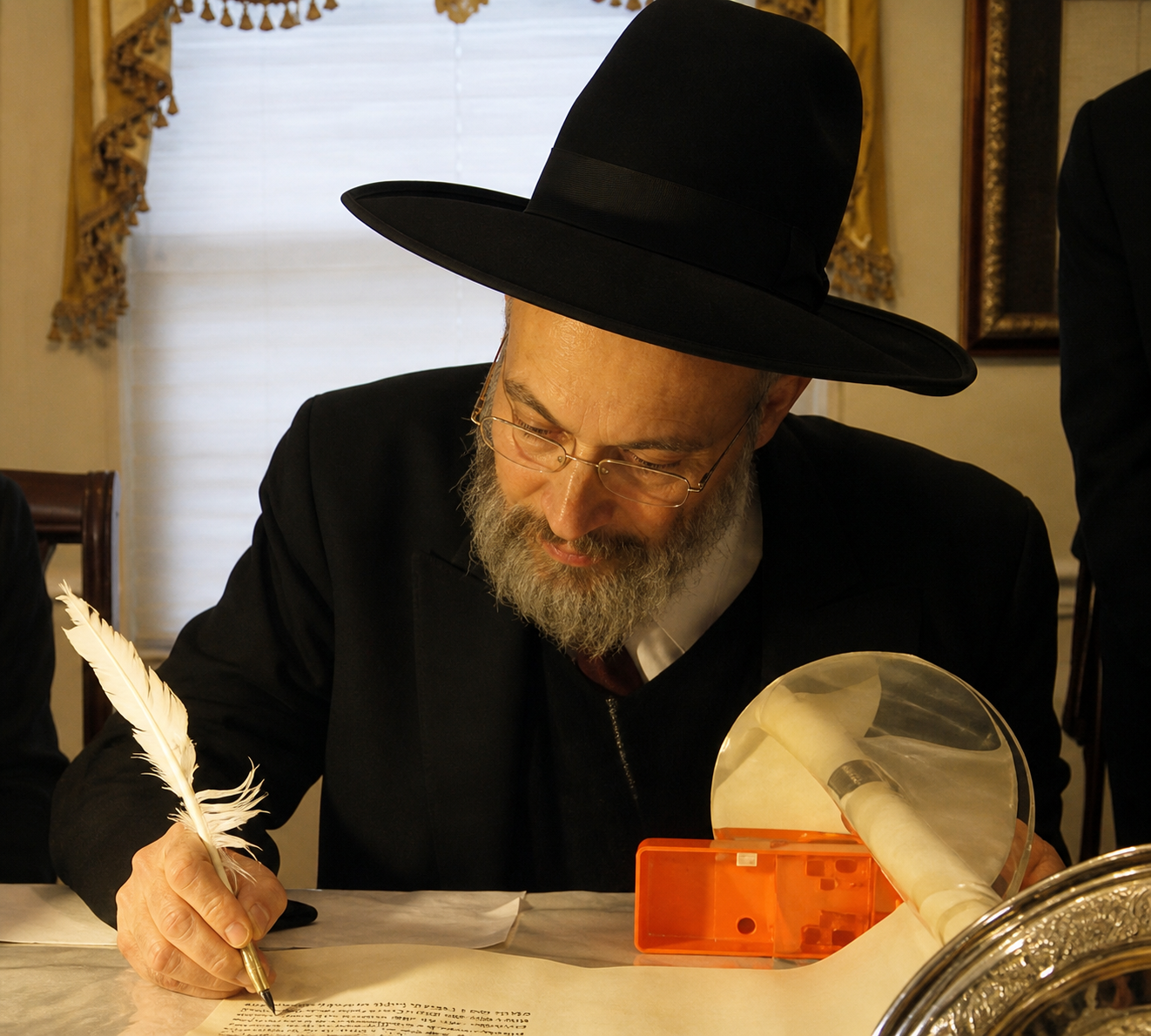
Rav Chaim was the son of HaRav Yitzchak Abadi zt”l, the towering posek and marbitz Torah from Lakewood’s earliest years, who was himself niftar only five months ago, on the second day of Chanukah. The father had been sent at nineteen by the Chazon Ish to learn under Rav Aharon Kotler zt”l, was appointed as posek of Beth Medrash Govoha and the Lakewood kehilla in his twenties, and trained much of the next generation of American poskim. Many of today’s leading halachic authorities in Lakewood and beyond consider themselves his talmidim.
That was the legacy into which Rav Chaim was born. And yet his own avodah took a strikingly different shape. His father carried the Torah of psak; the son carried the Torah of pikuach nefesh — quite literally, the saving of lives that the system had, in too many cases, given up on. He deeply loved his father and was sho-el aitzah from him constantly.
The community lost both within a single calendar year. Five months ago, the towering posek. Now, the son who pulled drowning bochurim back to shore. It is hard not to feel that an entire era — one that began with the Chazon Ish placing his hand on the head of a young man bound for Lakewood — has just closed.
The Founding of “The Minyan”
Lakewood in the late 1990s was already on its way to becoming the Torah metropolis it is today. But beneath the surface of that explosive growth, a quieter crisis was unfolding. Hundreds of teenagers and young adults — sons and daughters of yeshivishe homes — were finding themselves alienated from the system in which they had been raised. Some were experimenting with drugs. Some were sleeping in cars. Some were technically still “frum” but spiritually adrift. Almost all of them had stopped davening, because there was simply nowhere they felt welcome to walk in.
Rav Chaim Abadi noticed. And then he did something almost no one else in his generation was willing to do: he listened.
The story, as told by one of the founding members, is that a small group of close friends — perhaps ten in all — used to gather at Rabbi Gissinger’s shul after the regular minyan had dispersed. They would daven, eat breakfast, smoke a cigarette, and head to work. Rav Chaim, a successful real estate developer who had been ordained as a rabbi, gave several of them jobs at his own company. For some, it was the first stable framework they had known in years.
Out of that informal gathering, in 1998, was born Minyan Shelanu — “Our Minyan.” It quickly became something far larger than its founders had imagined: a beis medrash, a social center, a refuge, a surrogate home, and, in the words of more than one rebbi who watched it from the outside, “the only place in Lakewood where a kid who didn’t fit could feel he wasn’t broken.”
The Method That Saved Hundreds
Minyan Shelanu was never marketed as a kiruv operation, and Rav Chaim was emphatic on this point. The teenagers walking through his doors were not strangers to Yiddishkeit; they were sons of bnei Torah, often grandsons and great-grandsons of bnei Torah. What they had lost was not information — it was belonging.
So the method was deceptively simple. Unconditional acceptance. A non-judgmental space. A rav who, in the words of one alumnus, “still spoke to me on the phone multiple times a week, even after I moved out of Lakewood, even after I was married with children of my own.”
Around that core, an entire ecosystem grew. A daytime kollel and night seder under R’ Yaakov Bess. A yeshiva placement program under R’ Shneur Olshin, helping bochurim find the right yeshiva and covering tuition, travel, and living expenses. A Thursday night cholent and speech, with addresses by Reb Malkiel Kotler shlita, Dayan Dunner, Reb Shlomo Feivel Schustal, and others. Yossi’s game room. An annual Shabbaton. A road trip at the end of the zman that, in one famous summer, took the boys through thirteen states from the Smoky Mountains down to Florida. And, when needed — and it was often needed — full payment for drug rehabilitation, therapy, and yeshiva tuition for those whose families could not, or would not, help.
There was also “The Chill” — the girls’ division, kept entirely separate from the boys’ program, which served as a parallel haven for young women in similar straits. When a fire ripped through The Chill’s Jackson headquarters in the early hours of a Tuesday morning, destroying everything in its path, the girls who had called it home spoke of it the same way the boys spoke of the Minyan: as the place where, when every other door in their lives was locked, this one was always open.
The Cost He Paid
Those who knew Rav Chaim closely understood that his work exacted a price. As one Lakewood mechanech put it during the recent campaign of tefillos for his refuah: “The way Reb Chaim is metapel with our holy souls at risk in our town is unparalleled. And he has been living in incredible yissurim every day for years already.”
He carried, in other words, the weight of every kid he could not yet save, and many he had. He answered phone calls at hours no rav should have to answer phone calls. He attended weddings of bochurim whose parents had once given up on them. He danced at the chasunos of young men whose own fathers, in some cases, had stopped speaking to them. He was, as one alumnus described him, “my guardian angel — and I mean that literally. I am alive because of him. It is that simple.”
And he did all of this while his body was, increasingly, failing him.
The Final Days
In recent months, the tzibbur was repeatedly called upon to be mispallel for Rav Chaim Yisroel ben Chaya Rizsha. Tehillim groups were organized online. The seriousness of his condition was not hidden. In the past several days, he was in critical condition, and over Shabbos, his neshama was returned to its Maker.
Levaya details will be published when they become available.
The Legacy
It is tempting, in writing about a figure like Rav Chaim Abadi zt”l, to reach for the language of statistics — the hundreds of teens who returned to mainstream yeshivos, the alumni now raising frum families of their own, the Minyan members who today sit in kollel, run businesses, and serve as mentors to the next generation of strugglers.
But the deeper measure is harder to quantify. It is the measure of a community that, in part because of him, is no longer able to pretend that “this kind of thing doesn’t happen here.” It is the measure of every parent who, in the worst night of his life, was told by a friend, “Call Reb Chaim.” It is the measure of a mehalech — call it the Abadi mehalech — in which a struggling Yiddishe neshama is treated not as a liability to be managed but as a future zaide whose grandchildren are already davening for his geulah.
His father gave the Lakewood community its poskim. Rav Chaim gave the Lakewood community something arguably even more precious: he gave it back its lost children.
Yehi zichro baruch. T.N.Tz.B.H.