
 Vos Iz Neias
Police Authorize Three Hadlakot With 200 Participants Each At Meron Festivities
May 3, 2026·2 min read
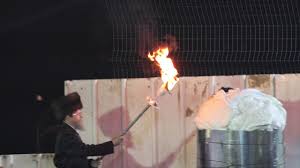
Following the Home Front Command decision on Friday to significantly tighten restrictions in Meron, and the Israel Police announcement canceling the traditional events of the Hilula of Rabbi Shimon bar Yochai, a new framework has been formulated in an effort to preserve the tradition as much as possible.
The key points of the proposed outline (pending approval), include:
Three ceremonial bonfire lightings (“hadlakot”) to be held:
- The central lighting by the Rebbe of Boyan (Hasidic tradition)
- The traditional Sephardic lighting led by Shlomo Moshe Amar
- A lighting led by rabbis from the Religious Zionist community
- Attendance: Each lighting will be limited to up to 200 participants, whose arrival will be organized by the respective communities. They will be asked to include representation from various communities that traditionally hold lighting ceremonies in Meron.
- Timing: The ceremonies will take place Monday evening, on the night of the hilula (Lag BaOmer).
- Broadcast:Live broadcasts will be provided from the ceremonies and the tomb courtyard.
- Crowd management: The plan assumes that several thousand people are already present in Meron with permission, and aims to manage them safely. Stewards will operate at the tomb area, as in previous years, to allow safe prayer.Designated areas to manage the existing crowd:
- The tomb compound
- Bnei Akiva complex
- Rabbi Benayahu Shmueli complex
- Rabbi Abuhatzera complex
- Shezifron amenities area
- Or Rashbi complex
- Entrance amenities area
- Additional elements:A traditional Lag BaOmer orchestra will perform in the courtyard of the tomb cave.
- Access restrictions: No additional arrivals to Meron will be allowed—neither by private vehicles nor by buses (including rabbis and public figures).
- Conditions: The plan will operate only if public order is maintained and the site can be managed safely. It remains subject to the restrictions of the Home Front Command and directives of the Israel Polic