
 Matzav
Transport Dispute Erupts Ahead of Yerushalayim Lag BaOmer Event as Petition Filed Over Limited Service
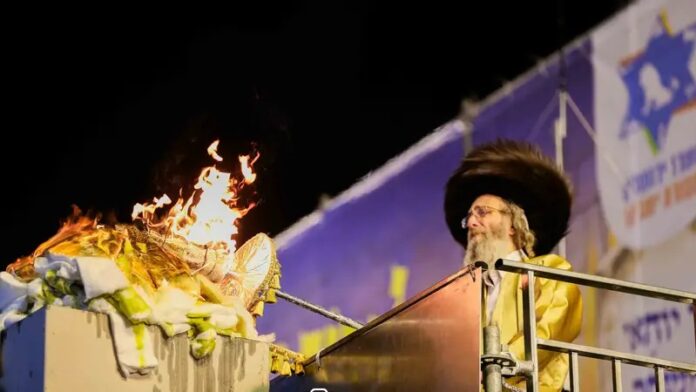
Tensions are mounting over transportation arrangements for a major Lag BaOmer gathering in Yerushalayim, where tens of thousands are expected to attend the lighting ceremony led by Rav Elimelech Biderman, but may face severe shortages in public transit.
Critics warn that without adequate service, participants could be left stranded or forced to pay high private travel costs, even as other large events receive extensive transportation support.
In an interview on Kol Chai Radio, Yisrael Gefner, head of the Emes L’Yaakov organization, described a growing crisis in planning for the event. He noted that while the situation in Meron is being handled separately, the large-scale gathering in Yerushalayim has not been matched with sufficient transportation infrastructure.
“We are essentially operating under two separate processes,” Gefner said, explaining that the Yerushalayim event requires its own dedicated logistical response.
Gefner pointed to a past case involving Israel Railways, which initially halted service during a mass protest near the entrance to Yerushalayim over the draft law, prompting a petition to the High Court of Justice. “The trains only resumed operation after the petition,” he said, arguing that the current dispute reflects the same broader issue — equal access to public services.
According to Gefner, while left-wing demonstrations and major entertainment events receive significant transit reinforcements, the chareidi tzibbur is often left without comparable support. “When a well-known secular singer performed, they added 14 trains,” he said, adding that protests and sporting events routinely receive expanded service. By contrast, for Lag BaOmer events, “not only is there no reinforcement — we are at risk of a shutdown.”
He also challenged the claim that the restrictions are based on genuine security concerns. “They conducted a review and found that the police actually requested increased security personnel, not a halt to train service,” he said, suggesting that the policy reflects systemic discrimination rather than operational necessity.
Gefner warned that without organized public transportation, many attendees will be forced to seek costly alternatives. “People are paying over 100 shekels for private rides — they don’t deserve that,” he said, emphasizing that public transit offers a safer, more affordable, and better-regulated option that also helps reduce congestion and risk.
In response, an urgent petition was filed with the High Court, seeking to establish a permanent policy requiring expanded transportation services for large chareidi events. “We want to ensure there is no situation where some receive and others do not,” Gafner said.
A decision from the court is expected by Tuesday morning, a delay that drew criticism from radio host Avi Mimran. “The same High Court that saw fit to convene in the middle of Shabbos to urgently discuss a protest in Kaplan suddenly shows surprising patience when it comes to the rights of the chareidi tzibbur. Even though the hilula begins tomorrow night, the court has until tomorrow morning to calmly deliberate the petition for increased transportation,” he said. Gefner added that even if the ruling does not impact the upcoming event, establishing a clear principle for the future remains the primary goal.
Shortly after the interview, Justice Yitzchak Amit ordered the relevant authorities — including the transportation minister, the Ministry of Transportation, the national transport authority, Israel Railways, the police, and the Yerushalayim municipality — to submit responses by 10:00 a.m. Tuesday regarding the petition, which argues that insufficient transportation poses a risk to public safety.
{Matzav.com}