

“I think it’s great. I know him very well, Mohamed [UAE President Sheikh Mohamed bin Zayed Al Nahyan]. [He’s] very smart, and he probably maybe wants to go his own way. …I think ultimately it’s a good thing for getting the price of gas down, getting oil down, getting everything down.”
—President Donald Trump, speaking to reporters in the Oval Office last week about the UAE’s decision to leave OPEC
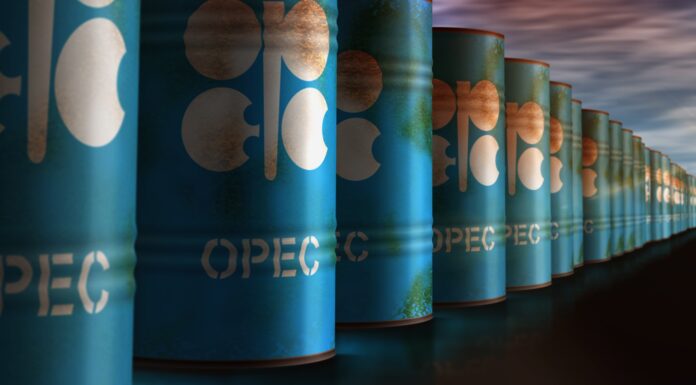
As the worldwide spike in oil prices continued last week, the United Arab Emirates created another upheaval, announcing that it was leaving OPEC, the oil cartel that has had a strong hand in setting prices for the past 65 years. As the third-largest oil producer in the cartel and perhaps the second-most influential, the UAE is going to change the power of OPEC by its departure.
Why did the UAE come to this decision? Experts say it is likely about more than just oil. The politics and larger economics of the region, as well as questions about allegiance and alliances, are all factors that probably influenced the Emiratis to move beyond the Saudi-dominated group.
The next question, of course, is what effects this will have not only on the region but on the entire world.
A short history of the cartel
OPEC—the Organization of Petroleum-Exporting Countries—was formed in 1960 by Saudi Arabia, Iran, Iraq, Kuwait and Venezuela. It has added another nine countries over its history. And in 2016, it made a deal with ten non-OPEC countries including Russia, Mexico, Kazakhstan and smaller producers to form what is known as OPEC+.
OPEC has claimed that it was formed to stabilize prices and protect its members against manipulation by international oil companies. Critics, however, have accused it of setting prices in a monopolistic manner by reducing or increasing the flow of oil. At the same time, some have made the case that OPEC isn’t efficient enough to really be called a cartel. (The fact that some of its members have been at war with each other, such as Iran and Iraq or Iraq and Kuwait, has been an issue at times.)
It’s clear that OPEC has sometimes been able to manipulate prices effectively. Arab members of OPEC (who called themselves OAPEC) coordinated the infamous 1973 oil embargo against the United States and the Netherlands over their support of Israel in the Yom Kippur War. The embargo pushed oil prices up by more than 300% and changed the economics of the remainder of the 1970s.
The discovery of new supplies of oil and gas as well as the development of fracking has made OPEC less powerful than it once was. Still, cutting production can drive prices up, and OPEC+ has tilted the edge back a bit.
A number of American presidents have requested policy changes from OPEC—usually appealing to Saudi Arabia, which acts as its de facto leader—when they felt the need. They were not usually successful.
One exception was when Trump convinced OPEC to reduce production in 2020 in order to keep oil prices stable in the midst of the pandemic. (While the US now produces a massive amount of oil due to fracking, the process requires that it be priced at around $65 a barrel to be economically viable.)
The exportation of the UAE’s oil is dependent on the Strait of Hormuz, so this decision won’t change the international supply of oil right now. But it may be important in the future.
To read more, subscribe to Ami

