
 Matzav
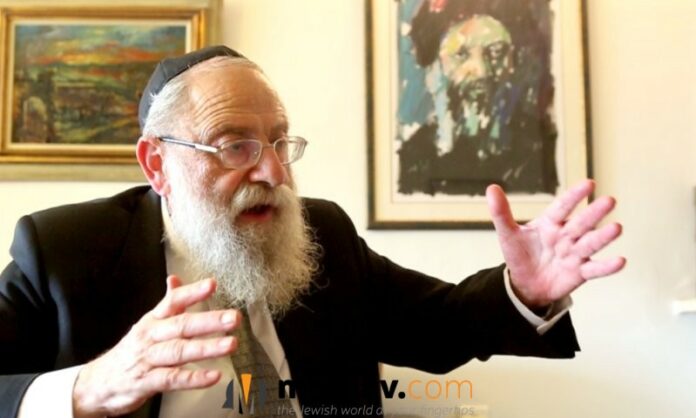
Rav Aryeh Stern zt”l, Former Ashkenazi Chief Rabbi of Yerushalayim, Passes Away at 81
The Torah world and the city of Yerushalayim are in mourning following the petirah of Rav Aryeh Stern zt”l, a prominent figure in the Religious Zionist rabbinic world, longtime marbitz Torah, and former Ashkenazi Chief Rabbi of Yerushalayim. He was 81.
Rav Stern was born on November 27, 1944, in Tel Aviv, into a home infused with Torah, emunah, and yiras Shamayim, combining Religious Zionist ideals with a chassidishe warmth. His father, Asher (Yeshaya), and mother, Chava Leah, raised him with a deep attachment to Torah and mesorah. His grandfather, Rav Rafael Stern, served as a respected communal leader in Ungvar and was closely connected to prominent Admorim.
In his youth, Rav Stern learned at Yeshivas HaYishuv HaChadash and later in Yeshivas Chevron. In 1964, he entered Yeshiva Mercaz HaRav, where he became closely attached to the teachings of his rebbi, Rav Tzvi Yehuda HaKohen Kook. Already as a young ben Torah, he distinguished himself with exceptional diligence and depth in learning, and in 1966 was awarded a prize from the Ministry of Religious Affairs for his chiddushei Torah.
In the winter of 1967, he enlisted in the IDF and later served in the Paratroopers Brigade in the reserves, including during the Six-Day War and the Yom Kippur War.
Following his marriage in 1968 to Miriam-Yocheved, Rav Stern settled in Tel Aviv, where he continued his hasmadah in the Shevet MiYehuda kollel, a program dedicated to training dayanim under Rav Ephraim Borodiansky.
In 1970, at the request of his rebbi, Rav Tzvi Yehuda HaKohen Kook, Rav Stern helped establish the Machon Halacha Berurah u’Birur Halacha, together with Rav Yochanan Fried and others. He stood at its helm from its founding, serving as the chief editor of its monumental work, organizing the shitos of the Rishonim and Acharonim on the sugyos of Shas.
Over the years, Rav Stern was a central marbitz Torah in a number of leading yeshivos. He served as a ram in Yeshiva Mercaz HaRav during multiple periods, and later as rosh yeshiva of Yeshivat HaDarom in Rechovot. He also delivered shiurim in Yeshivat Or Etzion, Yeshiva Kiryat Shmona during its early years, Yeshivat HaKotel, Yeshiva Oros Shaul, and the Aish HaTorah yeshivas hesder.
He was also active in strengthening Torah education more broadly, including helping found the Merhavim Institute in Yerushalayim for training melamdim and educators, alongside other prominent figures and with the encouragement of his rebbi. In addition, he took part in restoring the historic home of Rav Avrohom Yitzchok HaKohen Kook, transforming it into a center dedicated to preserving and transmitting his legacy.
For many years, Rav Stern served as the rav of the Har Chorev kehillah in the Katamon neighborhood of Yerushalayim, where he was known as a devoted manhig and moreh derech to his congregants.
In 2014, following years in which the position remained unfilled, Rav Stern was elected Ashkenazi Chief Rabbi of Yerushalayim, receiving the support of a broad coalition. He was chosen by a majority of the electoral body, alongside Rav Shlomo Moshe Amar, who was elected Sephardic Chief Rabbi.
Upon assuming the position, Rav Stern expressed his vision with clarity, stating: “I intend to serve as a rov for all of Yerushalayim’s residents: secular, religious, and chareidi. To head the Yerushalayim Rabbinate is a great privilege, but it also carries heavy responsibility. I will ensure that all religious services are accessible and welcoming, and in this way serve as a model for other rabbinates in Israel.”
A central focus of his tenure was strengthening the standards of kashrus in Yerushalayim. Through his efforts, the level of supervision was significantly elevated, and many within the tzibbur chareidi came to rely on the city’s mehadrin certification.
Rav Stern also addressed broader issues affecting the tzibbur, expressing opposition to increasing social division and advocating for greater unity among different segments of Klal Yisroel. He supported initiatives that encouraged dialogue and mutual understanding, including establishing forums for engagement between religious and secular communities.
Rav Stern is survived by his wife, Miriam-Yocheved, and their seven children, who continue in his path of Torah and avodas Hashem. Among them are Yekira, Sarah, and Rachel, as well as his son, Rav Yechezkel, a ram in a yeshiva. Their daughter Shira tragically passed away in 2007 at the age of 21.
Rav Stern leaves behind a legacy of harbotzas Torah, steadfast commitment to halacha, and a lifetime devoted to strengthening the רוחניות of Yerushalayim and Klal Yisroel. His impact will continue to be felt through his talmidim, his writings, and the many institutions he helped build.
Yehi zichro baruch.
{Matzav.com}