

Deborah Birx said Thursday that while the threat posed by a recent hantavirus outbreak connected to a cruise ship appears limited, health authorities must remain alert and communicate clearly in order to restore public confidence following the COVID-19 pandemic.
Speaking on Newsmax’s “National Report,” Birx pointed to what she described as a stronger global response compared to the early days of COVID-19, noting that governments are acting more decisively to contain the situation.
“The good news is, as opposed to what happened early on in COVID, countries are responding and governments are responding really well,” Birx said, noting that authorities are “taking precautions of contact tracing, staying in touch with them, monitoring them.”
The outbreak has been tied to the Andes strain of hantavirus and has drawn widespread attention after multiple passengers aboard a cruise ship contracted the illness following a stop in Argentina. The World Health Organization reported that three individuals have died.
Birx explained that hantavirus spreads less easily than COVID-19, stressing that it is not as well adapted for human-to-human transmission. At the same time, she cautioned that the United States has its own dangerous variant of the virus.
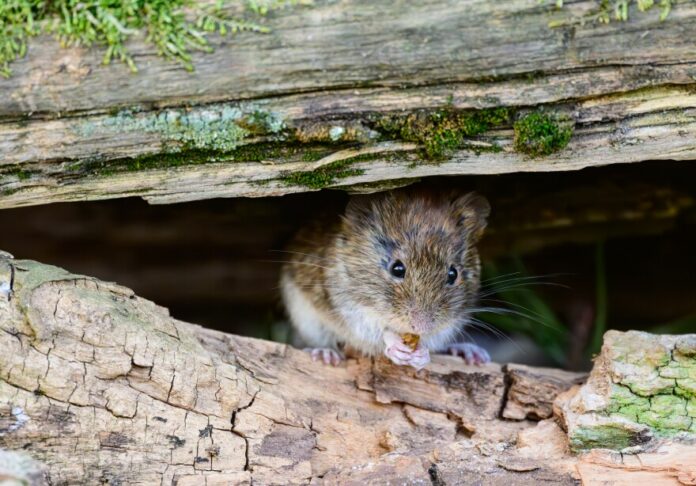
“We do have a different strain of hantavirus, but a deadly one in the Southwest,” she said. “Really being careful in the Southwest, when you see deer mice droppings, this can get aerosolized and cause hantavirus, as it has in the U.S. for years.”
She recommended that anyone who traveled on the affected cruise ship get tested, emphasizing the virus’s extended incubation period and the importance of early detection.
“Everyone who was on that ship, they should get tested for hantavirus, just to be reassuring to themselves over the next two to three weeks, because it has a long incubation period,” Birx said.
“We have 21st century testing. We ought to be using it because people need the peace of mind.”
Birx also said the situation underscores the erosion of trust in public health institutions that followed the COVID-19 crisis, and she called for greater openness in addressing past missteps.
“We all need to step back and really be very clear to the public about misstatements that did occur during CV,” she said, criticizing early pandemic guidance that claimed there was “no human-to-human transmission,” “no asymptomatic spread,” and that the virus “wasn’t aerosolized.”
“All of that isn’t true,” Birx said. “Breathing was enough to transmit the virus with COVID.”
She maintained that public health officials must learn from those errors and be better prepared for future outbreaks, including providing clearer guidance for schools and families.
“We have to revise our school closures to make it very clear to parents what we’re going to do when there’s another pandemic,” Birx said.
“All of us need to work with communities to reestablish that trust. It’s critically important.”
Birx concluded by warning that hantavirus infections can sometimes present with only mild symptoms, making testing and monitoring especially important to prevent further spread.
“No one wants to spread a virus,” she said. “So we need to give people the tools that they need.”