
 Matzav
Putin Declares Russia Will Prevail in Ukraine During Scaled-Down Victory Day Parade
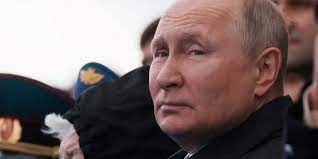
Russian President Vladimir Putin projected confidence in Russia’s war effort in Ukraine today as he presided over the country’s annual Victory Day parade in Moscow, though this year’s event notably lacked the tanks and other heavy military hardware traditionally featured in the display.
The ceremony on Red Square marked the Soviet Union’s victory over Nazi Germany in World War II and was held under heightened security amid fears that Ukraine could attempt to target the celebrations. Those concerns were eased somewhat by a temporary ceasefire brokered with U.S. involvement that reduced hostilities during the holiday period.
Putin, who has ruled Russia for more than 25 years, has long used Victory Day celebrations as both a patriotic rallying point and a showcase of Russian military strength. With the war in Ukraine now entering its fifth year, the Kremlin again tied the symbolism of World War II to the current conflict.
Addressing the crowd from Red Square, Putin praised Russian troops fighting in Ukraine, saying they “face an aggressive force that is armed and supported by the entire bloc of NATO,” and are fighting for a “just cause.”
“Victory has always been and will be ours,” Putin said, as columns of troops lined up on Red Square. “The key to success is our moral strength, courage and valor, our unity and ability to endure anything and overcome any challenge.”
Unlike previous years, however, the parade did not feature the usual procession of tanks, missile launchers, and other large weapons systems. Aside from the customary military jet flyover, heavy equipment was absent from the event for the first time in nearly 20 years.
Russian officials attributed the change to the “current operational situation” and said the government had implemented expanded security precautions because of the possibility of Ukrainian attacks. Russian state television commentators also argued that military equipment was needed more urgently on the battlefield.
For the first time, soldiers from North Korea participated in the Victory Day festivities, reflecting Moscow’s appreciation for Pyongyang’s assistance during fighting in Russia’s Kursk region, where North Korean forces reportedly helped Russian troops repel a Ukrainian incursion.
Russia announced a unilateral ceasefire covering Friday and Saturday, while Ukrainian President Volodymyr Zelenskyy had separately declared a truce beginning May 6. Both sides later accused one another of violating the ceasefire through continued attacks.
President Donald Trump said Friday that Russia and Ukraine had agreed to his request for a temporary ceasefire lasting through Monday, along with a prisoner exchange. Trump suggested the pause in fighting could represent the “beginning of the end” of the war.
Earlier in the week, Zelenskyy remarked that Russian officials “fear drones may buzz over Red Square” during the Victory Day ceremonies. Following Trump’s announcement, the Ukrainian leader mockingly issued a decree formally allowing Russia to proceed with the May 9 celebration and temporarily exempting Red Square from Ukrainian strikes.
Kremlin spokesman Dmitry Peskov dismissed Zelenskyy’s move as a “silly joke.” “We don’t need anyone’s permission to be proud of our Victory Day,” Peskov told reporters.
Russia’s larger and better-armed military has continued to make gradual territorial advances along the sprawling front line stretching more than 1,000 kilometers. Ukraine, meanwhile, has intensified its long-range drone campaign against Russian targets, striking energy infrastructure, factories, and military depots deep inside Russian territory.
Kyiv has developed drones capable of traveling more than 1,000 kilometers into Russia, significantly expanding its strike capabilities compared to the early stages of the war.
Russian officials warned that any Ukrainian attempt to attack Saturday’s ceremonies would prompt severe retaliation. Moscow threatened a “massive missile strike on the center of Kyiv” if the festivities were disrupted.
The Russian Defense Ministry also urged civilians and foreign diplomatic staff in Kyiv to leave the city, warning of possible escalation. European Union officials responded by saying their diplomats would remain in the Ukrainian capital despite the threat.
Victory Day remains one of the most emotionally significant commemorations in Russia. The Soviet Union lost an estimated 27 million people during World War II — known in Russia as the Great Patriotic War — and the memory of that sacrifice continues to play a central role in Russian national identity.
“We celebrate it with feelings of pride and love for our country, with understanding of our shared duty to defend the interests and future of our Motherland,” Putin said at the parade.
“Our soldiers suffered colossal losses, made a colossal sacrifice in the name of freedom and dignity of the peoples of Europe, became the embodiment of courage and nobility, fortitude, and humanity, and crowned themselves with the great glory of a grandiose victory.”
Since 2008, Moscow’s Victory Day parades have regularly featured extensive displays of armored vehicles, missile systems, and nuclear-capable intercontinental ballistic missiles. This year, however, many regional parades across Russia were reduced in size or canceled altogether because of security concerns.
Authorities also imposed broad restrictions on mobile internet access and text messaging services throughout Moscow on Saturday, citing public safety concerns. The measures come as the Russian government continues tightening online censorship and expanding control over digital communications.
Among the foreign dignitaries attending the event were Malaysia’s King Sultan Ibrahim Iskandar, Laos President Thongloun Sisoulith, Kazakhstan President Kassym-Jomart Tokayev, Uzbekistan President Shavkat Mirziyoyev, and Belarusian leader Alexander Lukashenko.
Slovak Prime Minister Robert Fico visited the Tomb of the Unknown Soldier outside the Kremlin walls but did not attend the main military parade. German Chancellor Friedrich Merz criticized the trip, stating, “I deeply regret this, and we will discuss his visit to Moscow with him.”
During a Kremlin meeting with Putin, Fico criticized what he described as a new “Iron Curtain” across Europe that has disrupted trade and stressed Slovakia’s reliance on Russian energy resources. Putin praised Fico for pursuing what he described as a “sovereign” foreign policy and for honoring Soviet soldiers killed during World War II.
{Matzav.com}