
 Matzav
Hantavirus-Ridden MV Hondius Cruise Ship Anchors In Canary Islands After Deadly Outbreak — As Passengers Evacuate
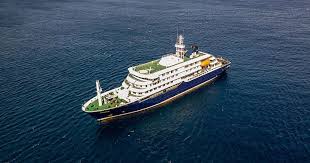
The Dutch expedition cruise ship HV Hondius arrived in Tenerife early Sunday as authorities began removing passengers following a hantavirus outbreak that has already claimed three lives and triggered an international public health response.
The vessel docked at approximately 6:30 a.m. local time on the Canary Island after days of mounting concern over the spread of the rare Andes strain of hantavirus among travelers aboard the Atlantic voyage.
Spanish authorities immediately launched a tightly controlled disembarkation process. Travelers leaving the ship were ordered to leave their luggage behind and undergo medical evaluations before being permitted to exit in carefully managed groups.
“All the passengers remain asymptomatic,” Spain’s Health Minister Monica Garcia said during a Sunday morning news conference. “The entire operation is proceeding normally.”
The first group to leave included 13 Spanish tourists and one Spanish crew member, who departed by small boat several hours after the ship anchored offshore.
Images from the operation showed passengers dressed in blue protective gowns, surgical head coverings, and white face masks while carrying belongings sealed in plastic bags. Emergency personnel in hazmat gear escorted them onto buses that transported them directly to evacuation flights waiting at Tenerife Airport.
According to Spain’s Health Ministry, the Spanish nationals will be transported to a military hospital in Madrid, where they are expected to remain isolated in individual quarantine rooms under strict observation.
Officials emphasized that extensive precautions were put in place to ensure no interaction occurred between passengers from the ship and residents of the island.
The ship’s arrival had fueled anxiety among Tenerife residents in recent days, though officials from the World Health Organization said they believe the overall danger to the public remains limited. The agency said it continues to track developments closely.
The US State Department said 17 American passengers will be flown back to the United States aboard a repatriation flight before being transferred to a federal quarantine facility in Nebraska for further monitoring and evaluation.
British authorities are also arranging a special evacuation flight for UK citizens. Those passengers will reportedly be required to isolate for 45 days once they return home.
The outbreak turned the luxury expedition into a medical emergency weeks after the cruise first departed Argentina on March 20.
Health investigators believe the outbreak began after an elderly Dutch couple contracted the Andes strain while visiting Argentina. The husband later died aboard the ship. His wife became ill after leaving the vessel on St. Helena and later died after traveling to South Africa.
A German passenger also died during the outbreak.
The WHO said three additional passengers — from Germany, the Netherlands, and Britain — were evacuated to the Netherlands for treatment after becoming suspected cases. Swiss authorities separately confirmed that a former passenger tested positive after developing symptoms following departure from the ship.
Complicating containment efforts, 23 additional travelers had already returned to various countries around the world before learning they may have been exposed to the virus on April 23.
So far, only one of those individuals is believed to have become sick.
American health officials are now monitoring former passengers located in Georgia, California, and Arizona.
Passengers who remained aboard the ship have spent days undergoing questioning by health officials while waiting to determine whether symptoms emerge. Experts say the incubation period for the virus can last as long as eight weeks.
Hantavirus primarily attacks the respiratory system and can cause victims to suffocate as the illness progresses. While the disease is typically spread through exposure to infected rodent droppings, the Andes strain is unusual because it can also spread between humans.
Experts say transmission generally requires prolonged close contact and is far less contagious than illnesses such as COVID-19.
Patients often initially experience flu-like symptoms before the disease rapidly worsens. Survivors have described the illness as “torture.”
The US Centers for Disease Control and Prevention has issued a “Level 3” response designation tied to the outbreak, though officials stressed that the danger to the general public remains low.
A Level 3 designation is considered the agency’s lowest emergency response category and is used primarily to mobilize specialists to monitor developments and prepare contingency plans if conditions worsen.
{Matzav.com}