
 Matzav
Despite Denials, Netanyahu’s Reported Demand for Reserved Spots Sparks Turmoil Inside Likud
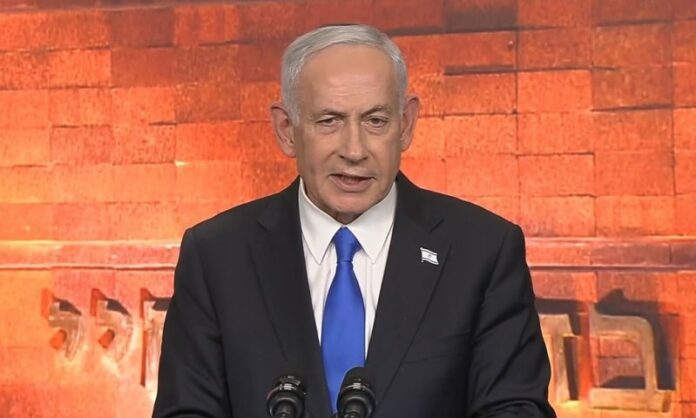
Tensions are continuing to rise within the Likud party despite official denials issued last week over reports that Israeli Prime Minister Bibi Netanyahu is seeking 10 reserved slots on the party’s Knesset list ahead of the next election.
Senior party officials, activists, and potential candidates are now openly debating the issue, with some backing Netanyahu’s desire for greater control over the slate while others warn that such a move could weaken the influence of party members and upset the internal balance within Likud.
According to sources inside the party, many believe Netanyahu’s public demand for 10 reserved spots is actually part of a negotiating tactic and that he ultimately hopes to secure five or six realistic positions for candidates of his choosing.
One member of the Likud secretariat dismissed the controversy as political maneuvering.
“This is all spin,” he said. “He doesn’t really want ten reserved spots. It’s nonsense. He wants three or four, so he says ten or twenty in order to negotiate.”
The official added that despite public criticism from some corners of the party, most Likud members would likely back Netanyahu in the end.
Ofakim Mayor Itzik Danino, a Likud member, voiced partial support for the proposal but said the scope should be reduced.
“The prime minister is the main engine bringing mandates to Likud,” Danino said, while cautioning that there is “an imbalance between the list that would emerge from primaries and the number of reserved spots being requested.”
Much of the resistance inside Likud is reportedly being led by MK Dovid Bitan, who has argued that the prime minister should not be given unchecked authority over the makeup of the party list.
Even so, party insiders believe some type of compromise will eventually be reached.
Sources familiar with internal discussions said Justice Minister Yariv Levin has also become involved in mediation efforts aimed at preventing a major internal clash within the party.
Likud officials believe Netanyahu hopes to place several outside figures and security personalities onto the list, including Gal Hirsch and Dedi Simchi, along with other new candidates.
One senior Likud minister offered a broader explanation of the political tensions developing behind the scenes.
“In the end, Netanyahu’s pressure is understandable,” the minister said. “He doesn’t want Dovid Bitan and the clique he brings with him. There are many people on the list whom he strongly wants — people with values and people close to him — some of whom were pushed aside in the last primaries, and he wants to advance them.”
The minister said one of the central issues revolves around the regional district system inside Likud.
“He doesn’t want the existing districts or the people who entered through them, and certainly not additional new districts,” the minister explained. “So his dilemma is significant. On the one hand, he wants reserved spots — at least two in every group of ten — in order to bring in fresh faces. But doing that pushes aside loyal people.”
Despite concerns that regional candidates could lose influence, some contenders inside the party are supporting Netanyahu’s efforts.
Shimon Booker, who is running for the Negev slot on the list, told Walla: “You have to give Bibi every reserved spot he wants, even if it hurts me personally — because it’s for the good of Likud.”
The senior minister added that Netanyahu’s inner circle has been discussing several compromise models, though each proposal appears to create new tensions.
“They’re talking about ideas like copying the current list and adding two reserved spots in every group of ten, freezing the list entirely, or changing the regional district structure,” he said. “But every one of those solutions creates internal conflict because it pushes out people Netanyahu values and wants to keep close.”
According to the minister, even more dramatic possibilities are being discussed behind closed doors, including reducing the scope of primaries or scrapping them altogether.
“There are even ideas not to hold primaries at all in order to save money, because the movement is in debt and is selling off assets and branch offices,” he said. “On the other hand, Netanyahu believes less in political operatives and more in the wisdom of the masses and social media.”
At the same time, heated debates have reportedly been taking place within Likud’s internal court system over the future of the party convention and membership structure.
MK Dovid Bitan and others have opposed attempts to reduce the influence of newly registered party members. Some within the party have claimed certain registrations were questionable, while others argued that canceling thousands of memberships or invalidating elected branch leaders would severely damage internal party democracy.
Party insiders now believe the larger convention itself may ultimately never take place, but say the real battle will center on the primaries and the final makeup of the Knesset slate.
Even Netanyahu’s allies reportedly understand that any overly aggressive restructuring could trigger a major internal war within Likud, increasing pressure to find a middle-ground solution that balances Netanyahu’s desire to refresh the party list while preserving the influence of longtime party figures.
{Matzav.com}