
 Matzav
Russian Cargo Ship Mystery Deepens Amid Claims of Secret Nuclear Shipment to North Korea
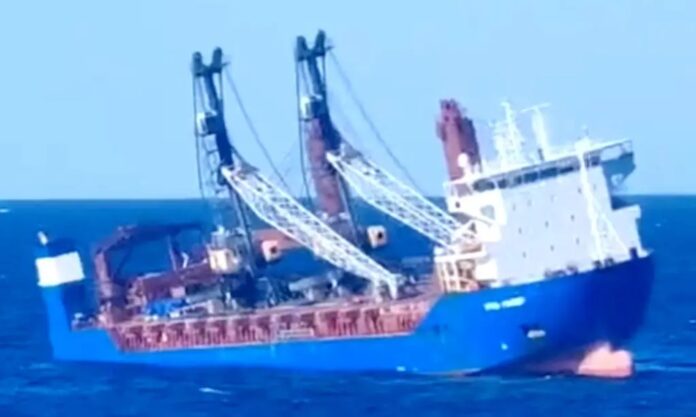
New details have emerged surrounding the mysterious sinking of a Russian cargo vessel in the Mediterranean Sea, with investigators now examining claims that the ship may have been transporting two nuclear reactors intended for North Korea when it went down following a series of explosions late in 2024.
According to a CNN report, growing speculation has centered on possible Western involvement in the destruction of the vessel, the Ursa Major, which sank roughly 60 miles off the coast of Spain on Dec. 23, 2024.
Spanish investigators reportedly believe the ship — also referred to as Sparta 3 — may have been struck by an advanced torpedo capable of piercing the hull and sending the vessel to the bottom of the Mediterranean.
Investigators concluded that the damage was consistent with a Barracuda supercavitating torpedo, an uncommon and highly sophisticated weapon believed to be possessed only by the United States, several NATO nations, Russia, and Iran.
Following the sinking, the ship’s Russian captain allegedly informed Spanish authorities that the vessel had been carrying “components for two nuclear reactors similar to those used in submarines,” though he reportedly said he did not know whether the reactors contained nuclear fuel, CNN reported.
The captain, Igor Anisimov, reportedly told investigators he believed the shipment was ultimately destined for the North Korean port city of Rason.
The vessel had departed Russia on Dec. 11, 2024. Despite being licensed to transport radioactive material, the ship’s publicly filed cargo manifest reportedly listed only empty containers, two oversized cranes, and two large “manhole covers,” making no mention of nuclear-related equipment.
The voyage took place shortly after North Korean leader Kim Jong Un agreed to dispatch thousands of troops to assist Russia in regaining control of the Kursk region after Ukraine’s unexpected incursion embarrassed the Kremlin and Vladimir Putin.
For years, analysts have suspected that Russia has been supplying North Korea with military and nuclear expertise in exchange for support, particularly as Kim has openly pursued the development of a nuclear-powered submarine program.
European militaries had reportedly been monitoring the Ursa Major during its journey. The Portuguese navy even sent aircraft to track the ship and accompanying Russian military escort vessels as they traveled through the Mediterranean.
Portuguese officials later said surveillance of the vessel ended on the morning of Dec. 22, after which the cargo ship was observed slowing near the Spanish coast.
Spanish rescue authorities reportedly contacted the ship after noticing its unusual behavior, but the Russian crew allegedly responded that there was no emergency.
Roughly a day later, however, the Ursa Major transmitted a distress signal after three explosions erupted aboard the vessel, apparently near the engine room. Two crew members were reportedly killed in the blasts.
The situation escalated further when one of the Russian escort ships, the Ivan Gren, arrived and instructed nearby vessels to remain at least two nautical miles from the damaged cargo ship. The Russian military vessel also reportedly demanded that Spain immediately hand over the rescued sailors.
CNN reported that footage from the rescue operation showed Spanish crews unable to gain access to the ship’s engine room because it had been completely sealed.
Although the vessel initially appeared stable, it later plunged to the seabed shortly after the Ivan Gren launched several flares into the sky. Investigators reportedly detected four additional explosions resembling underwater mine detonations soon afterward.
Four days after the sinking, the vessel’s owner, Oboronlogistics, declared that the Ursa Major had been the victim of a “targeted terrorist attack,” claiming the ship sustained a 20-inch-by-20-inch breach in its hull.
Further questions arose when the Russian research vessel Yantar arrived above the wreck site approximately one week later. Authorities reportedly detected another four explosions in the area around the seabed after its arrival.
Spanish officials later informed lawmakers that investigating the wreckage would be extremely dangerous because the ship rests at a depth of 8,202 feet and would require major technical resources to examine safely.
The mystery intensified further after records showed the US military twice flew its WC135-R “nuke sniffer” aircraft over the area — once on Aug. 28, 2025, and again on Feb. 6 this year.
American officials have not publicly explained the purpose of those flights or whether the aircraft detected any radioactive material near the wreckage.
With Russia, the United States, and other governments offering little public explanation about the incident, major questions remain unanswered about what exactly the Ursa Major was carrying — and what caused the vessel to sink beneath the Mediterranean.