

President Donald Trump has proposed pausing the federal gas tax as a form of relief for American consumers as energy prices soar as a result of the war in Iran.
The move – which requires congressional approval to pass – would mark the latest in a string of government interventions to address fallout from the war, which is weighing on Trump’s popularity.
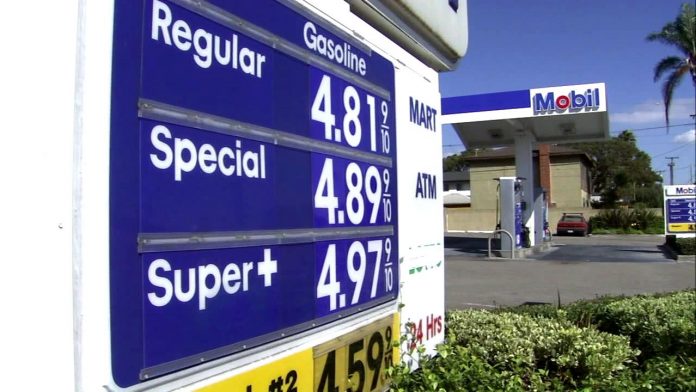
Since the war began in late February, the price of a barrel of Brent crude oil, an international benchmark, has skyrocketed from about $70 to more than $107. U.S. gas prices – now an average of $4.50 a gallon – have reached levels not seen since 2022 and contributed to Trump’s falling approval ratings ahead of the November midterms.
So is a pause on the federal gas tax likely to happen, and would it make a difference to the price you pay at the pump? Here’s what to know.
1. Why have prices surged?
Energy prices have spiked since the U.S. and Israel launched joint strikes on Iran on Feb. 28, leading Iran to block oil tankers from leaving the Persian Gulf through the Strait of Hormuz.
The critical waterway had previously carried about a fifth of the world’s oil and gas supplies, with the reduced flows causing prices to spike. The U.S. has enforced its own blockade of Iranian ports in retaliation, and the issue remains a key sticking point in negotiations to end the war. This week, Trump said the ceasefire between the two nations is on “life support.”
The U.S., as a major oil producer, is less energy-dependent than many countries, but oil is priced globally. “A disruption anywhere turns into a price increase everywhere,” Samantha Gross, a fellow at the Brookings Institution, told The Washington Post.
2. How is gas taxed, and what is Trump proposing?
Prices at the pump incorporate a mixture of federal and state taxes, meaning they can vary sharply between states. The federal tax is 18.3 cents per gallon on gasoline and 24.3 cents per gallon on diesel fuel, as well as a “leaking underground storage tank” fee of 0.1 cents per gallon on both fuels, according to the U.S. Energy Information Administration.
State taxes vary, with a national average of 32.6 cents on gasoline and 34.8 cents on diesel, according to the EIA. Factors such as the type of taxes added, where the gas comes from and the ingredients in it can also affect prices, which change daily. The Gulf Coast and southeastern states had the lowest prices in 2024, The Post has reported, partially because of their proximity to refineries.
On Monday, Trump proposed suspending the federal tax for an unspecified period, saying prices would “drop like a rock” once the war ended. Also that day, the Energy Department said it would release 53 million barrels of crude oil from the Strategic Petroleum Reserve. The Trump administration had agreed to release a total of 172 million barrels as part of a contribution to the International Energy Agency’s effort to stabilize oil prices, the Energy Department said.
The administration has also lifted restrictions on ships moving fuel between U.S. ports, eased pollution rules regarding ethanol and temporarily waived sanctions on Russian oil. Some states, including Georgia, Utah, Kentucky and Indiana, have moved to suspend or reduce gas taxes in response to rising costs, as have countries such as Canada, Australia and India, according to the IEA.
3. How would it work?
Trump cannot suspend the federal tax on his own; he needs Congress to approve it. The only time that’s happened was in 1934, when Congress cut half a cent off the gas tax when Prohibition ended, The Post reported.
The money from the tax goes into the Highway Trust Fund, which pays for road and public transport improvements. A five-month suspension of federal taxes would reduce revenue by $17 billion, the Bipartisan Policy Center has said, about 46 percent of the annual total.
In 2022, then-President Joe Biden asked Congress to suspend the gas tax for three months as gas shot to $5 a gallon in the aftermath of Russia’s invasion of Ukraine. The idea was met with skepticism by economists and lawmakers in both parties, with many unconvinced it would help bring prices down for consumers. No action was taken.
4. What has the reaction been?
Though the idea has previously been dismissed by some a gimmick that would create a hole in the transportation budget, this time both Republicans and some Democrats have expressed support.
Sen. Josh Hawley (R-Missouri) said he would introduce legislation to suspend the gas tax in a post on social media Monday. Rep. Anna Paulina Luna (R-Florida) said she would also introduce a bill in the House to suspend the federal gas tax in light of Trump’s comments. “American families need this relief on gas prices,” she said in a post on X.
Senate Majority Leader John Thune said he has not “been a fan” of suspending the federal tax in the past but would hear out colleagues in favor of it. “Obviously, any time you suspend the gas tax, that leaves a big hole in the highway trust fund, which also has implications down the road,” he said in comments reported by the Associated Press.
Democratic Sens. Richard Blumenthal and Mark Kelly had previously pushed the idea in March, introducing the Gas Prices Relief Act to temporarily suspend federal taxes through Oct. 1. “Families need help now,” Kelly said Monday in a post on X, adding, “Let’s get it done.”
Rep. Chris Pappas (D-New Hampshire) also called for it to happen quickly. “This should have happened months ago,” he wrote on X. “Let’s pass it this week.”
5. What happens next?
Whether Congress approves the decision remains to be seen, along with how any potential relief would be passed on to consumers.
When the idea was raised by Democratic presidential contenders in 2008 and by Biden in 2022, it was dismissed as a gift to oil companies. Federal taxes on gasoline are levied at the terminal or refinery, or when it’s imported to the United States, rather than at a gas station, according to the Congressional Research Service. This would make it difficult for the government to ensure the savings would be passed onto consumers, it said.
Any potential savings could also be offset by further increases in global oil prices. In the months after Russia’s invasion of Ukraine in February 2022, U.S. gas prices surpassed $5 a gallon.
A reduction in revenue to the Highway Trust Fund could bring its own predicaments. The federal gas tax is a “critical source of revenue for financing federal transportation,” the Bipartisan Policy Center has noted, meaning any interruption to this could leave a hole in the transportation budget that would need to be filled. It already faces declining revenue from inflation and improved fuel efficiency, and Congress has been outspending the fund’s growth.
The Congressional Budget Office predicts the fund will run out of money by 2028.
(c) 2026, The Washington Post · Victoria Craw