
 Vos Iz Neias
The Klausenberger Rebbe, Auschwitz, and the Deeper Meaning of a Shalom Zachar
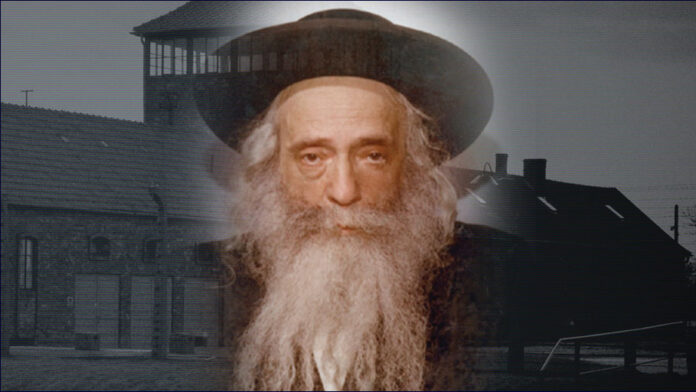
New York (VINNEWS/Rabbi Yair Hoffman) A Nazi guard shot the Klausenberger Rebbe zt”l in the arm. They were in Auschwitz. It did not take ruach hakodesh for the Rebbe to know that the camp infirmary was a death sentence dressed up as medicine. Everyone pretty much knew that walking through that door meant never walking out.
So the Rebbe healed himself.
He plucked a leaf from a nearby tree and pressed it against the wound. He broke off a branch, tied it around his arm, and walked away. Three days later the wound was closed.
Standing there in the filth of Auschwitz, blood drying on his sleeve, the Rebbe made a vow. If he lived through this, he would build a hospital in Eretz Yisrael. Every patient would be treated with dignity. Every doctor and nurse would believe in a Creator. Healing a Jew, they would understand, is among the greatest mitzvos in the Torah.
Thirty-two years later. Union City, New Jersey. A modest yeshiva building. It is the spring of 1976, just after Purim, and the Rebbe is hosting a Shalom Zachar.
Not for his son. Not for a grandson. And not for any child of any chassid.
That week, the maternity ward at Laniado Hospital in Netanya had opened its doors. A boy had been born — the first child to enter the world in the Rebbe’s hospital. Someone in Netanya picked up a phone. They held the receiver up in the nursery so the Rebbe in New Jersey could hear the baby cry.
That cry tore through him.
The Nazis were gone. Klal Yisroel had survived. A new Jewish child had drawn his first breath in a hospital built on a vow made in Auschwitz.
How could the Rebbe not make a Shalom Zachar?
AFTER MAARIV THIS SHABBOS
Across the world this Shabbos, gabbaim will announce a Shalom Zachar at the home of a new father. The week was long. The couch looks inviting. Going out into the cold to nibble arbis at a stranger’s table is not what tired feet want.
But the emotion the Klausenberger felt that night a half century ago. in 1976 is the emotion behind every Shalom Zachar. A Jewish child is here. The chain held. Klal Yizroel continues
WHY KNOW THE REASONS
The Rambam writes that understanding the reasons behind mitzvos matters (Hilchos Me’ilah 8:8, and again in Moreh Nevuchim 3:31). The Zohar (Yisro 93b) says the same. So does Rabbeinu Yonah in Shaarei HaAvodah #54. The principle holds for minhagim as well. Three classical reasons are given for the Shalom Zachar. A fourth will be proposed here.
REASON ONE: GRATITUDE
The Terumas HaDeshen (Siman 269) calls it a seudas hoda’ah — a meal of thanks. Thanks for the safe passage of the child through the dangers of birth. He reads this into the Tosfos in Bava Kamma 80a (d“h Yeshua HaBen) citing Rabbeinu Tam.
A NEW ANGLE ON GRATITUDE
The Klausenberger’s Shalom Zachar in Union City opens a wider window. Perhaps the baby in the cradle stands for something larger than himself. Perhaps he stands for Klal Yisroel.
That infant survived the Rindfleisch massacres. He survived the Crusades. He survived Chmielnicki’s Tach VeTat. He survived the Russian pogroms. He survived Auschwitz. He survived October 7th. Every Jewish baby born today is a survivor of every catastrophe that came before him.
Hakaras hatov for that survival is not a small thing. It shapes a person. A Jew who feels gratitude — to Hashem and to the people around him — becomes a different kind of oveid Hashem than a Jew who does not.
REASON TWO: THE LOST TORAH
The TaZ cites the Drisha — Rav Yehoshua Falk (1555–1614), one of the towering Polish poskim of his generation. The Drisha builds on the Gemara in Niddah 30b. A child in the womb learns the entire Torah from a malach. At the moment of birth the malach strikes the baby on the mouth and the Torah is forgotten. The Shalom Zachar, says the Drisha, mourns that loss.
The implication is sharp. Torah is not a feature of Jewish life; Torah is life itself. “Ki heim chayeinu v’orech yameinu,” the Maariv quietly insists every night. The Drisha hears those words in the cry of a newborn.
REASON THREE: SHABBOS
The TaZ offers his own reason, rooted in the Midrash (VaYikra Rabba 27. The Midrash explains why a bris waits until the eighth day: a king’s subjects must first present themselves before the matronisa — the queen — before approaching the king himself.
Shabbos is that matronisa.
The TaZ extends the idea. The Shalom Zachar is held on Shabbos. Why? Because Shabbos is the gateway through which the new Jew enters.
The line is often quoted: more than the Jew has kept Shabbos, Shabbos has kept the Jew. Ahad Ha’am wrote it, and he was no shomer Shabbos, which makes the line stranger and somehow truer. Every Shalom Zachar is a small reminder of what Shabbos is doing for the people sitting around the table.
REASON FOUR: JEWISH CONTINUITY
Here is a reason not found explicitly in the early sources but written into the Klausenberger’s actions in Union City.
The Terumas HaDeshen says the meal thanks Hashem for saving the child from the dangers of birth. But perhaps we can stretch that thought outward.
Every Jewish birth is salvation from a danger larger than the labor room. The danger is historical. The danger is theological. Pharaoh tried to end this baby. Haman tried. Hadrian tried. Chmielnicki tried. Hitler tried. Hamas tried. Boruch hashem, none of them succeeded.
The Chasam Sofer read “od Yosef chai” as a statement about Jewish endurance against every odd. The Satmar Rav, walking through the smoking ruins of postwar Europe, said the rebuilding of frum life was the answer no historian could have predicted. Rav Hutner, in his letters, called the post-Churban generation a generation of revival written into the bones of broken survivors.
A Shalom Zachar is, on this reading, a quiet declaration.
THE OBVIOUS QUESTION: WHY NOT FOR GIRLS
Rav Yechezkel Landau of Prague pressed the question in his Dagul Mervavah on Yoreh Deah. If the Shalom Zachar thanks Hashem for the safe birth of a child, a daughter’s arrival is no less worthy of thanks. Where is her seudah?
The answer may be hiding in plain sight. Maseches Smachos (Aivel Rabbasi 2:3) refers to a meal called Shavuah HaBas — the parallel to the Shavuah HaBen mentioned in Bava Kamma. The kiddush thrown in shul when a girl is born may be the surviving form of that ancient seudah.
Some report that Rav Chaim Kanievsky zt”l advised single women still waiting for their shidduch to sponsor a kiddush in shul, framing it as a fulfillment of the Shavuah HaBas. Others dispute that this was actually his position. Either way, the textual basis for celebrating a daughter’s arrival publicly is older than most assume.
WHY THE NAME SHALOM ZACHAR
The Yaavetz in Migdol Oz writes that the name itself encodes the Drisha’s reason. Zachar means to remember. The seudah remembers the Torah the baby learned in the womb and lost on his way into the world. Shalom carries its own freight — the Mishnah in Uktzin closes by calling shalom the vessel that holds all blessing.
IS IT A SEUDAS MITZVAH
The Terumas HaDeshen rules yes, and brings a proof. The Gemara in Bava Kamma records that Rav attended a Yeshua HaBen — the older name for this gathering. The Gemara in Chullin 95b tells us Rav never ate at a seudas reshus. By elimination, the seudah he attended must have been a seudas mitzvah.
The Chavos Yair (Siman 70) is not convinced. Maybe Rav only stopped in. Maybe he did not eat. The question is left open. Most poskim follow the Terumas HaDeshen.
WHEN THE BRIS IS DELAYED
Sometimes a baby is jaundiced. Sometimes there is another medical reason to push off the bris. When the bris will not happen within the week, when does the Shalom Zachar take place? The Yaavetz and the Chochmas Adam (149:24) hold the seudah moves — it is held on the Shabbos before the eventual bris. The Zocher HaBris disagrees and says it is always on the Shabbos following the birth, full stop. The language of the Rama leans this way. Common practice today follows the birth, not the bris.
BORN ON FRIDAY NIGHT
A baby born after candle-lighting on Friday creates a logistics problem. The Pri Megadim (MZ YD 444:9) rules to hold the Shalom Zachar as close to the birth as possible — that Shabbos. The Chayei Adam rules the opposite: hold it as close to the bris as possible. Ask a rav.
PRACTICAL QUESTIONS WORTH KNOWING
What gets served. Arbis — chickpeas — are the iconic Shalom Zachar food. The Maharil already mentions them. The simple reason: chickpeas are a mourner’s food, and the seudah carries an element of mourning for the lost Torah. Other foods follow no fixed law; cake, fruit, herring, and kugel are normal.
Twins, both boys. Most poskim hold one Shalom Zachar suffices. Two seudos are not required and not customary.
Caesarean birth. A Shalom Zachar is held as usual. The mitzvah is the birth of the child, not the manner of delivery.
During the Nine Days, Sefirah, or while in aveilus. A Shalom Zachar is a seudas mitzvah and overrides these restrictions. Music and frivolity are scaled back; the seudah itself proceeds.
Divrei Torah. The minhag is to learn or speak something. The Niddah 30b sugya is the most traditional choice — a small return of what the baby just lost.
BACK TO UNION CITY
Picture the Rebbe in 1976 holding that phone to his ear. A baby he had never met, born in a hospital he built on a vow made under a Nazi guard’s rifle, was crying into the receiver. The Rebbe wept. Then he sat down and made a seudah.
The walk down the block on Friday night is short. The reason to go is not.
The author can be reached at [email protected]