

“This is not another Covid.”
—Dr. Tedros Adhanom Ghebreyesus, director general of the World Health Organization, in a letter to the residents of the island of Tenerife in advance of the docking of a cruise ship that harbored a hantavirus outbreak in order to offload the remaining passengers.
virus jumps from animals to humans. Then it begins moving from person to person. Within days, people start dying.
On a cruise ship in the Southern Hemisphere, confusion turns into alarm. Health officials scramble, governments disagree on quarantines, and passengers—some already exposed—are allowed to continue traveling. The question spreads faster than the virus itself: who among us is already infected?
Those who remember the start of Covid-19 in the early months of 2020 will remember this scenario well and recall how the world soon changed.
But the above scenario isn’t describing 2020. It’s a current outbreak of hantavirus—a rodent-borne disease now spreading on a cruise ship—that has sparked alarm among public health officials and the public worldwide. Several people have already died, and questions about how far the disease could spread have not yet been fully answered.
Health experts, including those who focus on hantaviruses, say that it doesn’t have the potential to become a pandemic like Covid-19; there is no reason to panic. But even with that reassurance, the response from several governments to the outbreak have raised the question: Are we any more prepared for a pandemic than we were before Covid?
A terrible cruise
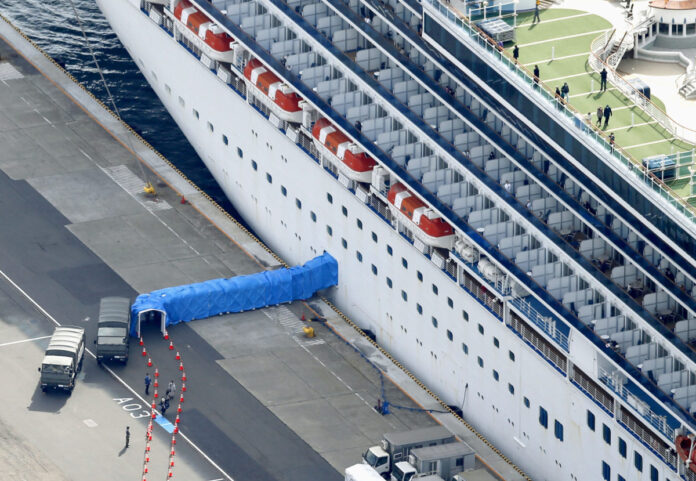
For over a month, the MV Hondius cruise ship has been moving through the waters of the Southern Hemisphere as the hantavirus spread among passengers—apparently from person to person—even as some disembarked and carried the virus onward.
The Dutch-flagged ship had set off from Argentina, where a known disease reservoir of a specific hantavirus is located. It was carrying 114 passengers and 61 crew members.
Less than a week later, a 70-year-old Dutch passenger became ill, running a fever and suffering from gastrointestinal distress. On April 11 he died after developing breathing problems.
The man’s body remained on the ship until April 24, when it was transferred to the island of St. Helena, where some two dozen other passengers also disembarked, including the man’s widow. The woman flew to South Africa the following day in an attempt to get back to the Netherlands, but she sickened and died the next day. There were approximately 88 passengers on the flight she took to South Africa, along with the crew.
Meanwhile, the Hondius continued on. When a British man became sick, he too was flown to South Africa. Then a German woman fell ill and died several days later, on May 2. That same day, the British man tested positive for hantavirus.
Members of the crew, including the ship’s doctor, then became sick as well, and there was a standoff near the island of Cape Verde when its government refused to allow anyone to disembark. Three people were eventually evacuated and flown to hospitals in Europe that can handle infectious diseases of an unknown nature. Then another passenger who left the cruise back in St. Helena tested positive for the disease in Switzerland.
Spain allowed the ship to dock in Tenerife, the largest of the Canary Islands, and the remaining passengers are now being carefully flown back to their countries of origin to be quarantined and observed. The ship itself will be sailed back to the Netherlands and disinfected, and its crew will be observed.
Three more people from the cruise—one French woman and two Americans—came down with symptoms or tested positive.
To read more, subscribe to Ami

