
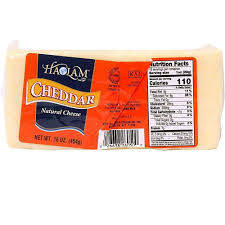

New York (VINNEWS/Rabbi Yair Hoffman) The shiniest block of cheese in the sample box looked almost wet under the light. The head of the cheese company had brought a small assortment of his products to the OU offices, hoping for certification on some of them. He saw Rabbi Avraham Gordimer reach toward the glossy one and stopped him.
“Rabbi, you don’t want to touch that one,” he said. “That cheese is coated with lard.”
The Gemara in Avodah Zarah 35b discusses the prohibition of non-kosher cheese. The gezeirah is two thousand years old. The product on the desk was being sold in American supermarkets last year.
Kosher cheese is one of the most labor-intensive certified products in the world. The reasons go back to the Mishnah in Avodah Zarah 29b, run through a centuries-old machlokes between the Rema and the Shach, and end with a mashgiach climbing a ladder at 2 in the morning in a Wisconsin factory to pour rennet into a vat the size of a small swimming pool. This is what is behind the price tag.
The Sticker Shock
At kosher supermarkets across the greater metropolitan area, eight ounces of aged Romano runs about $9.99. Pecorino can hit $31.99 a pound. Six ounces of kosher pepper jack is $5.99. And Cholov Yisrael cheeses can cost two to three times what mainstream cheese costs.
What’s pshat?
The OU’s own answer to the obvious question is short: sending rabbinic field representatives to distant factories to supervise hard-cheese production for days on end is expensive. Almost every domestic and European hard-cheese plant is non-kosher when it is not running a special kosher run. Those costs land on the consumer.
But the cost analysis is the second answer, not the first. The first answer is halachic.
Cheese Is Not Just Kosher Milk
Most people assume kosher cheese is simple and straightforward: take kosher milk, turn it into cheese.
It is anything but.
Cheese has its own separate category in Yoreh Deah, with its own gezeirah and its own rules. Yoreh Deah 115:2 codifies the prohibition of gevinas akum: cheese made without on-site Jewish supervision is non-kosher, full stop. Even if the milk was chalav Yisrael and even if every ingredient is verified kosher. They are two unrelated prohibitions and two unrelated supervisions. A person who drinks chalav stam still must eat only gevinas Yisrael.
The Gemara in Avodah Zarah 35a-b offers a number of reasons for the gezeirah. The reason accepted by the Rif, the Rambam (Hilchos Maachalos Asuros 3:13), and the Mechaber in Yoreh Deah 115:2 is the position of Shmuel. Rennet, the enzyme that coagulates milk into cheese, was traditionally obtained from the fourth stomach of a calf. If that calf was not properly shechted, the rennet itself was neveilah. Adding it to a vat of milk turned the entire vat into a non-kosher product. The Mishnah Berurah and other commentators note that the gezeirah was made even though the issue would only arise occasionally.
The lard concern from the Gemara is a separate reason. It is the one that walked into Rabbi Gordimer’s office.
The Machlokes That Drives the Price
Yoreh Deah 115:2 is where the price of kosher cheese is set. The Rema on the spot writes that the gezeirah is satisfied when a Yisrael is present and supervising the cheesemaking, verifying that the rennet used is kosher. Watching is sufficient.
The Shach, in s”k 20 on the same se’if, disagrees sharply.
He builds his position on the wording of the Mishnah itself: when the Mishnah discusses chalav akum it includes the qualification that a Yisrael may watch without it being prohibited, but when it discusses gevinas akum, no such qualification appears. From this the Shach concludes that mere observation does not work. A Yisrael must himself dose the rennet into the milk, or own the milk or the cheese outright. Watching alone leaves the product gevinas akum.
The Bi’ur HaGra (115:14) and Pischei Teshuvah (115:6) both side with the Shach. The Aruch HaShulchan (115:19) also leans this way. The Shach compares cheesemaking to pas akum and bishul akum, both of which are remedied through a Jew performing the act, not through observation.
Rav Moshe Feinstein in Igros Moshe YD 3:13 rules like the Rema mei’ikar ha’din, but writes that one should ideally satisfy the Shach as well. Most major American agencies — OU, OK, Star-K, cRc — follow the Shach as standard practice.
This is the chumra that costs money. A mashgiach watching is one job. A mashgiach pouring is a different job, one that cannot scale, cannot be remoted, and cannot be automated without the special closed-rennetting systems that some plants have built at considerable expense.
In some modern factories the mashgiach activates an electronic rennet feed for every vat, controlled by a switch he alone operates. This satisfies the Shach, since the Yisrael is functionally performing the act. But programming and coordinating such a system requires extra engineering work, and most kosher cheese in the world is still made the older way: a mashgiach with a pail, a ladder, and a vat of milk.
Microbial Rennet and Gezeirah Lo Plug
Almost all rennet used in OU-certified cheese today is microbial. The enzyme chymosin is produced by genetically modified microorganisms grown in fermentation tanks. There is no calf anywhere in the system. By Shmuel’s logic, the entire original concern should have evaporated.
Tosfos in Avodah Zarah 35a addressed a version of this question almost a thousand years ago. The chachamim of Narbonne held that in their region, where vegetable rennet was the norm rather than animal rennet, the gezeirah did not apply. The Rambam disagreed. The Mechaber in Yoreh Deah 115:2 ruled with the Rambam and added explicitly that even cheese known to be made without animal rennet — even if the manufacturer is known to use only herbs — remains gevinas akum. The Rema agreed.
Most rishonim, as Tosfos himself records, treat gevinas akum as a davar she’b’minyan: a rabbinic decree that retains its force even when the underlying reason no longer applies, until and unless a larger beis din rescinds it. No such beis din has ever convened. The decree stands.
Rav Moshe Feinstein addressed the modern version of the question explicitly. Even if a non-Jewish manufacturer were fully ne’eman to confirm that only microbial rennet was used, Rav Moshe wrote, the cheese would still be no better than the cheese of Narbonne. Microbial rennet does not solve the halachic problem.
Every wheel of kosher mozzarella, including one made in a facility that has not seen animal rennet in fifty years, still requires a mashgiach.
The Mashgichim Who Live at the Factory
Cheese factories are not generally located near Jewish communities. Most are tucked away in remote stretches of the Midwest or overseas. The kosher market is small relative to the overall cheese market. Most factories therefore run kosher production in short campaigns. A team of mashgichim travels in, koshers the equipment if needed, supervises a few days of kosher cheesemaking, and goes home. They might return once a month.
But some factories make kosher cheese full-time. These have a dedicated mashgiach apartment or house on or near the property. A rotating team lives there. Two mashgichim on site at all times. One sleeps, the other supervises. Shifts run around the clock.
They live there year-round and Yom Tov too. Some factories keep a sukkah ready for the chag and a shofar on hand for Rosh Hashanah. The cheese line runs 24/7, and a mashgiach is there for every vat.
A Mashgiach Story From Northern Denmark
Mashgichim deal with all the regular headaches of constant travel: finding kosher food, locating minyanim, figuring out zmanim in unfamiliar places. Rabbi Gordimer shared a story from his early years at the OU in a recent interview on Youtube released by the OU.
He was sent to inspect four cheese plants in Denmark. One was in the far north. The trip fell in June, near the longest day of the year. He came off an overseas flight exhausted, checked into a hotel, and tried to sleep. There were no zmanim apps. He calculated by hand. Alos hashachar was around 11:30 at night. Netz hachama was around 3 in the morning. He set an old alarm clock, got maybe two hours of sleep, and went out for shacharis before sunrise.
“Not recommended,” he said. “But I had to do it.”
Mashgichim talk about plant odor sometimes. Hot vats of mozzarella whey cooker water put off a smell. Long shifts on overnight production runs are difficult work. Most of the public image of a mashgiach involves clean white coats and clipboards. The reality involves a lot of ladders, a lot of valves, and a lot of fatigue.
How American Kosher Cheese Came to Be
Before 1923, there was no organized kosher certification system in America. There were individual rabbis giving individual hechsherim, often in contested and overlapping arrangements. New York State had passed laws in 1915, strengthened in 1920, against fraudulent kosher representation. The constitutionality of those laws was defended all the way to the United States Supreme Court by attorney Samuel Hofstadter, later a judge, on behalf of New York State. But there was no national agency.
In 1923, the Union of Orthodox Jewish Congregations of America established what would become OU Kosher. The first director was Abraham Goldstein, a chemist by training, which gave him an unusual grasp of the food additives entering the modern industrial supply chain. The first OU-certified product was Heinz vegetarian beans.
By the mid-1930s, about two dozen companies, including a few national brands, carried OU certification.
Dairy followed. A 1932 letter from the OU Women’s Branch announced that Borden cream cheese was now kosher for Passover, and pledged that the Women’s Branch would do everything in its power to make Borden’s kosher cream cheese popular among Orthodox consumers. Cream cheese is acid-set, which made it the easier first conquest.
Hard cheese (warning: pun forthcoming) was harder. For decades, kosher hard cheese in America came from a small number of facilities, often with mashgichim sent in for short campaigns. The economics were brutal. The Shach’s standard made automation impossible. Many projects simply did not survive.
Two things changed the landscape.
The first was the migration of major brands into kosher production. In 2015, a major mainstream string-cheese producer began producing OU-certified kosher string cheese, undercutting the smaller kosher specialists significantly on price. Wisconsin’s Lake Country Dairy now produces millions of pounds of kosher Italian-style Parmesan, Asiago, Romano, and mascarpone each year. Economies of scale at the largest companies mean kosher prices can sometimes approach non-kosher prices.
The second was the artisanal kosher cheese movement.
Producers partner with traditional cheesemakers in places like Sardinia, where a mashgiach sleeps in the barn for a full week during the kosher run. The kosher market now has Pecorino Romano aged eighteen months, blue cheese, Manchego, brie, camembert. Cheeses that did not exist on the kosher shelf a generation ago.
The OU’s arc, from a Borden cream cheese promotion letter to a mashgiach in a Sardinian barn, mirrors the larger story of how American kashrus turned a chaotic and contested practice into an industrial supervision system that now spans the globe.
How Cheese Is Actually Made
Two basic categories.
Acid-set cheese is the older, simpler kind. Bacteria in the milk convert the lactose into lactic acid; the acid causes the casein to curdle into something like cottage cheese. Cream cheese, farmer cheese, and ricotta are all acid-set. Rav Moshe Feinstein in Igros Moshe YD 2:48 famously analyzed the cottage cheese question and inclined toward Rav Henkin’s position that acid-set cheese is not subject to the gezeirah of gevinas akum altogether, since the original concern was animal rennet. Rav Moshe stopped short of a clear heter, writing that the leniency should not be publicized. The Chochmas Adam (53:38) and the Aruch HaShulchan (YD 115:16) take the stricter view that all cheeses are subject to the gezeirah. Most American agencies, including the OU, follow Rav Henkin and certify acid-set cheese with yotzei v’nichnas spot-check supervision rather than mashgiach temidi.
Rennet-set cheese is what most people think of when they think of cheese: cheddar, mozzarella, provolone, swiss, parmesan, munster, romano. This is the cheese fully subject to the strict halachos of gevinas akum, including the Shach’s requirement of nesi’ah.
To make rennet-set cheese, the factory starts with milk delivered in tanker trucks. The trucks pick up raw milk from many farms — sometimes a dozen on a single route — and unload at the plant’s silos.
From there the milk is pumped into huge round vats called double-O vats. The vats are large enough that workers climb a ladder to look inside. Culture, which is bacterial culture or acid, is added first. Then the rennet. Rennet is extraordinarily potent. A tiny amount sets tens of thousands of pounds of milk.
Within minutes the milk curdles. Small gelatinous pellets form. These are the curds. The leftover liquid is whey. Roughly 90 percent of the vat becomes whey, 10 percent becomes curd. The curds are stirred, cut, drained, molded, and aged.
This author used to do a mini-type of cheese production in his 11th grade Kashrus class. Recently, it was requested again.
The Italian Cheese Twist
Mozzarella and provolone go through an additional step called pasta filata. After the curds form, they are placed in a cooker filled with hot water at about 160 to 175 degrees. Mechanical augers stretch and pull the curd in the hot water. That stretching aligns the protein matrix and gives the cheese the elastic texture that pulls into long strings on a pizza slice.
Roughly a third of all cheese produced in America is mozzarella. Most of it is on its way to pizza shops.
And the Cheddar Twist
Cheddar gets its character from a different process — not pasta filata but cheddaring.
The cheese began in the 12th century in the village of Cheddar in Somerset, in southwestern England. Today only one traditional dairy remains in the village itself, and most of the world’s cheddar is industrial. The name is not protected, which is why supermarket cheddars in different countries taste so different from each other.
Traditional cheddar starts with raw milk from grass-fed cows. A single Somerset pasture might carry 18 varieties of grasses and herbs, maturing at different times of year and contributing different flavor notes to the cheese. The milk is heated, acidified with a yogurt culture, and set with rennet. As the chymosin in the rennet cleaves the kappa-casein, the proteins unravel and link together, and the milk forms a gel of curd.
So far this is the same process as any other rennet-set cheese. What makes a cheddar a cheddar is what happens next.
After the curd is cut and most of the whey drained off, the cheesemaker takes slabs of curd and stacks them. Then he restacks them slightly higher. Then higher again. The weight of the stack presses moisture out of the slabs below. Each restacking also stretches the curd, aligning the protein matrix into a tight, layered sheet. By the end, what was pillowy curd has become a dense, slightly rubbery material with most of the residual moisture squeezed out.
That is cheddaring. It produces the compact, slightly crumbly texture that gets sharper and drier as the cheese ages. Factory cheddar made with standardized milk approximates the result. The traditional version varies from day to day depending on what the cows ate.
The wheel is then pressed into a round mold and aged on shelves in conditions designed to mimic the cool English caves where cheddar was originally aged. Twelve to eighteen months is standard for a serious cheddar. Some carry far longer.
That aging is what eventually pulls cheddar into the discussion of waiting after cheese before meat. The drying that gives the cheese its character is what makes it brittle, and the brittleness is what lodges between the teeth.
The Mashgiach Climbs the Ladder
In traditional kosher cheese plants, the mashgiach’s job is physical. He carries a pail of rennet diluted with water. He checks that the rennet came from a sealed container with a proper hashgacha. He climbs the small ladder to the top of the double-O vat. He pours the rennet directly into the milk and watches it enter the vat.
That fulfills the Shach. The Yisrael has performed the nesi’ah.
A new vat starts every 30 to 45 minutes. Some plants begin at midnight or 2 in the morning and run for many hours. Fifteen or twenty vats a shift is normal. The mashgiach is there for each one. After the run ends, the plant goes down for an hour or two of cleaning and sterilization, then the next run starts.
What About Kashering the Equipment?
Many factories make both kosher and non-kosher cheese. Does the equipment need to be koshered before each kosher run?
Most of the time, no. Most cheeses are made well below yad soledet bo. Cheddar is made in the upper 90s. Mozzarella around 104. None of these come close to the threshold at which non-kosher taste transfers into the metal. So koshering the vats is usually not necessary.
Some cheeses are made at higher temperatures, and in those cases the mashgiach kashers the vats. That is a long process, water-intensive, but it gets done.
Brine tanks are a separate problem. Many cheeses — swiss, feta, mozzarella — are salted by being submerged in brine tanks, sometimes for days. Plants typically use the same brine for months at a time, since brine actually becomes more valuable as it absorbs cheese flavor. The tanks are often made of fiberglass, which cannot be kashered. A kosher production at such a plant means bringing in fresh brine and dedicated molds. The expense lands on the cheese.
The Whey Question
Whey is what is left after the curds are removed. Since whey is the part of the milk that never became cheese, its halachic status is different. According to most opinions, whey does not require mashgiach temidi. Kosher ingredients and kosher equipment are sufficient. Whey can be certified at a plant that makes non-kosher cheese.
Two things complicate this. If the cheese vat is above yad soledet bo, the taste of the non-kosher cheese transfers into the whey, and the whey is now non-kosher. The more common problem is mozzarella. The hot water in the mozzarella cooker absorbs significant fat and salt from the cheese. Non-kosher plants sometimes funnel that cooker water back into the whey tank because it has commercial value. Once that happens the whey is non-kosher.
Certifying whey at a non-kosher cheese facility requires a hard pipe drain that sends the cooker water to the ground rather than into the whey. Without that, no certification.
Mah Rabu Maasecha
Milk should not behave the way it behaves.
Most biological fluids loaded with protein and minerals will coagulate readily under stress, including heat. Milk can be boiled for hours without curdling. Pour a glass and the protein does not settle to the bottom even after a long time. Something is holding it in suspension against forces that would otherwise pull it apart.
The main protein in milk is casein. Casein is arranged into spherical bundles called micelles, roughly 200 nanometers across. The outer surface of each micelle is coated with a variant of the protein called kappa-casein, whose chains extend outward from the surface like fine hairs about seven nanometers long. Under an electron microscope the surface looks furry. The technical term in the dairy literature is the hairy layer.
Two forces keep the micelles apart. The hairs themselves create steric repulsion — they physically push against the hairs of any neighboring micelle. They also carry a negative electric charge, which adds electrostatic repulsion on top of the steric one. Two systems, working together, keep the milk in even suspension.
That protective coating is meant to come off. It comes off in response to rennet.
Rennet — chymosin, in its biochemical name — acts as a very specific molecular scissors. Out of the kappa-casein chain, which contains hundreds of amino acid bonds, chymosin recognizes and cuts at one position: between the phenylalanine at position 105 and the methionine at position 106. Phe-Met 105-106. Nowhere else on the protein.
Cut that single bond and the protective hairs separate from the micelle. Steric repulsion is gone. The negatively charged piece drifts off into the whey. The micelles, now bare, do what they otherwise wanted to do all along: they aggregate. The whole vat changes state. What was milk becomes curd within minutes.
So cheese, in a sense, is not milk transformed. It is milk un-switched.
Hashem built a switch into the protein at position 105-106 and gave the calf a stomach lined with the precise enzyme that recognizes that one specific bond. The substrate and the enzyme fit each other. Two pieces of the same system designed to meet. Chazal made a gezeirah on this enzyme because of where it might have come from. Modern biochemistry has shown what the enzyme is actually doing in the milk.
Mah rabu maasecha Hashem.
Waiting After Cheese Before Eating Meat
Everyone knows about waiting after meat before dairy. Fewer people know that there are rules about waiting after certain cheeses before meat.
Before any dairy is followed by meat, a person washes his hands, rinses his mouth with a liquid, and either brushes his teeth or eats a pareve food that cleans the mouth (Shulchan Aruch YD 89:2).
Aged cheeses go further. The Rema in Yoreh Deah 89:2 writes that the minhag is not to eat meat, even poultry, after hard cheese, and that one should wait the same time period one waits after meat before dairy. Three hours, six hours, depending on minhag. The Mishnah Berurah confirms that this has become the accepted practice for Ashkenazic Jewry.
Two reasons appear in the rishonim. Rashi (on Chullin 105a) explains that meat — and, by analogy, hard cheese — releases fat that adheres to the mouth and produces a lingering taste. Mashichas ta’am. The Rambam in Hilchos Maachalos Asuros 9:28 explains the waiting after meat as being about basar bein hashinayim, pieces caught between the teeth. The Pri Chadash (89:2) applies the same reasoning to aged cheese: hard cheese, like meat, can park itself in the teeth and remain there for a while. The TaZ (89:4) cites Rashi’s mashichas ta’am reason. Most poskim consider both reasons to be operative.
Which cheeses qualify?
The Shach (89:15) and TaZ (89:4) say that hard cheese for this purpose means cheese aged approximately six months. The TaZ adds Swiss cheese to the list even without six months of aging — the holes from worms (in the original European production) were taken as a sign of pungency on their own. The Aruch HaShulchan (89:11) extends the rule to “Swiss and Hollander cheese, which have a lot of fat and their taste endures for a long time.”
Practically, this means aged cheddar, parmesan (which is aged at least 10 months by law), aged Romano, aged Asiago, aged Gouda, and any cheese with a notably pungent taste. Limburger qualifies even fresh, on pungency alone. Rav Belsky used six months as a general threshold.
Fettuccine Alfredo and the Cooked-In Cheese Question
The waiting rule sounds clean until one runs into Fettuccine Alfredo.
The dish was invented in Rome in 1914. A restaurant owner named Alfredo di Lellio had an expecting wife who could not hold down food. He invented a pasta dish he hoped she would tolerate: fettuccine tossed with butter, heavy cream, and Parmesan cheese. She kept it down. He added it to his menu. In 1927 the Hollywood actors Douglas Fairbanks and Mary Pickford honeymooned in Rome, ate at the restaurant, and brought the dish home. It became world-famous.
And it raised a real halachic question. The dish is loaded with Parmesan, a hard cheese that under ordinary circumstances would trigger the six-hour wait. On a pizza, the Parmesan triggers the wait. Should it trigger the wait in a cooked pasta sauce as well?
Eight years before the dish was invented, in 1906, an av beis din named Rabbi Yehudah Leibish Landau in Sadigora published a commentary on the kashrus section of Yoreh Deah called Yad Yehudah. In 89:30 he writes that the stringency of waiting after hard cheese does not apply when the cheese has been melted into a tavshil shel gevina — a pareve dish into which the cheese has been melted indiscernibly. His reasoning follows the Pri Chadash. If the issue is brittle pieces lodging in the teeth, then cheese melted into a sauce no longer has the texture that creates the problem. The reason is gone; the chumra goes with it.
Most American va’adei kashrus follow the Yad Yehudah for cooked cheese dishes. Fettuccine Alfredo, baked ziti, broccoli kugel — these generally do not carry warning labels for six-hour cheese.
But the question is not closed. Rav Shraga Feivel Cohen zt”l, one of the leading American poskim of the past generation and the mechaber of Badei HaShulchan, who was niftar in November 2022, raised a substantive challenge in his treatment of Hilchos Basar VeChalav (perek 89, page 64 of the Biurim).
The Yad Yehudah’s heter depends on accepting the Pri Chadash’s reason for the chumra — pieces in the teeth. But Rashi and the TaZ explain it differently. They hold the issue is mashichas ta’am, lingering fatty taste. Cooking softens texture. It does not necessarily eliminate the taste. Rav Cohen concluded with tzarich iyun.
The OU’s own published position adopts a sharper reading of the Yad Yehudah. They limit his heter to cases where the cheese is melted into a dish and is no longer b’eyn — not visibly discernible. Pizza, where the cheese sits on top in clearly visible globs, would not qualify under the OU’s reading. Other poskim, including the Badei HaShulchan itself (89:3 in the Biurim, on the relevant phrase), read the Yad Yehudah more broadly and apply the heter to any melted aged cheese. The Mesorah Journal volume 20, page 92, surveys the debate at length.
A separate svara has been suggested: that mixing the Parmesan with butter, cream, and the rest of the sauce dilutes the cheese’s halachic identity. When this rationale was presented to Rav Yosef Shalom Elyashiv zt”l, he reportedly rejected it. Mixing hard cheese with other dairy ingredients does not mitigate its halachic status.
If Rav Elyashiv’s position is taken seriously, the implications reach further than pasta. Standard American processed cheese — the orange slices people picture when they hear the word “cheese” — contains real cheddar in its formulation. The orange color is not just food coloring on a generic dairy base. There is actual cheddar in the mix. If mixing does not mitigate, a long list of common kosher dairy products comes under scrutiny.
In practice, many a Vaad Harabbonim follow the Yad Yehudah, particularly when the cooking and mixing factors are both present. As in every area of halacha, one’s own rav should be consulted on specific cases.
The Parmesan Shaker
What about the parmesan shaker on the table at the kosher pizza store?
Rav Belsky zt”l drew a distinction. Real grated parmesan — made by shredding actual aged parmesan into small pieces — is still aged cheese. The pieces are smaller, but they are the same brittle dried-out aged cheese that lodges in the teeth. A person must wait after it.
Many cheese powders used today in flavored snacks and shakers are not natural cheese in the same sense. They are made by melting cheese, blending it with a majority of water and other additives, and then spray-drying the mixture into a powder. The aged texture is gone. The fat content is diluted. Rav Belsky ruled that for these spray-dried cheese powders there is no need to wait. The strict waiting requirement was a chiddush of the poskim, and a chiddush is not extended to cases the original ruling did not clearly include.
So a flavored snack dusted with cheddar powder is in a different category than a chunk of aged cheddar. The article was written in honor of the shalom zachar of the author’s new grandson (with the hope that the editor will not remove the dedication).
Halacha L’maaseh: Waiting After Cheese
| Wait the full meat-to-milk interval (3 or 6 hours per minhag) after: • Aged cheddar (aged 6 months or more) • Parmesan (all parmesan is aged at least 10 months by law) • Real shredded or grated parmesan • Aged Romano, aged Asiago, aged Pecorino, aged Gouda • Swiss cheese (TaZ 89:4) • Limburger (pungency qualifies it even when fresh) • Any cheese with a notably pungent taste No waiting required after: • Spray-dried cheese powder in flavored snacks (chips, crackers, popcorn seasonings) • Powdered cheese in shaker form that is reconstituted from melted cheese plus water and additives • Mild cheddar (aged less than 6 months) • Soft cheeses: mozzarella, cream cheese, cottage cheese, ricotta, farmer cheese Common practice based on the Yad Yehudah, though Badei HaShulchan raises tzarich iyun: • Hard cheese melted into a cooked dish (Fettuccine Alfredo, baked ziti, lasagna, broccoli kugel) • The OU’s position limits this leniency to cases where the cheese is no longer visibly discernible in the dish. In all cases, a person must still wash hands, rinse the mouth, and either brush teeth or eat a pareve food before transitioning from dairy to meat. The above reflects the rulings of Rav Belsky zt”l as taught at the OU. A person’s own rav should be consulted for specific cases. |
The Bottom Line
The kosher cheese in the shopping cart is the visible end of a long chain. A mashgiach on a ladder. A machlokes between the Rema and the Shach. A Mishnah in Avodah Zarah. And, written into the protein chain at position 105-106, a switch that flips on contact with one specific enzyme. The OU video can be seen here.
The author can be reached at [email protected]