
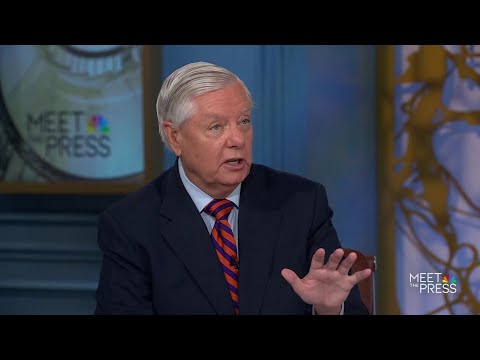

[Video below.] Sen. Lindsey Graham on Sunday called on President Donald Trump to restart American military strikes against Iran, arguing that the current ceasefire deadlock and continued closure of the Strait of Hormuz are benefiting Tehran while damaging the U.S. economy.
“I think the status quo is hurting us all,” Graham said during an appearance on NBC’s “Meet the Press,” insisting that sustained military pressure — rather than prolonged diplomacy — is the quickest way to end the conflict.
Graham’s remarks came as negotiations between the United States and Iran remain frozen.
Talks between Washington and Tehran, which have been mediated by Pakistan, have been suspended after both sides rejected each other’s most recent proposals. No permanent agreement has been reached since the two countries announced a ceasefire last month.
According to Graham, the ongoing stalemate plays directly into Iran’s hands.
“The longer the [Strait of Hormuz] is closed, the more we try to pursue a deal that never happens, the stronger Iran gets,” he said.
The South Carolina senator, who has strongly supported Trump’s military operations against Iran, urged the administration to intensify pressure on the regime.
“He credited the administration’s strikes as “amazing, militarily.” But, he said, “there’s more targets to be had.”
Graham also argued that Iran’s leadership has shown no indication that it has abandoned what he described as the regime’s objective “to terrorize the world, destroy Israel, come after us.”
The ongoing closure of the Strait of Hormuz — a critical waterway that handled more than 20% of the world’s energy supply before the war began — has sent global oil prices sharply higher since fighting erupted on Feb. 28.
By Friday, the average price of regular gasoline in the United States had climbed above $4.50 per gallon, representing a 51% increase since the war started.
Graham argued that decisive military action against Iran would ultimately reduce energy prices. Speaking to NBC moderator Kristen Welker, he said, “Gas prices will come down when you put Iran in a box.”
Meanwhile, Iranian officials have shown little willingness to soften their position.
Iranian Foreign Minister Abbas Araghchi said Friday that Tehran has “no trust” in the United States and would only return to negotiations if Washington demonstrates serious intent, accusing American officials of sending “contradictory messages.”
The diplomatic stalemate coincided with Trump’s recent multi-day visit to China, where he held meetings with Chinese President Xi Jinping.
During an interview with Fox News anchor Bret Baier, Trump said he did not ask China for assistance regarding Iran. “If he wants to help, that’s great, but we don’t need help,” Trump said, adding that accepting outside assistance often creates future obligations.
The Iran conflict has also created growing political concerns inside the United States.
Trump faced criticism last week after saying that Americans’ personal finances were not his primary consideration during negotiations with Iran, comments that reportedly unsettled some Republicans ahead of the upcoming midterm elections.
Graham dismissed those political concerns entirely.
“It’s worth losing my job,” he told Welker. “If I had to give my job up to make sure Iran would never have a nuclear weapon, I would do it.”
His comments echoed Trump’s own position. Speaking with Baier, the President said he would not allow electoral politics to shape policy toward Tehran because Iran “cannot have a nuclear weapon.”
Trump acknowledged that his approach could temporarily “screw up” Republican polling numbers as some GOP candidates continue weighing how closely to align themselves with him during the campaign season.
WATCH:
{Matzav.com}