
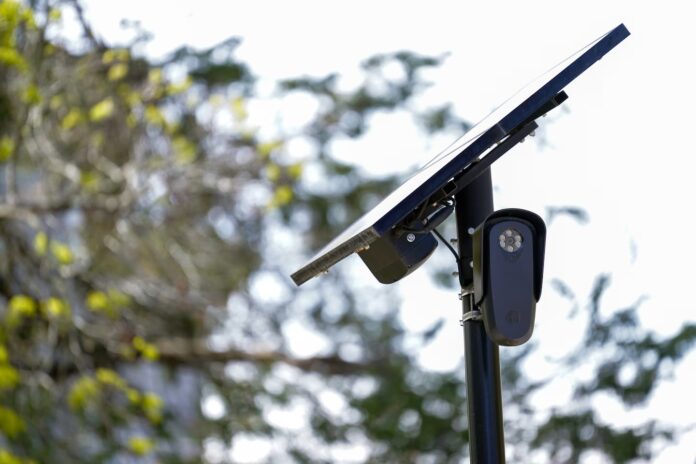

A growing dispute over automated license plate reader technology in Troy, New York, has sparked legal action and renewed debate over privacy, data collection, and concerns about possible federal surveillance involvement.
At the center of the controversy are Flock cameras, an AI-powered license plate recognition system that records not only license plates but also vehicle details such as make, model, and color. Critics have voiced concerns that the system could potentially be used by Immigration and Customs Enforcement to monitor immigrants.
The dispute escalated Monday when Troy’s Democrat-led City Council filed a lawsuit against Republican Mayor Carmella Mantello after she issued an emergency order allowing the cameras to remain operational. The legal challenge came after the council directed the city auditor to “pause payments to Flock until the city resolves all outstanding questions and public concerns.”
Mantello defended the program, arguing that the cameras are an important public safety tool that assists law enforcement in solving crimes.
“I believed there was a path to share that work collaboratively with the City Council — to protect civil liberties while ensuring law enforcement has effective tools to keep our neighborhoods safe,” Mantello said in a statement, according to The Record of Troy. “Unfortunately, the Council has chosen frivolous litigation instead of collaboration. That does not change our mission.
“My administration will continue doing everything necessary to keep Troy safe, address crime proactively, and ensure those who break the law are held accountable.
“The people of Troy expect leadership focused on results — not political theater — and that is exactly what we will deliver.”
During last week’s City Council meeting, Mantello publicly opposed proposed legislation aimed at restricting how much information can be retained from the camera system, The Record reported.
Under the proposal, any collected data would need to be erased after 48 hours unless state evidence laws require preservation. At present, the information may be stored for up to 30 days.
The legislation would also require any city agency using the technology to publish annual public reports on the city website. The proposal was formally introduced last week, with a public hearing scheduled for June 4.
Flock’s surveillance network relies on artificial intelligence-enabled cameras that photograph every vehicle traveling through monitored areas.
The technology generates what the company describes as a digital “fingerprint” of each vehicle, including distinctive identifying features such as bumper stickers or gun racks. Law enforcement agencies support the technology because the company’s nationwide database can be used to trace vehicle movements connected to drug investigations, recover stolen cars, and assist in major criminal probes.
A spokesperson for the company told The Washington Post that the technology helps “communities across the country in addressing crime and locating missing people.”
“At Flock, we believe safety and privacy should go hand in hand, which is why our technology is built around transparency, accountability, and local control,” Chris Castaldo, Flock Safety’s chief information security officer, said. “Our platform includes safeguards like audit trails to help ensure accountability at every step.”
Still, Flock’s rapid growth nationwide has fueled concerns over mass surveillance, especially following reports that federal immigration authorities have used the system to help locate illegal immigrants, according to The Washington Post.
A nationwide mapping effort known as DeFlock estimates that more than 90,000 license plate readers are currently operating across the United States. The Post also reported that more than 60 municipalities have either canceled or rejected agreements with Flock and similar companies.
In a statement cited by The Record, the Troy City Council sharply criticized Mantello’s actions, saying, “The mayor has gone far beyond her lawful authority. If left unchallenged, it sets a dangerous precedent where the mayor can claim a public safety emergency anytime she disagrees with the legislative branch, creating an unchecked power that echoes what is happening in Washington.”
{Matzav.com}