
 Matzav
Rav Dov Landau to Young Bochurim: “A Person Can Make Mistakes — and Correct Them”
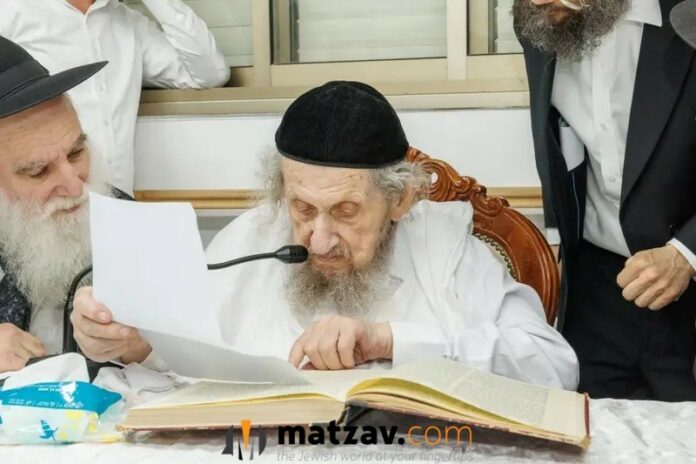
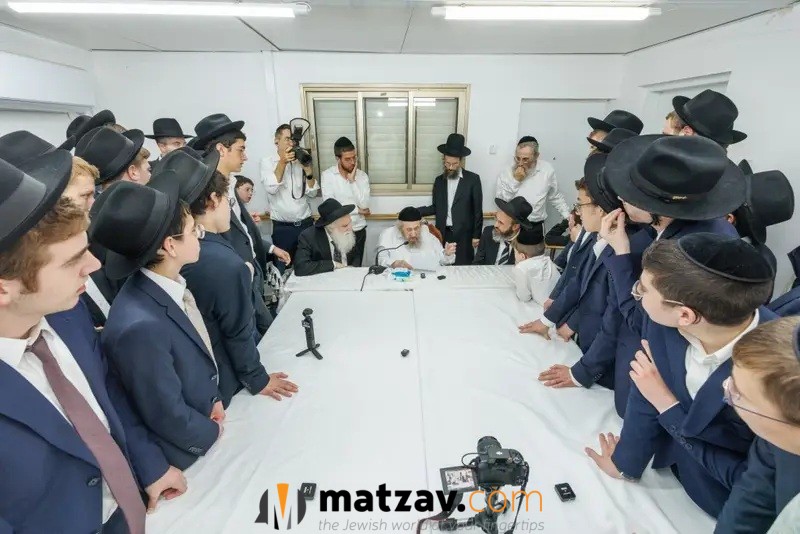
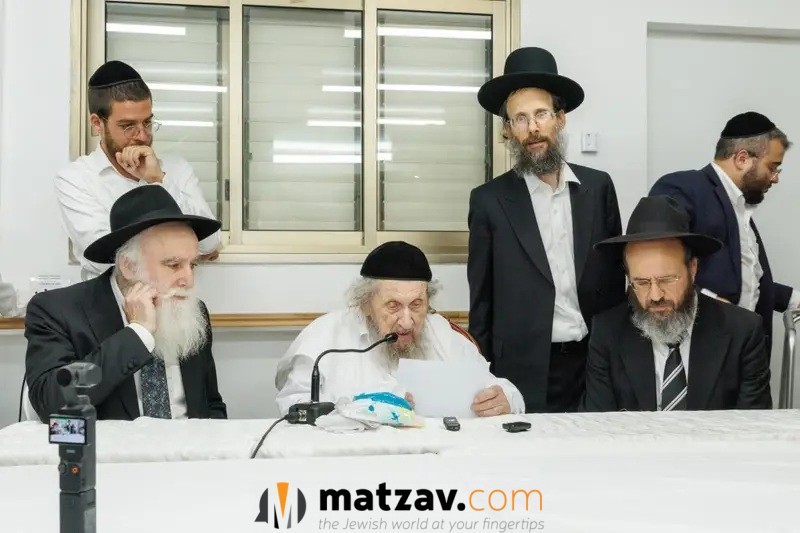
A special rischa d’Oraisa gathering took place this week at the home of Rav Dov Landau, as talmidim of the younger division of Yeshivas Heichal Shmuel, led by Rav Avrohom Yeshaya Prober, arrived together with their rabbeim for an uplifting Torah discussion with the Slabodka rosh yeshiva.
The room came alive with energetic Torah debate as the bochurim engaged with the Rosh Yeshiva in spirited back-and-forth learning. Rav Landau challenged the talmidim with questions, and the talmidim responded with enthusiasm and depth.
During the gathering, Rav Landau delivered strong guidance about the proper approach to learning Torah.
“This is a major yesod in learning — to think,” the rosh yeshiva told the young bochurim. “Someone who thinks knows how to learn. Someone who doesn’t think only knows how to shout. A person has to think. Even if someone thought and made a mistake, that’s not terrible. But if he never thought in the first place, what was accomplished? A lamdan is someone who thinks. He can make mistakes. It’s permitted to make mistakes. It is not an avlah to make a mistake. The real avlah is not admitting to the truth.”
At the conclusion of the gathering, Rav Landau again stressed the importance of slow, thoughtful iyun and becoming immersed in Torah.
“Hashem should help that they should learn and delve deeply into learning, to be completely immersed in learning. The less rushed a person is, the healthier it is. Think about everything. And if someone makes a mistake once or twice, that is not terrible. What is terrible is when a person refuses to admit the truth,” he said.
“Learning has to be with immersion, the way a person becomes immersed on the night of the Seder. Completely absorbed. To be fully involved in the learning — that is the essence of learning. To think again and again. Making mistakes is not terrible. The Chazon Ish wrote to someone who did not want to admit the truth: ‘I am full of mistakes — sometimes in Gemara, sometimes in logic — and mistakes do not diminish the honor of the learner.’”
Rav Landau continued by emphasizing that genuine Torah understanding comes through straight thinking and honest pursuit of truth.
“To know how to learn means to think, to analyze, and then to think again. The main thing is what Rav Chaim Volozhiner already said: ‘The earlier generations were praised only for straight reasoning.’ The straighter a person is in his thinking, the greater he is,” the rosh yeshiva said.
“There can be arguments over what is considered straight thinking, but a person must strive for sevara yesharah. Cleverness and sharp ideas are wonderful — but only if they are grounded in deep thought and iyun. One must seek the truth. Sometimes you are right, sometimes the other person is right. The important thing is that the truth is right.”
The rosh yeshiva also urged the bochurim to listen carefully to one another and to their rabbeim.
“You must listen well to what the rabbeim teach you. Even when arguing with another person in learning, hear what the other person is saying. ‘Ve’ahavta l’rei’acha kamocha’ is not a song. It is a major rule in Torah learning,” he said.
He pointed to Rav Akiva Eiger as an example of a gadol who readily admitted when another talmid chochom was correct.
“How many times did Reb Akiva Eiger admit that the other side was right? The main thing is seeking truth,” Rav Landau said. “Hashem should help us learn Torah with a search for truth and succeed in that.”
Rav Landau also encouraged the talmidim to remain focused on Torah despite outside distractions.
“Other things are hevel havolim,” he declared. “We know that the truth is Torah. That is everything. That is our essence. Learn, succeed, and grow in Torah learning, in Yiras Shomayim, in proper behavior, in listening to your rabbeim and honoring them.”
Toward the end of the gathering, Rav Avrohom Yeshaya Prober shared a well-known story about Rav Boruch Ber Leibowitz. He recounted that Rav Boruch Ber once answered a question immediately, then retracted the answer, thought deeply about it, and afterward repeated the exact same answer — explaining that now it was an answer that came through genuine thought.
Rav Landau reacted warmly, saying, “Tanya nami hachi — Reb Boruch Ber says the same thing. Extraordinary. A person has to think.”
The rosh yeshiva concluded with heartfelt brachos for the talmidim as they prepare for entrance exams to major yeshivos.
“All yeshivos are good,” he told them. “But each person needs the place that fits him. One place fits this person, another place fits someone else. Hashem should help that each person should find the place suited for him. Kol tuv to everyone — rabbanan and talmideihem.”



{Matzav.com}