
 JBizNews
Mayor Mamdani Meets With JPMorgan’s Dimon as Tax-the-Rich Backlash Builds
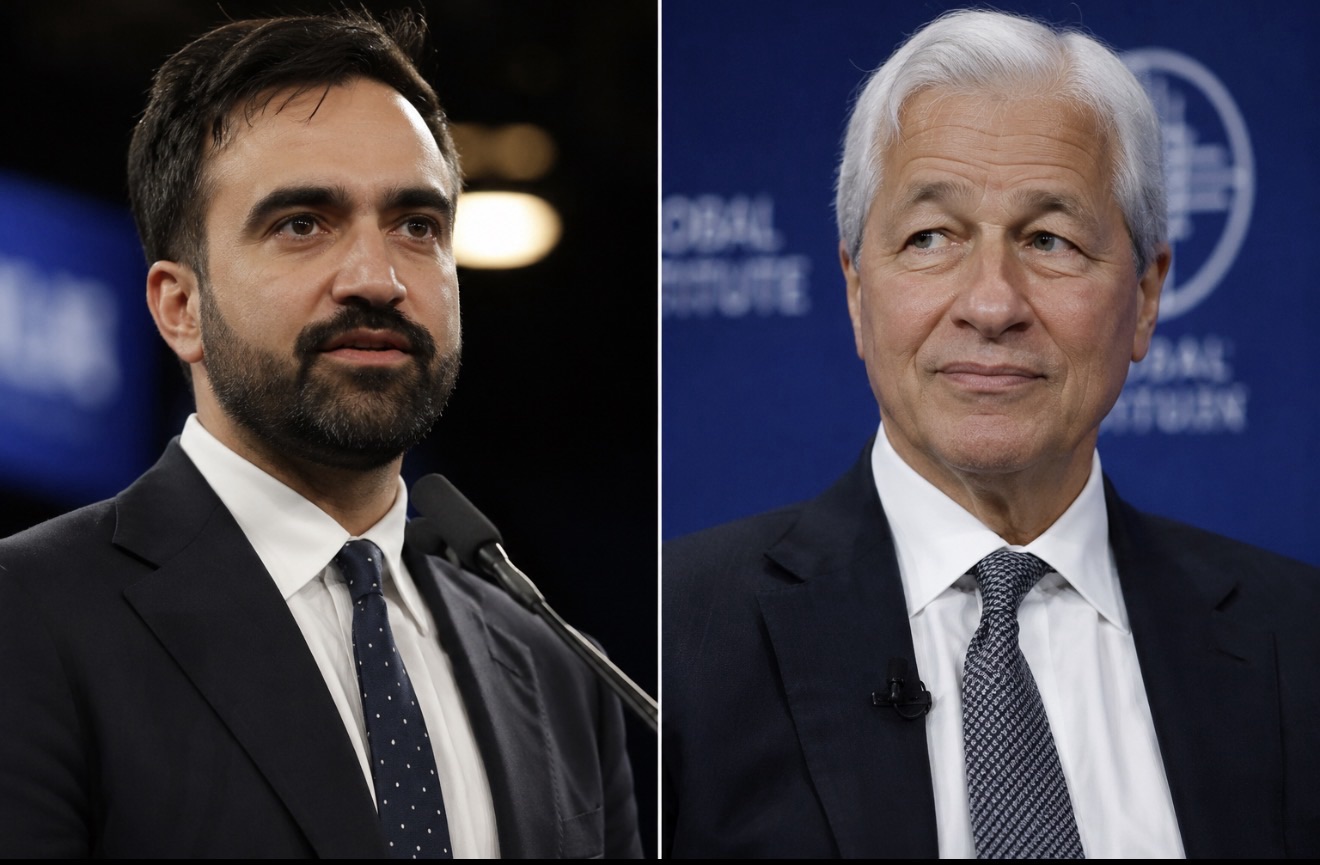
New York City Mayor Zohran Mamdani walked into JPMorgan Chase & Co.’s new $3 billion headquarters at 270 Park Avenue at noon Monday for his first in-person meeting with Chief Executive Jamie Dimon, the most closely watched private sit-down yet between the city’s new democratic socialist administration and Wall Street’s most powerful figures. The meeting came as Mamdani works to tamp down growing backlash to his “tax the rich” agenda, which has increasingly unsettled wealthy New Yorkers and major corporate employers. The JPMorgan session was held alongside a separate meeting between the mayor and Goldman Sachs Group Inc. Chief Executive David Solomon, according to Bloomberg.
According to a City Hall spokesman, the Dimon meeting focused on cutting government waste, reforming New York State’s environmental-review process to accelerate development projects, and structuring public-private partnerships aimed at addressing the city’s housing and infrastructure needs. Mamdani also discussed a large Queens-based redevelopment proposal with Dimon and other executives during the day’s meetings, including the mayor’s push for roughly 12,000 affordable housing units at Sunnyside Yards, a project he pitched directly to President Donald Trump during a surprise Oval Office visit in February. While Mamdani and Dimon sit on opposite ends of the political spectrum, both men frequently reference their Queens roots, a detail that has softened the tone of some of their recent public exchanges.
The meetings arrive amid intensifying resistance from Wall Street to the most aggressive elements of Mamdani’s economic platform. The 34-year-old mayor has placed affordability at the center of his administration, championing free city buses, a rent freeze, municipal grocery stores, and higher taxes targeting affluent New Yorkers and luxury property owners. The financial industry remains deeply sensitive to those proposals because the sector generates roughly 19% of New York State’s tax revenue and anchors a large portion of the city’s high-income tax base.
The backlash escalated sharply last month after Governor Kathy Hochul unveiled a new pied-à-terre tax targeting luxury second homes. Mamdani intensified the debate further with a social-media video highlighting Citadel founder Kenneth Griffin’s $238 million penthouse at 220 Central Park South as an example of the type of ultra-luxury property that could face additional taxation. The video quickly ignited criticism from business leaders and investor groups concerned that New York risks pushing more high earners and corporations toward lower-tax states such as Florida and Texas. City Hall has reportedly reached out to Griffin regarding a potential meeting, though none has been scheduled.
The administration’s outreach campaign to corporate America has become increasingly visible. Prior to Monday’s meetings with Dimon and Solomon, Mamdani met last week with Blackstone Inc. President and Chief Operating Officer Jonathan Gray. In the aftermath of the pied-à-terre controversy, the mayor also held a separate session at City Hall with Bank of America Corp. Chief Executive Brian Moynihan. Additional recent meetings included leadership from food company Chobani and several real-estate executives.
Dimon himself has evolved publicly in his posture toward the mayor. Last July, the JPMorgan chief described Mamdani’s progressive economic platform as “ideological mush” during an investor event before moderating his tone following the November election. JPMorgan employs more than 24,000 workers in New York City, making it one of the city’s largest private employers. At the same time, Dimon has repeatedly noted that the bank now employs more workers in Texas than in New York, a comment widely interpreted across Wall Street as a warning about the long-term risks of escalating taxes and regulation.
The fiscal backdrop surrounding the meetings remains highly consequential. Mamdani inherited an estimated $7 billion budget shortfall upon taking office, though City Hall says the gap was closed without increasing property taxes after securing several billion dollars in additional state aid and roughly $1.7 billion in agency savings. New York State Comptroller Thomas DiNapoli recently estimated that Wall Street bonus payouts alone are expected to generate approximately $91 million more in city revenue than last year, aided by a stock market that continues supporting financial-sector compensation. The S&P 500 has risen nearly 8% year-to-date, helping stabilize bonus pools that remain critical to New York’s tax base.
Still, the deeper structural conflict between progressive fiscal policy and Wall Street’s mobility remains unresolved. Many of Mamdani’s largest revenue proposals — including possible adjustments to corporate or income-tax rates — would require approval from Albany, giving Governor Hochul and state lawmakers significant leverage over how much of the mayor’s agenda ultimately becomes law. Mamdani has previously floated the possibility of property-tax increases as a negotiating tool designed to pressure state leaders into raising taxes on top earners instead.
Business organizations and financial executives continue lobbying aggressively against the proposals, warning that stacking additional city and state taxes on top-income households and luxury real estate could accelerate corporate relocations and weaken New York’s long-term competitiveness. Pershing Square Capital Management Chief Executive Bill Ackman, who supported an alternative candidate during the mayoral race, previously warned that Mamdani’s economic agenda risked destroying jobs and driving wealthy taxpayers out of the city. Ackman has since softened his rhetoric and publicly offered to assist the administration if needed. Galaxy Digital Chief Executive Mike Novogratz and several other Wall Street executives who initially threatened to relocate have similarly moderated their language in recent weeks.
For Dimon and Solomon, Monday’s meetings represent a strategic reset rather than an endorsement. Both banks maintain enormous operational footprints in New York and benefit heavily from proximity to municipal, state, and federal regulators. The symbolism surrounding JPMorgan’s new Park Avenue headquarters was difficult to miss. The 270 Park Avenue tower, completed last October, was the largest private real-estate investment in Midtown Manhattan in decades and serves as a physical statement that JPMorgan remains deeply committed to New York even as employment growth accelerates elsewhere.
Mamdani has acknowledged the importance of maintaining open communication with business leaders, telling reporters earlier this month that the meetings are part of a broader outreach effort and that he values the dialogue even amid significant disagreements.
What emerges from Monday’s discussions could shape the tone of negotiations heading into the next budget cycle. If Mamdani can convince Wall Street leaders that he is willing to engage pragmatically while still advancing his affordability agenda, he may preserve the city’s revenue engine without triggering the corporate departures critics fear. If those relationships deteriorate, however, the battle over taxes, housing, and New York’s economic direction could intensify rapidly — with implications extending far beyond Manhattan’s financial district.
JBizNews Desk
© JBizNews.com. All rights reserved. This article is original reporting by JBizNews Desk. Unauthorized reproduction or redistribution is strictly prohibited.