
 Yeshiva World News
11TH-HOUR SCRAMBLE: Chareidi Parties Dismiss Netanyahu Claim He Can Get Draft Bill Passed As “Nonsense”
Senior chareidi political figures on Tuesday dismissed claims from Prime Minister Netanyahu’s office that he has assembled a Knesset majority to pass the controversial chareidi draft exemption bill, even as lawmakers prepared to begin the formal process of dissolving the government tomorrow.
A senior official in the Prime Minister’s Office told Israeli media late Tuesday that Netanyahu’s pressure campaign on holdouts within his own coalition had succeeded in flipping enough lawmakers to allow the bill to advance toward its final readings.
“We achieved the necessary majority and that is what is important,” the official said, adding that Netanyahu’s staff had relayed the message to chareidi party leaders.
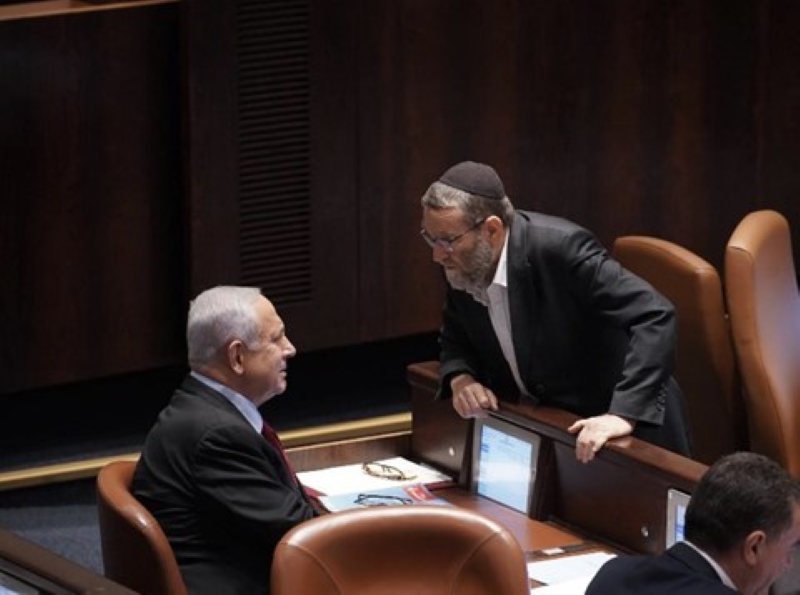
Chareidi figures pushed back hard. A senior official in United Torah Judaism dismissed the claim as “nonsense,” while a spokesman for Degel HaTorah chairman Moshe Gafni said his office had received no such communication from the prime minister.
“He doesn’t need to give notice. He should just bring the bill to a vote,” the spokesman said.
The exchange comes one day before the Knesset is scheduled to hold a preliminary vote on legislation to dissolve parliament and trigger early elections, a process set in motion last week after Netanyahu informed UTJ representatives that his coalition lacked the votes to pass the draft exemption law in the current Knesset. The prime minister had reportedly asked the chareidi parties to wait until after the next election to revisit the bill, an offer they refused.
Rav Dov Landau, the leader of Degel HaTorah and head of the Slabodka yeshiva in Bnei Brak, has instructed the faction’s lawmakers not to be “drawn into political games” and to vote in favor of dissolving the Knesset on Wednesday. Rav Landau reportedly called Netanyahu a “liar” in a closed meeting with his lawmakers last week and declared that “the concept of a [right-wing] bloc no longer exists as far as we are concerned.”
The standoff has set off an unusually open fight over the timing of the next election. Under Israeli law, the vote must in any case be held no later than October 27. But chareidi leaders are pushing for a September date, before the Yomim Noraim, calculating that turnout in their communities would be higher ahead of Rosh Hashanah and Yom Kippur. Netanyahu’s office has reportedly pressed for an October date, which would give the coalition more weeks to advance pending legislation, including bills to split the attorney general’s role and overhaul Israel’s public broadcaster.
On Monday, the draft exemption bill was placed back on the Knesset’s parliamentary agenda, with the Foreign Affairs and Defense Committee set to resume preparatory discussions tomorrow ahead of the two final readings required for passage. A parallel discussion is scheduled on a bill to extend the length of mandatory service for regular IDF conscripts.
Chareidi sources told Israeli media that the renewed committee schedule was an attempt by Netanyahu’s office to buy time and delay elections into October. A senior Degel HaTorah figure told Kikar Hashabbat that the move was transparent. “What do you do when you want to buy time?” the source said. “They are now informing the chareidim that there is a breakthrough to achieve a majority, and they do not have a majority. They are telling [Knesset Defense Committee chairman] Boaz Bismuth to hold discussions in the committee, and according to the attorney general, at least two or three more discussions are needed before the law is read.”
The legislation, which Netanyahu’s coalition partners have demanded since the government was sworn in at the end of 2022, would ostensibly increase military conscription rates within the chareidi community while in practice preserving the decades-old exemption for full-time yeshiva students. Critics across the political spectrum, including senior military officials, have called it legally unsound and riddled with loopholes. The IDF has continued to warn of a worsening manpower shortage amid ongoing operations in Gaza, southern Lebanon, and the possibility of resumed military action against Iran.
The bill was shelved in March with the outbreak of the US-Israeli war with the Islamic Republic but was revived by Foreign Affairs and Defense Committee chairman Boaz Bismuth in the weeks that followed.
Opposition leader Yair Lapid accused Netanyahu of attempting to extend his political life at the expense of national security. “Prime Minister Netanyahu knows he is facing defeat in the elections and will do everything he can in order to gain a few more days in the Prime Minister’s Office,” Lapid wrote on X. He called the renewed push to pass the bill “another act of betrayal toward IDF soldiers and reserve service members.”
Yashar party chairman Gadi Eisenkot, a former IDF chief of staff, called the move “another desperate attempt” by the prime minister “to buy himself a few more weeks in power at the expense of the national interest of strengthening the IDF during a war.”
Whether Wednesday’s preliminary vote on dissolution actually proceeds remains an open question. Shas chairman Aryeh Deri had reportedly agreed to give Netanyahu another week to try to advance the conscription law, and that the dissolution bill could yet be pulled depending on movement on the draft legislation. Shas, while having resigned its ministerial portfolios last year over the issue, has continued to support the coalition in plenum votes.
What is clear, even in the absence of a final tally, is that the trust between Netanyahu and his chareidi coalition partners has frayed to a degree without obvious precedent in the prime minister’s long alliance with them.
(YWN World Headquarters – NYC)