
 Yeshiva World News
VP Vance: US Still Prefers A Deal With Iran, But Is “Locked And Loaded” To Resume The War [VIDEOS]
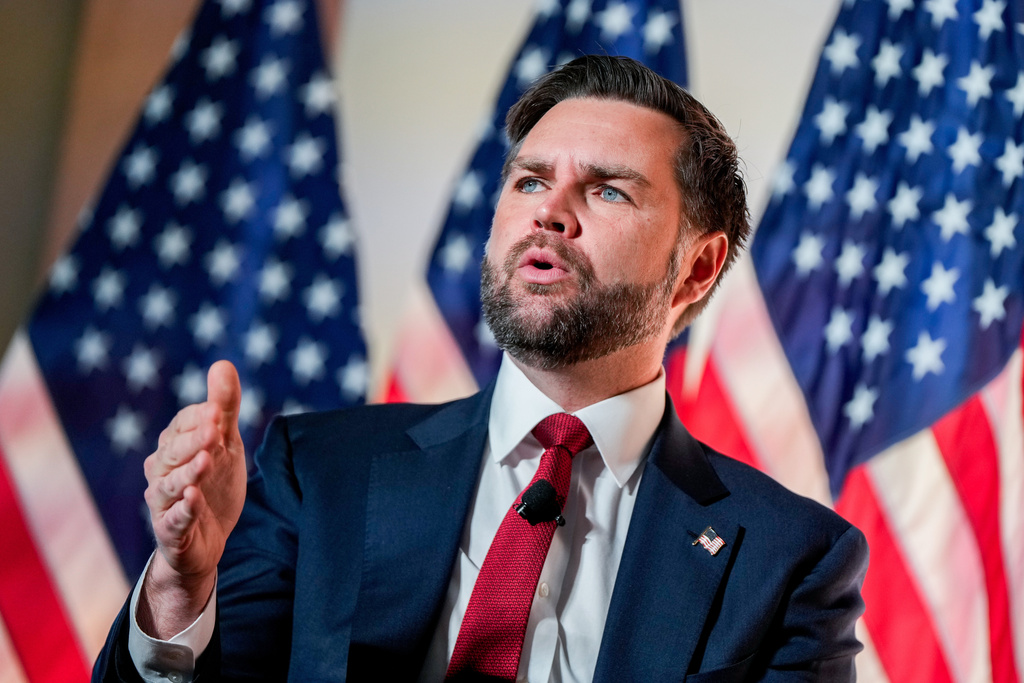
Vice President JD Vance said Tuesday that the Trump administration still favors a negotiated end to its war with Iran, but warned that the United States is prepared to resume military operations to prevent the Islamic Republic from acquiring a nuclear weapon.
Speaking at a White House press briefing in the place of Press Secretary Karoline Leavitt, who is out on maternity leave, Vance said the administration was making meaningful headway in talks with Tehran while keeping open what he called “option B” — a return to the air campaign that paused under the April 7 ceasefire.
“We are not going to have a deal that allows the Iranians to have a nuclear weapon. So, as the president just told me, we’re locked and loaded,” Vance said.
The vice president, who has led the American delegation in face-to-face negotiations with Iranian officials in Islamabad alongside special envoy Steve Witkoff and senior adviser Jared Kushner, said the first six weeks of fighting had already substantially degraded Iran’s conventional military capabilities.
“That has been successfully done. You could always do a little bit more, but where we are now is the president has told us to aggressively negotiate with the Iranians,” he said. “We’ve made a lot of progress. We think the Iranians want to make a deal.”
Vance framed the choice in stark terms.
“So we’re in a pretty good spot here, but there’s an option B, and the option B is that we can restart the military campaign to continue to prosecute the case to try to achieve America’s objectives,” he said. “But that’s not what the president wants, and I don’t think it’s what the Iranians want either.”
The vice president grounded the administration’s nuclear red line in regional terms, arguing that an Iranian bomb would set off a cascade of proliferation across the Middle East. “It would lead to a regional arms race that would make the world less safe,” he said.
“It’s not sometimes totally clear what the negotiating position of the [Iranian] team is, and I don’t know if that’s sometimes bad communication, if that’s bad faith,” he said.
Iranian decision-making since the death of the elder Khamenei has been described by US and regional officials as fragmented, with the Islamic Revolutionary Guard Corps gaining influence relative to President Masoud Pezeshkian’s government and the new supreme leader operating almost entirely through written statements. Iranian Foreign Minister Abbas Araghchi has continued to publicly characterize the central deadlock as enriched uranium, while hardline voices have called for a return to full-scale war.
Asked whether a deal remained achievable, Vance said he was “confident enough with the current state of talks to keep on doing the work and to try to find a good deal for the American people.”
He pushed back on a separate line of reporting that has dogged the negotiations for weeks: the suggestion that Iran’s highly enriched uranium stockpile could be transferred to Russia as part of a final agreement.
“That is not an idea currently being considered by the United States,” Vance said, adding that the proposal had not been raised by Tehran in the current round.
Russia has offered repeatedly since last year to take custody of the material through its state nuclear corporation Rosatom. President Vladimir Putin personally raised the proposal with President Trump in a phone call earlier in the war, and Kremlin spokesman Dmitry Peskov has reiterated the offer publicly several times, most recently saying the proposal “still stands, but has not been acted upon.”
Trump rejected it in March, and a US official told Axios at the time that “the US position is we need to see the uranium secured.”
Iran’s foreign ministry has separately said its uranium “will under no circumstances be transferred anywhere,” though Iranian negotiators in the Geneva round in February had floated transferring a portion of the 60-percent enriched stockpile to Russia as part of a phased plan.
The administration’s preferred outcome, according to officials familiar with the talks, would involve a verifiable end to Iranian enrichment, the removal or destruction of the existing highly enriched stockpile, the full reopening of the Strait of Hormuz, and a long-term moratorium on Iran’s ballistic missile development. Iran has so far rejected zero enrichment as a precondition and has insisted on its right to a peaceful nuclear program under the Nuclear Non-Proliferation Treaty.
(YWN World Headquarters – NYC)