
 JBizNews
NATO Weighs Hormuz Escort Mission as Strait Closure Drags Toward Fifth Month
NATO is actively discussing a potential military escort mission through the Strait of Hormuz if the waterway remains blocked into July, a major escalation in the alliance’s posture toward the U.S.-Iran conflict that is already reshaping calculations across global energy, shipping, insurance, and defense markets.
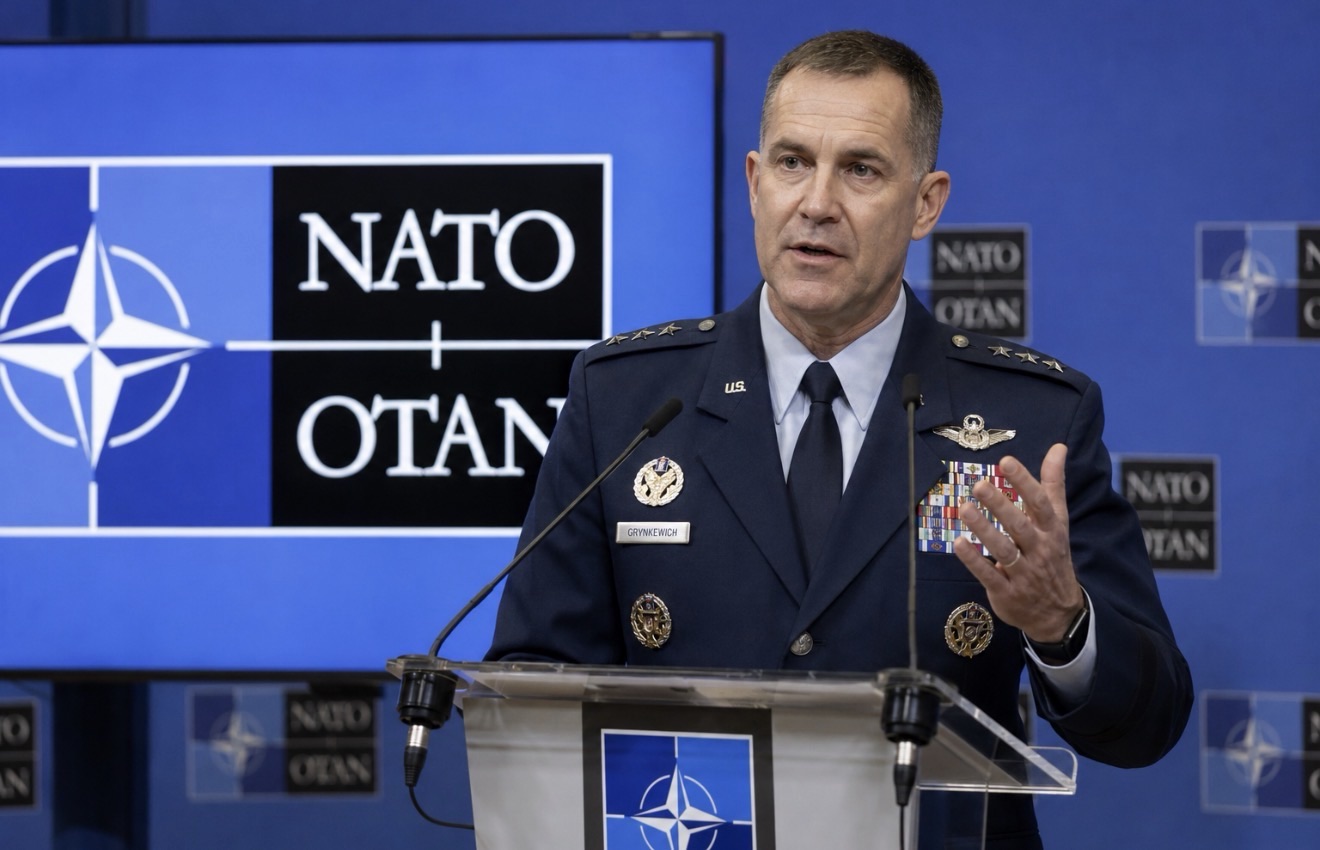
The possibility was confirmed Tuesday by General Alexus Grynkewich, NATO’s Supreme Allied Commander Europe, who acknowledged during a press conference in Brussels that alliance leaders are evaluating operational plans should the crisis continue.
Asked directly whether NATO is considering a Hormuz mission, Grynkewich answered: “Absolutely.”
The remarks marked the first public confirmation that a formal NATO-led maritime operation is under active discussion as the conflict surrounding Iran and the Gulf deepens.
According to officials briefed on the discussions, several NATO member states support the proposal, though unanimous approval — required for a formal alliance operation — has not yet been secured. Alliance leaders are expected to revisit the issue during a major NATO gathering in Ankara on July 7-8, now emerging as a potential decision point for Western intervention.
For markets, the implications are enormous.
The Strait of Hormuz normally handles roughly one-fifth of global oil and liquefied natural gas shipments. The disruption triggered by the war and subsequent closure of major shipping lanes has produced one of the largest energy supply shocks in modern history.
The International Energy Agency estimates roughly 14 million barrels per day of crude exports remain disrupted or stranded behind the chokepoint.
Brent crude has traded above $100 per barrel for most of the conflict, briefly nearing $120 during peak panic buying before easing modestly this week after President Donald Trump confirmed he had postponed a planned strike following appeals from Gulf leaders seeking additional time for negotiations.
QatarEnergy has already declared force majeure on exports, while oil production across Saudi Arabia, Kuwait, Iraq, and the United Arab Emirates reportedly fell by more than 10 million barrels per day during the worst phase of the March disruption.
The political backdrop behind NATO’s discussions is increasingly tense.
Several European alliance members have resisted Trump administration pressure to directly participate in efforts to reopen Hormuz militarily. The White House recently announced plans to withdraw thousands of U.S. troops from Germany following disputes over burden-sharing and Gulf operations.
Spain has been among the most vocal opponents of direct military involvement, restricting the use of Spanish airspace and facilities for Iran-related strikes. Other European governments have quietly provided logistical support while avoiding formal military commitments.
At the same time, France and the United Kingdom have reportedly been coordinating separate maritime-security contingency plans for the Gulf should active hostilities eventually subside.
What changed Tuesday was NATO itself publicly acknowledging that alliance-level intervention is now being openly debated even while the war remains active.
Shipping markets are already operating under extreme strain.
The International Maritime Organization estimates approximately 20,000 mariners aboard nearly 2,000 commercial vessels remain stranded across Gulf waters. IMO officials say there is little precedent for disruptions affecting such a large concentration of commercial shipping simultaneously.
Earlier U.S.-led efforts to reopen transit routes under the Trump administration’s “Project Freedom” initiative failed within days despite overwhelming American naval superiority.
The U.S. Navy destroyed several Iranian attack boats during the operation, but Iran retaliated with missile and drone strikes targeting Gulf infrastructure, forcing insurers and major shipping operators to continue avoiding the route.
Only a handful of U.S.-flagged vessels successfully completed escorted transits before broader commercial traffic effectively stopped again.
Labor unions representing international seafarers have warned shipping companies not to interpret military escort proposals as guarantees of safety without explicit Iranian assurances.
The financial impact is already spreading far beyond energy.
War-risk insurance premiums for tankers entering Gulf waters have surged dramatically since February. Asian commodity buyers remain scrambled for replacement fertilizer and petrochemical supplies previously sourced through the Gulf.
According to shipping and commodity data from Kpler, Asian buyers receive a significant share of global urea, sulfur, and ammonia exports through the region, much of which remains disrupted.
Food supply chains across Gulf Cooperation Council countries are also under mounting stress.
Retailers including Lulu Retail have reportedly resorted to airlifting staple goods into Gulf markets that rely heavily on imports transiting Hormuz. Consumer food prices across parts of the region have surged sharply as shipping disruptions persist.
The crisis is becoming especially dangerous for Europe.
Qatar supplies roughly 12% to 14% of Europe’s liquefied natural gas imports, nearly all of which transit Hormuz. With Europe still heavily dependent on LNG following the collapse of Russian pipeline supplies after 2022, prolonged Gulf disruption threatens renewed industrial shutdowns and energy shortages across Germany, Italy, and other manufacturing-heavy economies.
That strategic pressure is increasingly driving NATO’s internal debate.
Every additional week of disruption raises the political and economic cost of inaction for European governments already struggling with elevated energy prices and slowing industrial production.
Meanwhile, the military risks continue escalating.
Trump has instructed the Pentagon to remain prepared for renewed large-scale strikes on Iran if negotiations fail. Sen. Lindsey Graham (R-S.C.) has publicly urged the administration to target Iranian energy infrastructure directly in future attacks — a move analysts warn would almost certainly prolong the closure of Hormuz through the summer.
Adding further pressure, the U.S. Senate voted 50-47 on Tuesday to advance a war powers resolution challenging Trump’s military authority over Iran, the first successful procedural breakthrough for congressional critics since the conflict escalated.
Markets are now confronting the possibility of simultaneous escalation on multiple fronts: renewed U.S. strikes, deeper Iranian retaliation, and a formal NATO naval operation entering the Gulf.
Such a scenario would represent the broadest coordinated Western military presence in the Persian Gulf since the Gulf War era.
For now, NATO officials are making clear that the alliance’s patience is narrowing as the economic damage spreads.
The longer Hormuz remains effectively closed, the more likely military intervention becomes.
— JBizNews Desk
© JBizNews.com. All rights reserved. This article is original reporting by JBizNews Desk. Unauthorized reproduction or redistribution is strictly prohibited.